Skip to content

Howard / Wisconsin

AI Answering for Howard law firms.

A caller who reaches voicemail may not explain what happened, when it happened or how to reach them. Bosseo AI Answering is presented as a law-firm phone system that answers when your team cannot, including nights, weekends, holidays and overflow. It can capture caller details, provide a transcript and case summary, and classify calls as Potential New Client, Current Client or Other. For a firm serving Howard, the useful question is not whether a population estimate guarantees demand. It does not. The question is whether your response rules, intake ownership and follow-up process are ready for calls connected with Howard and the surrounding service area.

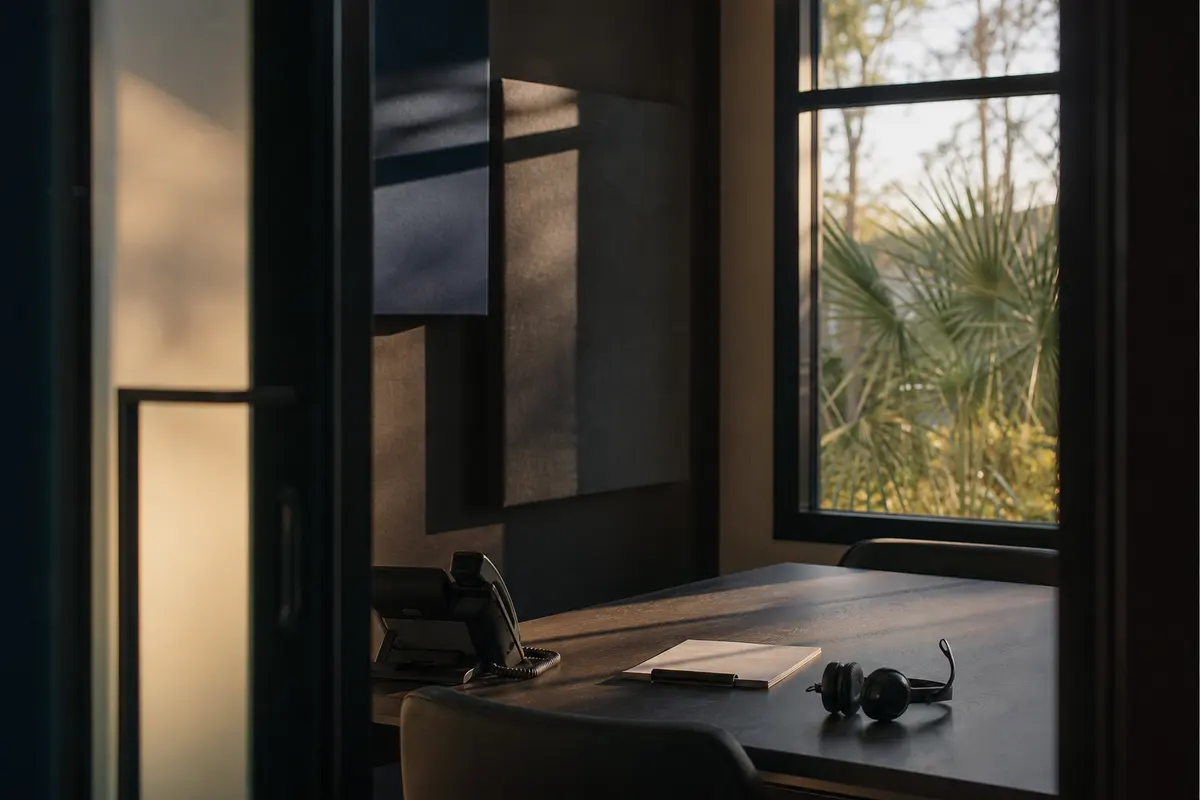
Editorial intake planning scene for AI Answering in Howard, Wisconsin

Local analysis

A practical AI Answering review for Howard firms

Evaluate AI Answering as an operating decision, not a population-based demand forecast. Howard’s recorded population provides municipal context, while your own call records and firm rules should determine the response design.

01

Start with Howard’s actual service boundary

Howard is recorded as a municipality in Brown County and Outagamie County. The 2020–2024 ACS five-year population estimate for Howard village is 21,087, with a margin of error of 22. That is geographic and population context, not proof of call demand, legal need, competition or staffing requirements. Your firm should therefore define which callers it serves before configuring response paths: Howard village, selected communities in Brown County, selected communities in Outagamie County, or a wider Wisconsin service area. The phone system should not treat every local call as the same type of matter.

Recommended approach

Write down the geographic questions your intake team actually needs answered. For example, ask where the incident, residence or court matter is located when that distinction affects eligibility. Review whether the caller’s location should change routing, urgency or attorney follow-up. Use the consultation to test the boundary rather than treating Howard’s population as a forecast.

02

Keep your team first, with a defined safety net

Bosseo’s public AI Answering page says calls go to the firm’s front desk first and that the AI steps in when nobody answers within 20 seconds. It describes the system as a backstop for unanswered calls, after-hours calls, weekends, holidays and overflow. That structure matters for a Howard firm deciding whether an automated answer should supplement, rather than replace, its existing phone responsibility. A rule without an owner can still produce a delayed response.

Recommended approach

Map the current path from the first ring to a returned call. Identify who owns the front desk, what happens when all lines are occupied, and who reviews a new Howard inquiry outside office hours. Decide which calls require immediate human attention and document the handoff expected after the AI captures the information.

03

Capture facts that make a callback useful

The public product text says AI Answering guides callers through their situation and captures case type, timeline and contact details. It also describes a full transcript, case summary and caller information delivered to an inbox or case management system. Those outputs can give an attorney more than a bare voicemail, but the value depends on the questions your firm needs for its practice areas. A Howard caller asking about a matter in Brown County may require a different follow-up question from a caller whose issue is elsewhere.

Recommended approach

List the minimum information needed to decide who calls back and how quickly. Include the practice area, relevant location, timing, contact method and immediate concern where appropriate. Review the proposed questions for clarity, legal-ethics boundaries and accessibility. Do not ask an automated system to make a legal judgment that should remain with a lawyer.

04

Make classification and escalation visible

Bosseo describes automatic classification as Potential New Client, Current Client or Other, along with case-type tagging and summaries. Its public page also says urgent potential clients can be surfaced in the transcript and summary. Classification is useful only when someone acts on it. A current client, a prospective client and a non-case caller may need different owners, response windows and records.

Recommended approach

Agree on the destination and owner for each classification before adopting the service. Define what makes a call urgent for your firm, how that urgency is communicated, and what happens if the assigned person is unavailable. Test examples involving a new inquiry connected with Howard, an existing client seeking an update and a caller whose request is outside the firm’s scope. Keep the resulting rules easy for staff to follow.

05

Plan for simultaneous calls without assuming volume

Bosseo states that its AI Phone System can handle up to 20 simultaneous calls. That is a stated capacity, not evidence that a Howard firm needs that capacity or will receive a particular number of calls. The relevant decision is whether your current phone arrangement creates busy signals, voicemail during staff activity or unanswered calls at certain times. The population estimate for Howard cannot answer that operational question.

Recommended approach

Review your own call records, voicemail, missed-call list and staff observations. Identify periods when calls compete for attention, then ask Bosseo how the stated simultaneous-call capability would apply to your phone setup. Measure answer status, classification, callback ownership and disposition after implementation rather than projecting cases or revenue from local population.

06

Use call records to improve intake responsibly

Bosseo’s public page says the platform provides transcripts and summaries, classifies calls and includes Intake Coach feedback on missed questions, tone and lost conversions. That creates a possible review loop for calls answered by the AI and calls answered by staff. It does not guarantee that every call will become a client, that search visibility will improve or that a particular financial result will follow.

Recommended approach

Choose a small set of operational measures that answer practical questions: Were calls answered? Was the classification useful? Did the summary contain the needed facts? Was a callback assigned? Was the matter accepted, declined or still pending? Review access, retention, confidentiality and any applicable recording or notification requirements with qualified counsel and the service provider.

Implementation

A decision framework for your consultation

Use these questions to decide whether the product’s stated capabilities match the way your firm handles calls.

  1. 011. Document the current phone path Record where calls go first, when staff are unavailable, how voicemail is reviewed and who returns calls. Separate Howard village from the broader Brown County, Outagamie County or Wisconsin areas your firm actually serves.
  2. 022. Define the intake boundary Choose the questions that help staff identify practice area, timing, location, current-client status and contact details. Mark questions that require attorney judgment rather than automated handling.
  3. 033. Assign ownership before activation Name the person or role that reviews each classification, summary and urgent flag. Decide how inbox or case-management delivery will be checked and how an unassigned call is surfaced.
  4. 044. Review records and adjust After the service is in use, review answer status, summary quality, classification, callback assignment and disposition. Change questions or routing only after examining actual firm experience and applicable confidentiality and call-recording requirements.

Questions

AI Answering in Howard

Does AI Answering replace a law firm’s front desk?+

Bosseo’s public product text says the firm’s team receives the first ring and the AI steps in when nobody answers within 20 seconds. It is described as a backstop for missed, after-hours, holiday and overflow calls.

What information does the system capture?+

Bosseo says the system guides callers through their situation and captures case type, timeline and contact details. It also describes a transcript, case summary and caller information delivered to an inbox or case management system.

How are calls classified?+

The public product text identifies three classifications: Potential New Client, Current Client and Other. Bosseo also describes case-type tagging. Your firm still needs to decide who reviews each category and what action follows.

How many simultaneous calls can it handle?+

Bosseo states that the system handles up to 20 simultaneous calls. That stated capability does not establish your firm’s call demand. Review your own unanswered-call and busy-line experience before deciding what capacity matters.

Can the system determine whether a caller should become a client?+

The published description supports capturing information, summarizing the call and classifying it. It does not make a promise that an automated call will determine legal eligibility, accept a matter or produce a signed case. Those decisions should remain with your firm.

What should a Howard firm prepare before a consultation?+

Bring your current phone-routing rules, practice areas, service boundaries, unanswered-call observations, urgent-call expectations and preferred destination for summaries. Include whether location within Howard, Brown County, Outagamie County or another Wisconsin area changes follow-up.

Next step

Review your Howard call-handling path with Bosseo

Book a consultation through calendar.bosseo.com to examine how AI Answering could fit your firm’s front-desk routing, missed-call coverage, qualification questions, escalation rules and follow-up ownership. Bring your service boundary and current phone-handling questions so the discussion stays specific to your practice.

Book an AI Answering consultation ↗
Sources and scope