Skip to content

White Center / Washington

Custom Software for White Center law firms.

A law firm serving White Center may not need another general-purpose legal platform. The more useful question is whether a specific recurring bottleneck deserves a tool designed around the way your team already works. Bosseo’s Custom Software service is intended for law firms that want to evaluate that question carefully, including data definitions, reliability, permissions, recovery, integrations and acceptance criteria.

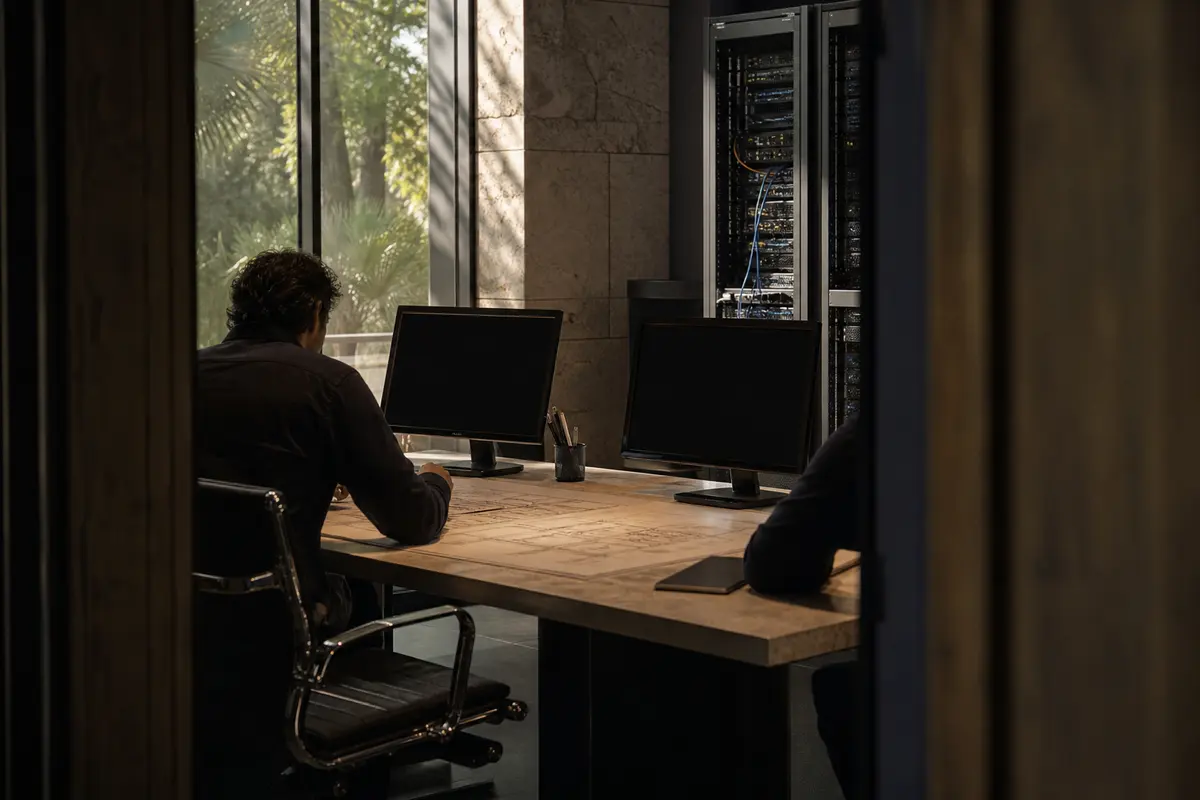
Editorial platform planning scene for Custom Software in White Center, Washington

Local analysis

A practical Custom Software review for White Center firms

Use this decision framework before booking: custom software is a candidate when a defined bottleneck recurs, existing tools do not fit the required workflow, the firm can name the data and users involved, and the value of reducing the manual work can be tested. It is not automatically justified by firm size, geography or the existence of a new technology.

01

Start with the service area, not a guessed market

White Center CDP is recorded in King County, Washington. The 2020–2024 ACS 5-year population estimate for the CDP is 14,886, with a margin of error of 1,176. That figure describes a geographic population estimate; it does not establish legal demand, competition, search volume, lead volume, case volume or revenue. For a firm serving White Center, the practical software question is narrower: which work arrives from this service area, and where does that work become difficult to track or complete?

Recommended approach

Map the operational path from an initial inquiry through the next internal action. Separate White Center matters from other service areas only if that distinction changes routing, reporting, permissions or follow-up. Do not design a build around population alone. Use the consultation to identify the actual process, users, systems and decision points that the firm wants software to support.

02

Define the data before choosing the tool

Custom software is only useful when the firm agrees on what each important field means. A lead, consultation, matter, referral and retained client may be different records. The same distinction may apply to source, practice area, assigned person, urgency, status and next action. If the firm serves White Center and other parts of King County, geographic labels should be defined rather than casually treated as interchangeable. The location record does not tell Bosseo what the firm’s internal categories mean.

Recommended approach

Create a short data dictionary during evaluation. For each proposed field, identify who enters it, which values are allowed, when it changes and what downstream action depends on it. Ask whether the proposed tool should display, create, update or merely report the field. A clear definition is more valuable than adding a large number of fields that staff will interpret differently.

03

Review reliability and recovery as part of scope

Bosseo’s public Custom Software page describes hosting, monitoring, backups, maintenance and a managed hosting stack. It does not establish a particular uptime level, recovery time, recovery point, security certification or local infrastructure location. Those details should not be assumed. A law firm should decide what interruption or data-loss scenarios matter before accepting a hosted tool.

Recommended approach

Ask for the proposed reliability and recovery arrangements in writing. Review backup frequency, restoration responsibility, access during an outage, change handling and the process for correcting bad data. Tie acceptance to observable checks: for example, whether an authorized user can complete a defined task and whether the agreed recovery procedure has been explained. The consultation should identify what requires confirmation rather than treating general hosting language as a guarantee.

04

Make permissions fit legal work

A custom tool may be used by attorneys, paralegals, intake staff, administrators or outside participants, depending on the approved scope. Those users may not need the same visibility or editing rights. Bosseo’s public description discusses client portals, internal dashboards, intake tools and referral trackers, but it does not publish a universal permission model for every build.

Recommended approach

List each user role and the records or actions it needs. Decide who may view sensitive information, edit a status, assign a task, export data or administer settings. Include a review for departed staff, shared accounts and mistaken access. If a client-facing portal is considered, define exactly what the client can see and what remains internal before treating the portal as ready.

05

Evaluate integrations without assuming them

Bosseo describes custom tools as able to connect with a firm’s website, intake and dashboard, and its public page discusses connections with CRM, case-management and marketing systems. The page does not identify every supported vendor, data field, authentication method or synchronization behavior. An integration should therefore be evaluated as a specific technical question, not as an automatic feature.

Recommended approach

Bring the names of the systems currently used, the records that must move, the direction of each transfer and the acceptable delay or failure behavior. Ask what happens when a record is incomplete, duplicated or rejected. Decide which system is authoritative for each field. If the proposed connection cannot be confirmed, scope a review or manual handoff rather than promising a live integration.

06

Set acceptance criteria before anyone calls it finished

Bosseo’s public page describes a working version shown early, feedback-based refinement, team onboarding and iteration after launch. Those capabilities support a reviewable build, but they do not replace firm-specific acceptance criteria. A tool can be technically complete and still fail if staff cannot use it, if a required record is missing or if the output cannot be checked.

Recommended approach

Write acceptance tests in plain language. Include the users, starting information, expected result, permissions, error behavior and record of completion. Test ordinary work and exceptions, such as an incomplete intake, a duplicate inquiry, a reassigned matter or a person who should lose access. Include training and feedback in the decision, but keep acceptance tied to the agreed workflow rather than to a general impression that the interface looks finished.

Implementation

Prepare for a focused Custom Software consultation

A useful conversation starts with the firm’s actual process. White Center is a CDP in King County, and its 2020–2024 ACS population estimate is 14,886; that geographic context does not answer the operational questions. Bring evidence from your own workflow instead.

  1. 011. Describe the work as it happens now Bring one process that staff perform repeatedly. Note the trigger, every handoff, the information entered, the systems consulted and the point at which someone must remember to act. A sentence such as “someone checks this manually” is a useful starting point, but the consultation should turn it into a sequence that can be reviewed.
  2. 022. Separate requirements from preferences Identify what the firm must have for the process to be safe and usable. Then list preferences such as layout, notifications or reports. This separation helps prevent a visually appealing feature from taking priority over data ownership, access control, recovery or exception handling.
  3. 033. Review the proposed scope Ask how the tool would fit with the firm’s website, intake and reporting environment, and identify any CRM, case-management or marketing connection that needs confirmation. Review the proposed hosting, maintenance, onboarding and iteration arrangements without assuming an uptime figure, security certification or integration that has not been established.
  4. 044. Test the decision against real work Use agreed acceptance criteria and representative scenarios. Include a normal transaction and at least one exception. Decide who signs off, what remains unresolved and whether custom software is justified at all. If an existing product already handles the defined need adequately, buying it may be the better decision.

Questions

Custom Software in White Center

What kinds of custom software can Bosseo discuss with a law firm?+

Bosseo’s public Custom Software page describes client portals, intake tools, internal dashboards, referral trackers and other tools intended to remove operational bottlenecks. The consultation should determine whether the proposed problem is suitable for a custom build.

Do we need a technical requirements document before speaking with Bosseo?+

Bosseo says a firm can describe its bottleneck in plain English and that Bosseo will ask questions and shape the scope. You should still bring the current workflow, users, systems, data concerns and desired acceptance tests if they are available.

Can Bosseo connect a proposed tool to our existing systems?+

Bosseo describes connections with a firm’s website, intake, dashboard, CRM, case-management and marketing systems. Availability depends on the firm’s actual systems and the proposed data flow, so each integration should be reviewed rather than assumed.

How should we evaluate hosting and recovery?+

Ask for the specific hosting, monitoring, backup, access and recovery arrangements for the proposed build. Bosseo’s public page describes managed hosting, monitoring and backups, but it does not publish a universal uptime or recovery guarantee for every custom tool.

Who decides whether the build is complete?+

The firm and Bosseo should agree on acceptance criteria before the work is treated as complete. Criteria can cover required fields, permissions, ordinary and exception workflows, integrations that were specifically scoped, onboarding and the firm’s ability to verify the result.

What if custom software is not the right answer?+

That is a valid conclusion. Compare the cost and complexity of a custom build with an existing product, a process change or a related Bosseo service. The consultation should clarify the bottleneck and the decision, not force a build where the problem does not justify one.

Next step

Bring your White Center workflow to Bosseo

Book a Custom Software consultation through calendar.bosseo.com. Describe the manual process that is slowing your firm, then review whether a focused tool makes sense, what data and permissions it requires, which connections need confirmation, and how the result should be accepted. If another approach is better, that should be part of the decision.

Book a Custom Software consultation ↗
Sources and scope