Skip to content

Tanglewilde / Washington

AI Answering for Tanglewilde law firms.

A caller in Tanglewilde may reach your team during office hours, after hours, on a weekend or when every line is occupied. Bosseo AI Answering is designed to give that caller a clear next step instead of voicemail. Your team receives the first ring. If nobody answers within 20 seconds, the system can pick up, greet the caller, collect case information and contact details, and send a transcript and summary to your inbox or case-management system. For a firm serving Tanglewilde and the wider Thurston County area, the useful question is not whether the local population guarantees demand. It does not. The practical question is whether your current response path gives every caller an appropriate owner, escalation route and follow-up record.

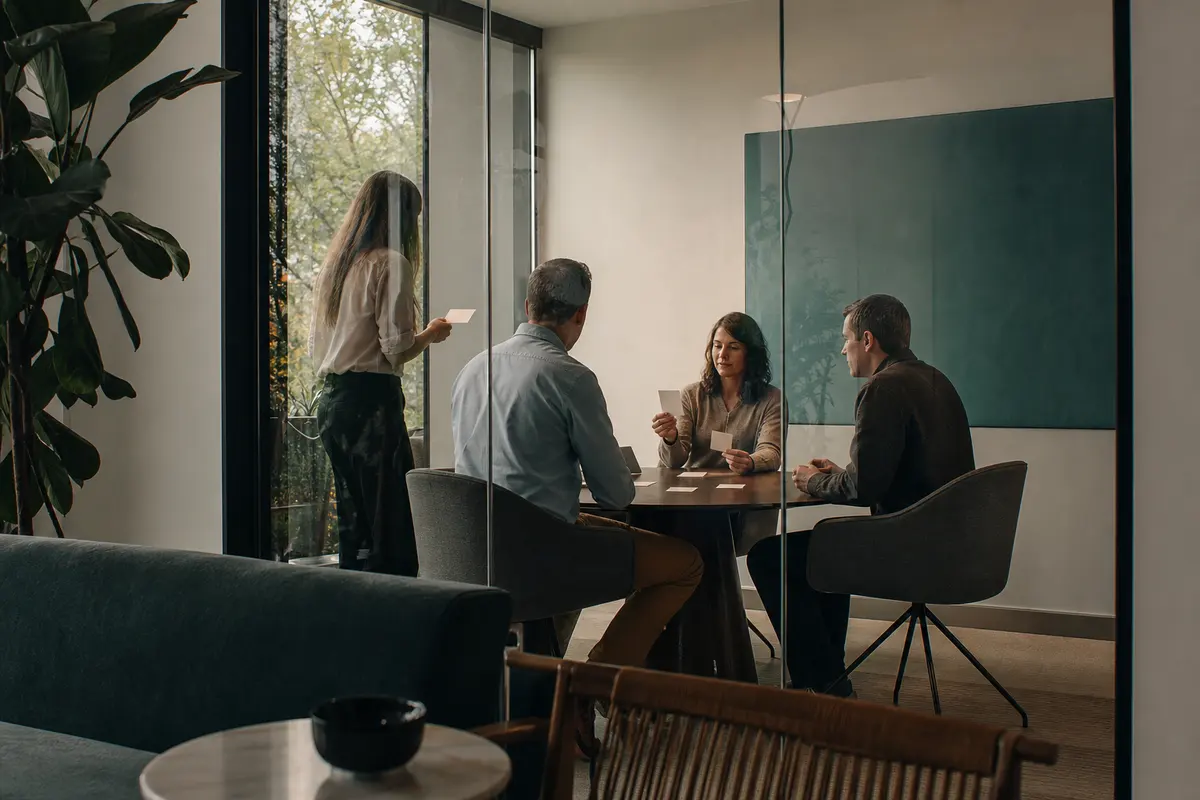
Editorial intake planning scene for AI Answering in Tanglewilde, Washington

Local analysis

Treat Tanglewilde as a service area and test AI Answering against your firm’s actual call handling: unanswered-call routing, urgent-call escalation, practice-area qualification, accessibility, follow-up ownership and measurement.

Evaluate AI Answering as an intake control, not as a population-based forecast. A sound decision connects the firm’s actual call path to five questions: who answers first, what information is collected, who owns the next action, how urgent matters are escalated and how the firm will review the record. Tanglewilde’s status as a CDP in Thurston County helps define the geographic context. It does not answer those operational questions.

01

1. Use Tanglewilde’s geography to define the response boundary

Tanglewilde is recorded by the U.S. Census Bureau as a census-designated place in Thurston County, Washington. The 2020–2024 ACS five-year population estimate is 6,314, with a margin of error of 810. That is geographic context, not evidence of call demand, legal need, competition or likely revenue. Your intake configuration should therefore distinguish a caller’s location from the firm’s service decision. A Tanglewilde caller may be seeking help for a matter elsewhere in Thurston County or Washington, while a caller outside Tanglewilde may still fit your practice and service area.

Recommended approach

Write the service-area rule your team actually uses. Decide what the answering system should collect about location, when location affects eligibility, and who reviews matters that fall outside the firm’s scope. Measure location as an intake field rather than treating the Census estimate as a forecast.

02

2. Keep your team on the first ring

Bosseo describes AI Answering as a safety net: calls go to your team first, and the AI picks up when nobody answers within 20 seconds. That distinction matters if your Tanglewilde-serving firm wants continuity with its existing number and front-desk process. The system is presented as working behind the firm’s existing numbers, with a forwarding rule for unanswered calls rather than a requirement for new hardware or phone numbers.

Recommended approach

Map your current ring order, lunch coverage, overflow handling and after-hours rule. Then decide whether 20 seconds is suitable for your actual staffing pattern. Confirm the escalation path for a caller who needs a human response rather than a general intake conversation.

03

3. Capture the facts that determine a useful callback

Bosseo states that the AI guides callers through their situation and captures case type, timeline and contact information. It also describes full transcripts, case summaries and caller information delivered to an inbox or case-management system. For a law firm serving Tanglewilde, the value lies in deciding which facts are necessary for a responsible callback—not in collecting every possible detail. A summary should help the assigned person understand what happened, when it happened, where the caller is located and what the caller wants next, subject to the firm’s approved intake rules.

Recommended approach

List the minimum fields for each practice area. Separate information needed to route a call from information that requires attorney review. Have the firm approve wording that avoids legal advice, sets expectations appropriately and identifies urgent situations for prompt human attention.

04

4. Make urgency and ownership explicit

The public Bosseo description says calls can be classified as Potential New Client, Current Client or Other, and that case-type tagging can feed an ROI Dashboard. It also describes summaries that surface urgency. Classification alone does not decide who acts. Your firm still needs an owner, a callback standard and a route for matters that require immediate human review. A Tanglewilde caller with a time-sensitive issue should not be treated differently merely because the call arrives outside normal office hours; the firm must define the appropriate response.

Recommended approach

Create an approved ownership table for new inquiries, current clients, existing matters and other calls. Specify what should be flagged, who receives the notice, what information is safe to collect and how the team records the disposition. Review the rule with the people responsible for intake and legal supervision.

05

5. Plan for accessibility without guessing about callers

The available local record identifies Tanglewilde as a Washington CDP and provides a population estimate. It does not establish language preference, disability prevalence, call volume or staffing need. Those questions belong in your firm’s own review. Bosseo’s public page describes a professional phone interaction that guides callers through their situation, but it does not establish every accessibility option or supported language.

Recommended approach

Ask Bosseo to demonstrate the caller experience and explain the available accessibility controls before making a commitment. Review pace, clarity, transfer behavior, information confirmation and alternatives for callers who cannot complete the standard conversation. Base decisions on your callers and obligations, not on demographic assumptions.

06

6. Measure response quality, not just answered calls

Bosseo describes transcripts, summaries, classifications, case-type tags and delivery to an inbox or case-management system. Its public page also describes an Intake Coach that analyzes calls and provides feedback on missed questions, tone and lost conversions. Those capabilities can support review, but they do not establish your firm’s baseline or guarantee more cases. Search visibility and population data cannot substitute for call-handling records.

Recommended approach

Choose measures that match the decision: answer timing, unanswered-call routing, classification accuracy, summary completeness, callback ownership, urgent-call handling and disposition. Compare records over a defined review period that your firm selects. Ask how the information is delivered, retained and accessed, and confirm that the arrangement fits your confidentiality requirements.

Implementation

What to bring to a Bosseo consultation

Bring your current phone-flow description, approved practice areas, service-area rules, after-hours policy and examples of the information your intake team needs. Ask for a direct demonstration of the unanswered-call path, transcript and summary delivery, classification, case-type tagging, escalation behavior and the Intake Coach described by Bosseo. You can book through calendar.bosseo.com.

  1. 01Step 1: Document the existing phone path Record who receives the first ring, how long calls ring, what happens during overflow, and how after-hours calls are handled. Include the numbers and service areas your firm actually uses; do not infer a configuration from Tanglewilde’s population.
  2. 02Step 2: Approve the intake boundary Identify the practice areas, locations, timelines and caller details the system may collect. Decide which questions are routing questions and which require attorney or staff review. Ask Bosseo to show how the proposed conversation handles questions outside that boundary.
  3. 03Step 3: Assign ownership and escalation Name the team role responsible for Potential New Client, Current Client and Other calls. Define the urgent-call route, callback responsibility and documentation standard. Make sure the rule remains workable for nights, weekends, holidays and busy periods.
  4. 04Step 4: Review records and decide Use transcripts, summaries, classifications and call dispositions to evaluate whether the response path is useful. Review answer timing, summary completeness, routing accuracy and follow-up ownership. Decide whether the system fits your firm only after confirming delivery, confidentiality and accessibility questions.

Questions

AI Answering in Tanglewilde

Does AI Answering replace our front desk?+

Bosseo describes it as a backstop rather than a replacement. Calls ring your team first, and the AI picks up when nobody answers within 20 seconds. Confirm the routing behavior for your phone system before choosing a configuration.

Can a Tanglewilde-serving firm keep its current phone number?+

Bosseo’s public page says the existing numbers stay in place and that the system sits behind them. The page describes a forwarding rule for unanswered calls. Your firm should confirm how that rule would work with its current provider and call flow.

What information does the caller receive after an unanswered call?+

Bosseo describes a full transcript, case summary and caller information delivered to your inbox or case-management system. The firm should decide which recipient owns the follow-up and what information is required for each practice area.

Can the system distinguish new inquiries from current-client calls?+

Bosseo says calls are classified as Potential New Client, Current Client or Other. Classification should support routing, but your firm must define the action for each category and review how accurately the categories fit its calls.

How should we evaluate urgent calls?+

Define urgency using your firm’s approved intake and escalation rules. Bosseo describes summaries and classification that can surface urgency, but the firm remains responsible for deciding who reviews the call and what response is appropriate.

Does Tanglewilde’s population estimate predict how many calls we will receive?+

No. The 2020–2024 ACS five-year estimate for Tanglewilde CDP is 6,314, with a margin of error of 810. That is geographic context only; it does not establish demand, call volume, legal need, leads or revenue.

Next step

Review your Tanglewilde call path with Bosseo

Book a consultation to examine how AI Answering could handle unanswered calls for your law firm serving Tanglewilde and Thurston County. Ask for a live look at the phone experience, the transcript and summary flow, classification, escalation questions and the Intake Coach. The booking destination is calendar.bosseo.com.

Book a Bosseo consultation ↗
Sources and scope