Skip to content

Lumberton / Texas

AI Answering for Lumberton law firms.

For a law firm serving Lumberton in Hardin County, an unanswered call is an intake decision waiting to be made. Bosseo AI Answering is designed to give missed calls a clear next step: your team receives the first ring, and the system can step in when nobody answers within 20 seconds. It can capture case details and contact information, provide a transcript and summary, and classify the call as a Potential New Client, Current Client or Other. The right evaluation is not whether every call should go to an automated system. It is whether your firm has a clear, reviewable response path for calls your team cannot answer.

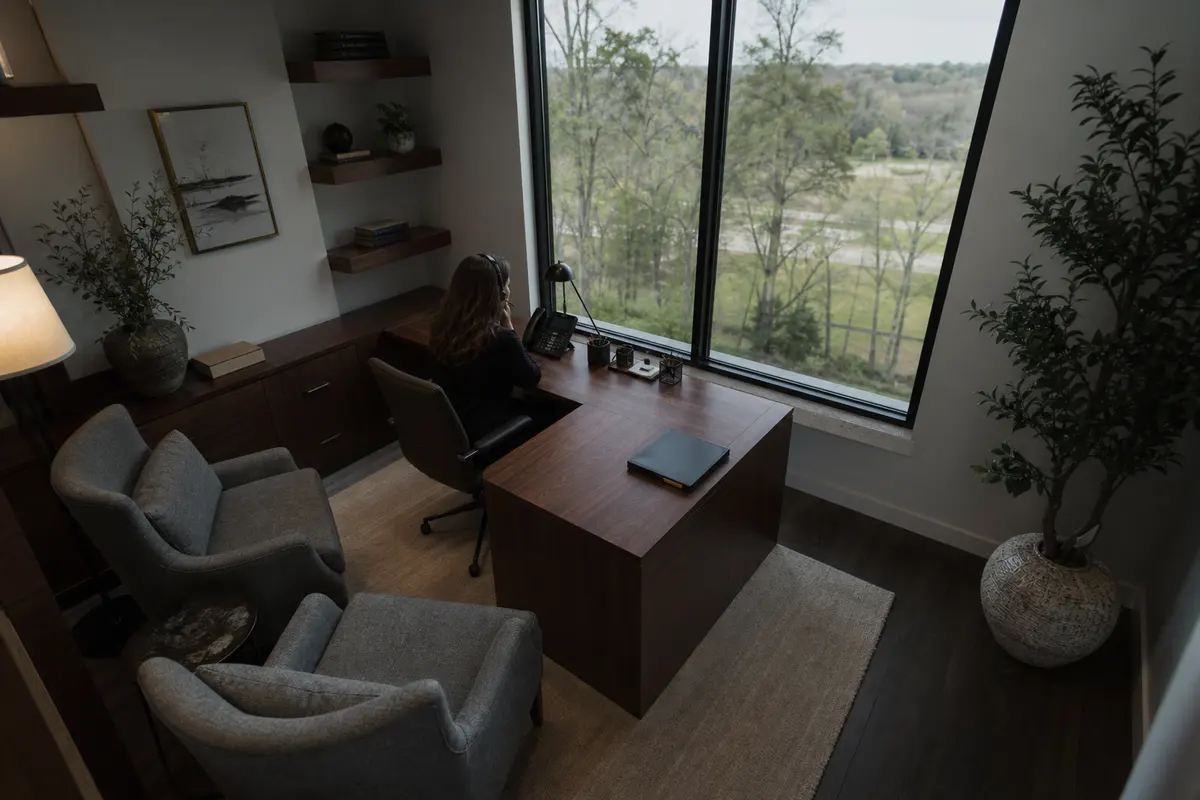
Editorial intake planning scene for AI Answering in Lumberton, Texas

Local analysis

Use a consultation to map unanswered-call handling, qualification, escalation, accessibility, follow-up and measurement against the way your Lumberton practice actually serves clients.

A sound AI Answering decision should connect the product’s stated capabilities to your firm’s actual phone behavior. Use four questions: what happens when nobody answers, what information must be captured, who owns the next step, and how will you know the path worked? Keep those questions separate from assumptions about Lumberton demand or case value.

01

Start with Lumberton’s actual service boundary

Lumberton is recorded as a municipality in Hardin County, Texas. The 2020–2024 American Community Survey five-year estimate records 13,963 residents, with a margin of error of 46. That figure describes the city’s population; it does not establish call demand, legal need, competition, language preference or staffing requirements. For your firm, the useful question is geographic: which calls come from people seeking service in Lumberton, which come from elsewhere in Hardin County, and which fall outside your practice area or intake policy?

Recommended approach

Bring your current service-area definition to the review. Decide how an answering system should handle a Lumberton caller, a caller elsewhere in Hardin County, an existing client and a matter your firm does not accept. Use the city and county relationship to clarify routing—not to predict lead volume.

02

Let your team remain the first response

Bosseo’s published AI Answering page describes a team-first arrangement: calls go to the firm’s front desk first, and the AI steps in when nobody answers within 20 seconds. That makes the product a backstop rather than a replacement for your staff. This distinction matters when a Lumberton caller expects a direct conversation with your office during ordinary hours, while after-hours or overflow calls need a defined next step.

Recommended approach

Review your current ring order, unanswered-call rule, lunch coverage, holidays and overflow handling. Confirm who owns a call after the system answers and what your team should do when the transcript identifies an urgent matter. Do not treat the 20-second rule as a substitute for deciding who responds.

03

Define qualification without overpromising legal advice

The public product description says the system can guide a caller through the situation and capture case type, timeline and contact details. It also describes case-type tagging and classifications of Potential New Client, Current Client or Other. Those fields can make a callback more useful, but they do not decide whether the firm has an attorney-client relationship, whether a matter is viable or whether legal advice should be given during intake.

Recommended approach

Specify the facts your firm needs before a callback: contact information, general matter type, timing, location and the caller’s requested next step. Separately identify questions that require attorney review. Establish a clear response for callers whose matter is outside your scope or whose location does not match the firm’s service boundary.

04

Make urgent calls visible to the right person

Bosseo describes transcripts, summaries and caller information being delivered to an inbox or case-management system. Its public page also describes classification and case-type tagging. Those capabilities support a review of urgency and ownership; they do not, by themselves, establish a legal emergency protocol or guarantee a response time from your firm.

Recommended approach

Create an escalation policy for matters your firm considers time-sensitive. Decide who reviews new summaries, how that person identifies an urgent call, what happens outside office hours and when a caller should receive a direct instruction to seek emergency assistance. Test the policy using representative situations without promising a legal outcome or immediate attorney availability.

05

Use transcripts to examine accessibility and caller experience

The product page says callers are greeted professionally and guided through their situation, with a transcript and summary produced after the call. A public description alone cannot establish how every caller will experience the system, including callers with communication, hearing or accessibility needs. Lumberton’s population estimate also cannot establish language needs or preferred communication methods.

Recommended approach

During the consultation, ask to hear the answering experience and review how your firm’s profile, practice areas, office locations, hours and consultation process would be represented. Decide what alternative contact path you will provide when an automated conversation is not suitable. Measure whether callers can understand the next step rather than assuming that an answer equals a successful intake.

06

Measure response quality, not just answered calls

Bosseo’s public page describes a full transcript, case summary, classification and case-type tagging for calls. It also describes Intake Coach feedback on missed questions, tone and lost conversions, and an ROI Dashboard connected to phone traffic. These are described capabilities, not evidence that your firm will obtain a particular number of leads, cases or signed matters.

Recommended approach

Agree on the records you will review: whether an unanswered call received a response path, whether required facts were captured, whether ownership was clear, how quickly your team reviewed the summary and whether the caller reached the appropriate next step. Compare categories over time and keep legal outcomes separate from call-handling measures. A Lumberton location page should support relevance and clarity, not imply demand or rankings.

Implementation

What to bring to a Bosseo review

A focused consultation can assess whether the described answering path fits your firm. Bring the information below and ask for clear answers about configuration, delivery and responsibility.

  1. 011. Document the current phone path List the numbers, ring groups, office hours, overflow conditions and people responsible for callbacks. Include the situations that currently reach voicemail. Keep Lumberton and Hardin County service boundaries explicit so an answering path does not imply that every caller is eligible for representation.
  2. 022. Approve the intake boundaries Choose the facts the system should collect and the questions it should avoid. Write the firm description, practice areas, hours, consultation process and routing rules in language your team can review. Decide how the system should respond to current clients, new inquiries, wrong numbers and matters outside scope.
  3. 033. Set review and escalation ownership Assign responsibility for reading summaries and transcripts. Define how your team spots urgency, how after-hours matters are handled and what callback record is retained. A system can surface information; your firm still needs a human policy for legal judgment and client communication.
  4. 044. Review evidence from real operations After implementation, examine call categories, captured fields, delivery, review time and follow-up disposition. Compare results by time period and call type rather than treating the Lumberton population estimate as a forecast. Revisit the workflow when your practice areas, hours or service boundary change.

Questions

AI Answering in Lumberton

Does AI Answering replace our front desk?+

Bosseo’s public page describes a team-first setup. Calls go to your people first, and the AI steps in when nobody answers within 20 seconds. Your firm should still decide which calls require a person and how callbacks are owned.

What can the system capture?+

The published description says it can capture case details and contact information, including case type and timeline, and provide a transcript and case summary. Confirm the exact questions and fields appropriate for your firm before proceeding.

What happens after a call?+

Bosseo says the transcript, summary and caller information can be delivered to your inbox or case-management system. Confirm the destination, ownership and review procedure for your firm during the consultation.

Can it handle several calls at once?+

Bosseo’s public page states that AI Answering can handle up to 20 simultaneous calls. That capacity statement does not predict your call volume or determine whether the product fits your phone setup.

Can it identify new and existing callers?+

The published product description says calls are classified as Potential New Client, Current Client or Other. Your team should decide what action follows each category and how exceptions are handled.

How should a Lumberton firm evaluate fit?+

Review your actual unanswered-call path, service boundary, intake questions, escalation policy, accessibility needs and measurement approach. Lumberton’s population is geographic context, not proof of demand, legal need or expected results.

Next step

Review AI Answering for your Lumberton firm

Book a consultation with Bosseo to walk through your unanswered-call path, intake boundaries, escalation rules and measurement questions. Bring your phone-routing details and service-area policy so the discussion stays grounded in how your firm serves Lumberton and Hardin County. Booking is available through calendar.bosseo.com.

Book a Bosseo consultation ↗
Sources and scope