Skip to content

Irving / Texas

Custom Software for Irving law firms.

Your firm does not need another tool that almost fits. Bosseo Custom Software is designed for law firms that want to examine a specific operational bottleneck and decide whether a purpose-built tool is appropriate. For a firm serving Irving in Dallas County, that decision should be based on the work your team actually performs—not on population alone, software fashion or a generic feature list.

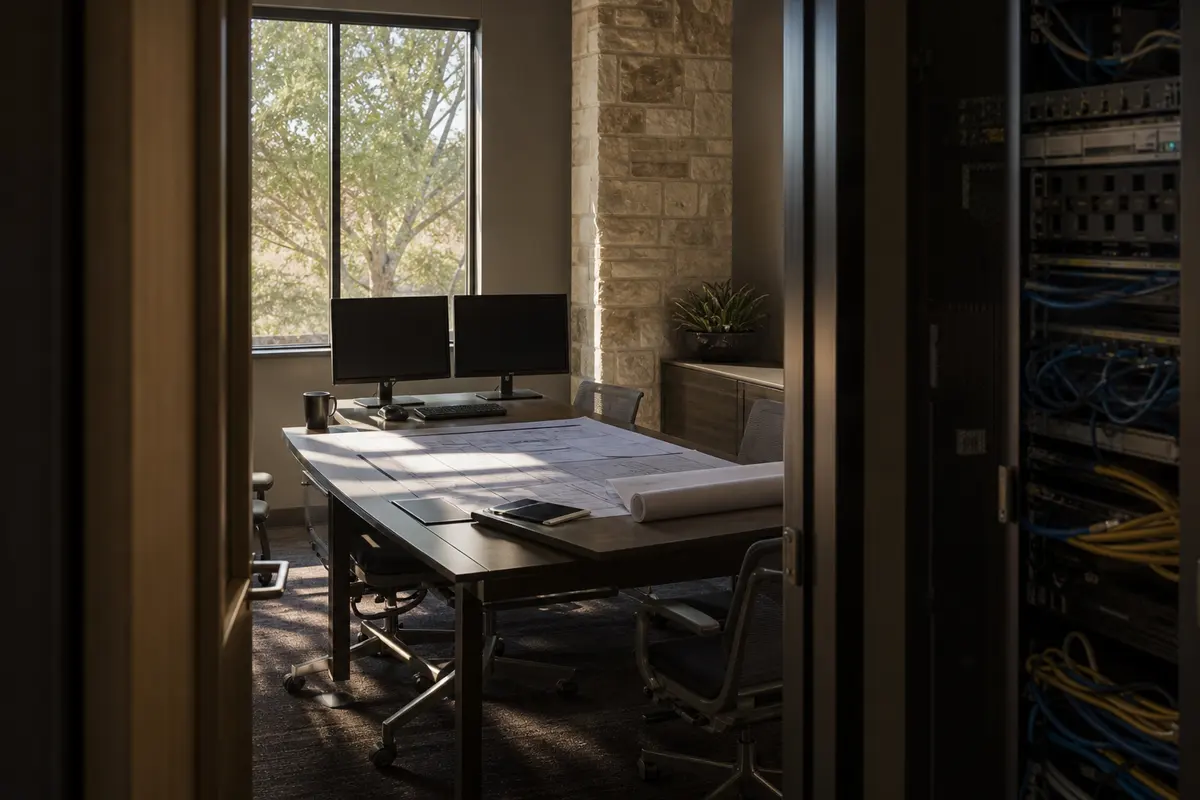
Editorial platform planning scene for Custom Software in Irving, Texas

Local analysis

Bring Bosseo one manual process that creates friction. The consultation can help you determine whether custom software belongs in that process, what the tool must do, how it should connect to your existing systems, and what acceptance criteria should define a usable result.

Use this decision framework before approving a custom build. It keeps the discussion grounded in the process your firm can observe and the obligations it must manage.

01

Start with the Irving workflow, not a software category

Irving is a municipality in Dallas County, Texas, with a 2020–2024 ACS five-year population estimate of 256,492 and a margin of error of 91. That is geographic context, not proof of legal demand, competition, leads or revenue. For custom software, its practical value is narrower: it identifies the service area you may use when describing the firm’s operating context. The build decision still starts with a recurring task inside your office. If staff re-enter consultation information, maintain a referral spreadsheet or answer status questions manually, document that process before discussing features.

Recommended approach

Describe the bottleneck in operational terms: who starts it, what information enters the process, where it is copied, who approves the next step and what happens when something is missing. Ask Bosseo to translate that description into a scoped software concept rather than beginning with a request for a broad platform.

02

Define the data before discussing screens

A custom tool is only as dependable as the information it receives and displays. Bosseo’s public Custom Software page describes tools such as client status portals, intake tools, internal dashboards, referral trackers and document-collection flows. Those examples do not establish which tool your Irving practice needs. They do show why the initial conversation should distinguish a matter, a prospective client, a referral, a task, a document and a status rather than treating every record as one undifferentiated entry.

Recommended approach

Ask for a data review covering required fields, permitted values, ownership, duplicate handling, audit needs and retention expectations. Decide which information should be entered once, which systems should receive it, and which fields staff may edit. Keep the first scope tied to a defined bottleneck instead of adding unrelated features.

03

Make permissions and recovery part of the scope

Law-firm software can expose sensitive operational and client information, so access and recovery deserve explicit decisions before implementation. Bosseo states that its custom tools are hosted and maintained on its managed infrastructure and describes monitoring and backups on its public page. That statement does not define your firm’s permission model, recovery objectives, security requirements or legal obligations. Those details must be reviewed directly before you approve a build.

Recommended approach

Ask who may view, create, change and export each category of information. Confirm how access changes when a staff member joins, leaves or changes role. Request a clear discussion of backup coverage, recovery procedures, incident communication and account administration, and record the answers in the acceptance criteria.

04

Test integrations instead of assuming them

Bosseo says its custom software can connect with a firm’s website, intake and dashboard, and its public page describes integrations with systems such as a CRM, case management and marketing stack. That does not prove compatibility with the systems your Irving firm uses, nor does it establish the available permissions, APIs, data limits or synchronization behavior. A connected tool can create new errors if ownership and failure handling are vague.

Recommended approach

Bring the names and roles of the systems involved to the consultation. Ask what information moves in each direction, when it moves, how duplicates are handled, what happens when a connection fails and how a user knows that an update succeeded. Treat every proposed connection as an item to confirm, not as an automatic inclusion.

05

Use acceptance criteria that staff can verify

Bosseo describes showing a working version early, refining the build with feedback and including onboarding and iteration after launch. Those capabilities support a review-oriented approach, but they do not replace a written definition of acceptable behavior. A firm serving Irving and Dallas County may have several offices, practice groups or intake paths; the tool should be tested against the actual path it is meant to support, not a generic demonstration.

Recommended approach

Write acceptance criteria as observable actions. For example, identify the information a user enters, the required validation, the resulting assignment or notification, the record created in the receiving system and the expected behavior when information is incomplete. Test ordinary, duplicate, delayed and permission-restricted cases before calling the workflow ready.

06

Measure operational usefulness without inventing a return

Bosseo’s page positions custom software around manual work such as repeated entry, status requests, referral tracking and lead routing. It also presents a calculator for examining the cost of a manual task. That calculator is not evidence of savings for your firm, and no local performance result should be assumed. The useful question is whether the chosen process becomes easier to complete and easier to supervise.

Recommended approach

Before the consultation, record a baseline using your own information: how often the task occurs, how many roles touch it, where it waits, how often corrections are needed and what staff must check afterward. After implementation, compare the same measures and review exceptions. Do not treat a new interface as a success unless it improves the defined workflow without weakening permissions, records or client service.

Implementation

A practical decision framework for Irving firms

The Irving and Dallas County context helps identify the geographic setting of your practice; it does not decide whether software will improve operations. Use the following questions to make that decision.

  1. 011. Bring one process to the consultation Choose a task that your team can describe from start to finish. Bring screenshots or field lists only if your firm is permitted to share them, and remove confidential information before discussing it.
  2. 022. Map data, roles and system boundaries Identify what enters the workflow, who can access it, where it must go and what should happen when information is missing or a connection fails. This gives the conversation a concrete operating boundary.
  3. 033. Agree on scope and acceptance criteria Decide which problem the first build addresses, which requests are outside scope and how staff will test the result. Include permissions, recovery questions, integrations and onboarding in the review.
  4. 044. Review the working tool and measure the process Use the working version with the people who perform the work. After adoption, compare your own baseline measures, exceptions and staff feedback rather than relying on an assumed result.

Questions

Custom Software in Irving

What kinds of custom software can Bosseo discuss with a law firm?+

Bosseo’s public page describes client status portals, intake tools, internal dashboards, referral trackers, document-collection flows, calculators and integrations between existing systems. Whether one is appropriate for your firm requires a direct scope discussion.

Do we need a technical requirements document before contacting Bosseo?+

Bosseo says a firm can describe the operational annoyance in plain English and that its team will ask questions and turn the problem into a scoped build. You should still bring the workflow, users, systems and constraints you already know.

Can Bosseo connect a custom tool to our current systems?+

Bosseo states that its tools can connect with a firm’s website, intake and dashboard and describes CRM, case-management and marketing connections. Compatibility with your specific systems, permissions and data behavior must be confirmed during scoping.

Who hosts and maintains the custom software?+

Bosseo’s public page says it hosts and maintains the tools it builds on its managed or dedicated servers and provides updates, fixes and improvements. Ask how account access, backups, recovery, security responsibilities and changes will work for your particular tool.

How should our firm decide whether custom software is worthwhile?+

Compare the recurring cost and risk of the current manual process with the scope of the proposed tool. Review frequency, re-entry, delays, corrections, permissions and adoption. Also consider whether an existing product already fits; custom software is not automatically the right answer.

What should we measure after implementation?+

Use measures tied to the chosen workflow, such as completion time, waiting points, correction frequency, exception handling and staff adoption. Establish your own baseline before launch and do not assume a particular time saving, revenue result or client outcome.

Next step

Bring your firm’s bottleneck to Bosseo

Book a consultation with Bosseo to discuss the manual process your Irving law firm wants to examine. You can review the workflow, data definitions, permissions, recovery questions, integrations and acceptance criteria before deciding whether a custom build makes sense. Bosseo’s public page directs prospective clients to its booking calendar.

Book a Custom Software Consultation ↗
Sources and scope