Skip to content

Wilkes-Barre / Pennsylvania

AI Answering for Wilkes-Barre law firms.

A missed call can leave your team without the caller’s contact details, matter type or urgency. Bosseo AI Answering is presented as a phone-system backstop for law firms: your team receives the first ring, and the AI can answer when nobody picks up within 20 seconds. It captures the caller’s situation, provides a transcript and summary, and classifies the conversation as a Potential New Client, Current Client or Other.

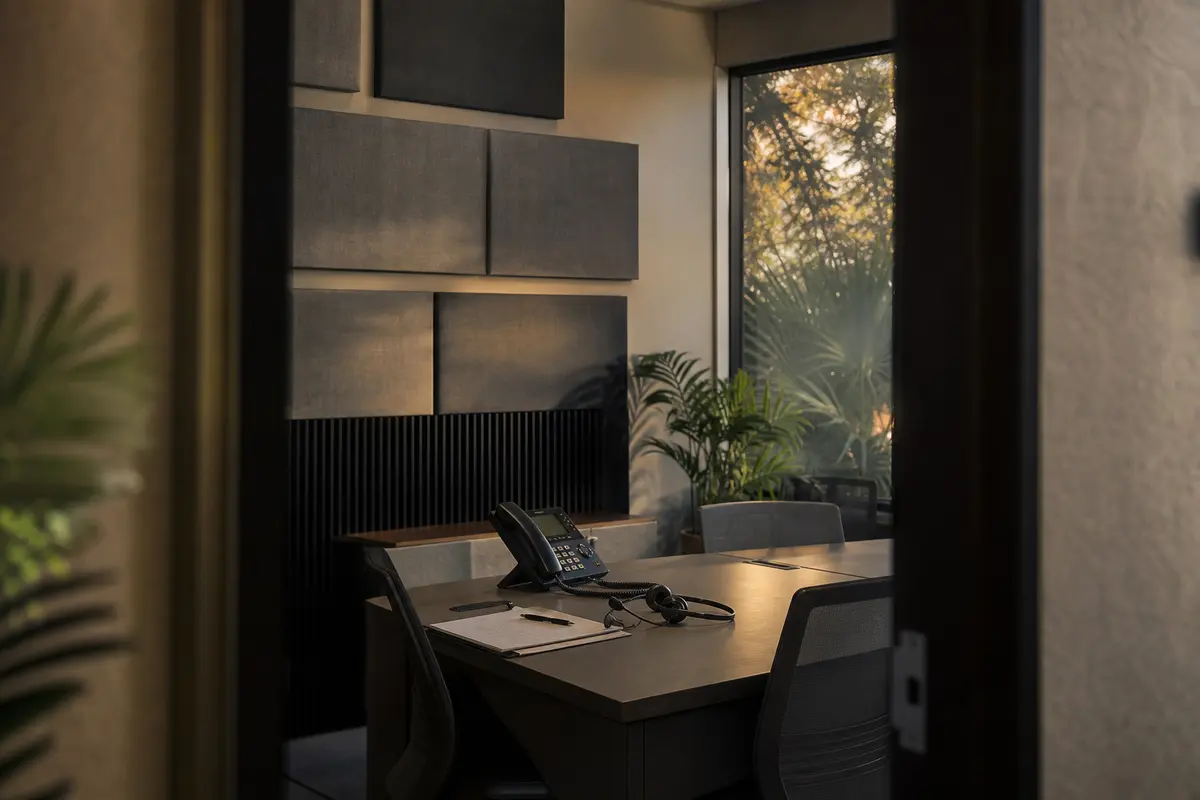
Editorial intake planning scene for AI Answering in Wilkes-Barre, Pennsylvania

Local analysis

For a law firm serving Wilkes-Barre and Luzerne County, the decision is not whether every caller represents a case. It is whether your firm has a clear, reviewable response path when a caller reaches the team after hours, during overflow or when the office is closed.

Use four decisions to evaluate AI Answering for a Wilkes-Barre practice: coverage, capture, control and review. Coverage asks when the system should answer. Capture asks what the caller and firm need recorded. Control assigns ownership and escalation. Review establishes how you will judge transcript quality, classification and follow-up. The Census record places Wilkes-Barre in Luzerne County; it does not answer any of those operational questions, so your firm’s call records and policies must do that work.

01

1. Start with the calls your team cannot reliably answer

Wilkes-Barre is recorded by the U.S. Census Bureau as a municipality in Luzerne County, Pennsylvania, with a 2020–2024 ACS 5-year population estimate of 44,423 and a margin of error of 69. That establishes the geographic setting for a Wilkes-Barre service page; it does not establish call demand, legal need, competition or the number of prospective clients. Your firm should therefore begin with its own call records rather than treating population as a forecast. Review unanswered calls, after-hours calls, busy-line events, holidays and calls routed to voicemail. Bosseo’s public AI Answering page describes coverage for nights, weekends, holidays and overflow, with the firm’s team receiving the call first and the AI stepping in after 20 seconds without an answer.

Recommended approach

Ask Bosseo to map your existing phone routing to the specific situations in which the AI would act as a safety net. Decide which calls should remain with your team, which unanswered calls should be covered, and who reviews the resulting summaries.

02

2. Define what a useful intake conversation must capture

A greeting alone does not give an attorney enough context for a callback. Bosseo describes AI Answering as guiding the caller through the situation and capturing case type, timeline and contact details. Its public page also describes a full transcript, case summary and caller information after the call. Those capabilities make the intake design a practical buying question: what information does your firm need before deciding who calls back and how quickly? Practice areas, incident dates, opposing parties, deadlines and preferred callback details may matter differently by firm and matter type. Do not assume one script fits every department.

Recommended approach

Create a firm-approved intake review for each practice area you want covered. Mark every field as required, optional or escalation-only, and confirm that the wording gathers information without presenting the system as a lawyer or promising an outcome.

03

3. Set ownership and escalation before the first live call

The product page describes classification into Potential New Client, Current Client or Other and says summaries can be delivered to an inbox or case-management system. That classification can help organize attention, but it does not replace your firm’s judgment about conflicts, emergencies, deadlines or representation status. A Wilkes-Barre firm serving callers in Luzerne County may have different internal owners for new matters, existing clients and non-intake calls. The geography identifies the service area; it does not determine your staffing model or urgency rules.

Recommended approach

Name an owner for each call category and document what happens after a summary arrives. Review who handles urgent inquiries, current-client messages, wrong numbers, referral requests and calls outside your practice areas. Confirm what the system should say when the firm cannot provide legal advice or accept a matter.

04

4. Use simultaneous-call handling as a question to validate

Bosseo’s public page states that the AI Phone System can handle up to 20 simultaneous calls. That is a stated product capability, not evidence that your firm needs that capacity or that every call will be a viable matter. Your own records should show whether unanswered calls cluster during a particular time, campaign or event. A firm in Wilkes-Barre should evaluate its actual phone configuration, forwarding behavior and any existing answering process before relying on a capacity claim.

Recommended approach

Ask for a review of how simultaneous calls would be routed, recorded and surfaced to your team. Compare the proposed setup with your observed peak periods and decide what constitutes a busy-line event worth monitoring.

05

5. Treat transcripts and summaries as operational records

Bosseo describes word-for-word transcripts, case summaries and caller information delivered to an inbox or case-management system. The usefulness of that output depends on access, review and retention decisions at your firm. A transcript is not a legal assessment, conflict check or substitute for an attorney’s review. Before adopting the service, your firm should determine who can access call information, where it is stored, how it enters the case workflow and what should happen when a caller provides incomplete or sensitive information.

Recommended approach

Request a clear explanation of the proposed delivery destination and review the firm’s confidentiality, retention, access and conflict-check practices with appropriate counsel or compliance personnel. Confirm which information is operationally necessary and which should not be collected through the answering flow.

06

6. Measure response quality without inventing business results

The Bosseo page describes automatic classification, case-type tagging and an Intake Coach that analyzes calls and provides feedback on missed questions, tone and lost conversions. These are measurement and coaching capabilities described by Bosseo; they are not a promise of more cases, revenue or signed matters. Google states that automation does not guarantee crawling, indexing or search visibility, which is separate from phone-answering performance. For this service, useful measures are operational: answer-path status, completeness of summaries, correct classification, callback ownership and review time.

Recommended approach

Agree in advance on the records your firm will review and the questions that determine whether the service is useful. Separate measured call handling from later business outcomes, and avoid treating population, rankings or a single caller story as proof of performance.

Implementation

Related Bosseo service handoffs

AI Answering addresses the response path for phone calls. Other Bosseo offerings may be relevant when your firm is reviewing adjacent parts of intake and measurement; each should be evaluated for its own scope.

  1. 01Step 1: Inventory the current phone experience Review a defined period of call records and note unanswered calls, voicemail transfers, after-hours calls, holidays, busy periods and calls that reach the wrong person. Keep this assessment separate from assumptions based on Wilkes-Barre’s population or from claims about legal demand.
  2. 02Step 2: Choose the coverage boundary Decide which practice areas, hours and call categories should be considered. Confirm whether your team should receive every first ring and when the AI should act as the backstop. Ask how the proposed routing preserves your existing number and phone behavior before treating that as part of the implementation.
  3. 03Step 3: Approve the intake and escalation rules Review the questions, caller disclosures, classification labels, urgency handling and ownership rules. Include a plan for current clients, prospective clients, nonlegal inquiries and matters the firm does not handle.
  4. 04Step 4: Review records and coaching Set a recurring review of transcripts, summaries, classifications and intake feedback. Compare the records with your standards for completeness, correct routing and timely ownership. Do not convert operational observations into unsupported claims about cases, revenue or firm growth.

Questions

AI Answering in Wilkes-Barre

Does AI Answering replace a law firm’s front desk?+

Bosseo describes it as a backstop. The public product page says the firm’s team receives the first ring and the AI steps in when nobody answers within 20 seconds. Confirm the proposed routing for your phone system before making a purchase decision.

What information does the system capture?+

Bosseo says the caller is guided through the situation and that the system captures case details, including case type, timeline and contact information. Your firm should review and approve the exact intake fields for its practice areas.

What does the firm receive after a call?+

Bosseo describes a full transcript, a case summary and caller information delivered to an inbox or case-management system. Ask how delivery, access, retention and review would work for your firm.

Can the system distinguish new inquiries from current-client calls?+

Bosseo says each call is classified as Potential New Client, Current Client or Other. Classification should support your workflow, but your team remains responsible for deciding urgency, conflicts, representation status and next action.

How many calls can it handle at once?+

Bosseo’s public page states that the system handles up to 20 simultaneous calls. That stated capability is not a forecast of your call volume or a conclusion that your firm needs that capacity. Compare it with your phone records and proposed routing.

How should a firm evaluate whether it is working?+

Review whether calls follow the intended path, summaries contain the required information, classifications are useful, ownership is clear and callbacks are handled according to firm policy. Keep those operational measures separate from unsupported claims about leads, signed matters or revenue.

Next step

Review your Wilkes-Barre call response with Bosseo

Book a consultation through calendar.bosseo.com to examine your firm’s unanswered-call paths, intake requirements, ownership rules and review questions. Bring your current phone-routing details and the standards your team uses to decide what happens next. The consultation is the place to determine whether Bosseo AI Answering fits your firm; no local client, performance or business-result claim is implied.

Book an AI Answering consultation ↗
Sources and scope