Skip to content

Butner / North Carolina

Automation for Butner law firms.

For a law firm serving Butner and Granville County, the practical automation question is not whether every inquiry should follow one rigid path. It is whether each inquiry reaches the appropriate next action with the right information, ownership and follow-up. Bosseo Automation is designed to connect a first inquiry to a ready-to-work file, reducing manual movement between intake, CRM and case-management systems.

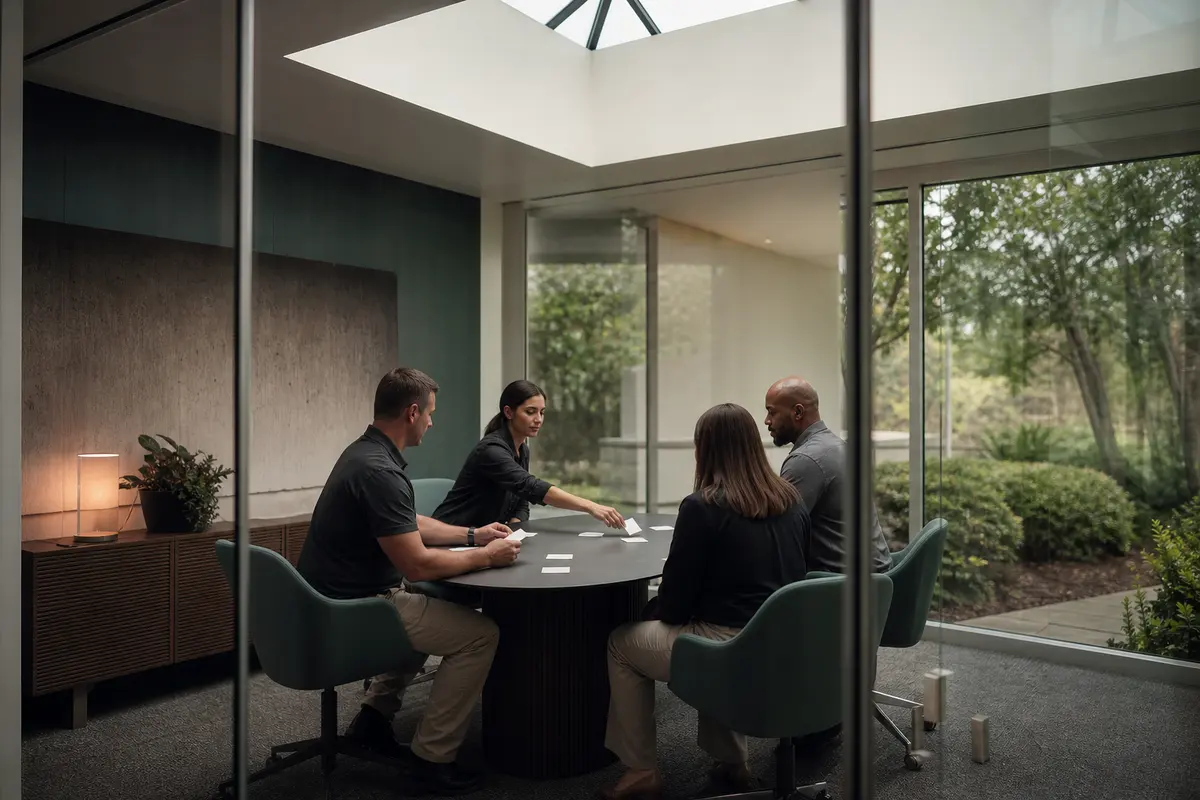
Editorial intake planning scene for Automation in Butner, North Carolina

Local analysis

A practical Automation review for Butner firms

Use this decision framework to determine whether Automation addresses an actual operational gap in your Butner practice. The population estimate for Butner supplies geographic context, not a forecast. The stronger evidence is your own record of inquiry sources, response ownership, duplicated entry, missed tasks and incomplete handoffs.

01

Start with the Butner service area, not an assumed lead forecast

The Census records Butner as a municipality in Granville County. Its 2020–2024 ACS 5-year population estimate is 8,065, with a margin of error of 46. That is useful for defining the local context of a Butner-focused service page and consultation. It cannot tell you how many people will contact your firm, which matters they may have, whether they prefer calls or forms, or how much staffing automation requires. Those are operational questions to answer from your own intake history and service plan.

Recommended approach

Use Butner and Granville County to define the geography you want to discuss with Bosseo. Then bring actual examples of how inquiries arrive, where they wait, and which person or system should own the next action. Do not use population as a proxy for demand or performance.

02

Map every first inquiry to a defined next action

Bosseo describes Automation as a connection between website, CRM and case-management workflows. Its public product page identifies form, call, chat and video intake as possible capture points, followed by logging, tagging, routing and follow-up. For your firm, the important decision is what should happen after each type of inquiry. A prospective client who submits a form may need a consultation invitation; a call may require a task; a matter outside your scope may need a different disposition. Automation should reflect those decisions rather than conceal them.

Recommended approach

List each intake source serving your Butner practice and assign a next action, owner and escalation rule. Ask Bosseo to review where information currently stops: an inbox, an unassigned CRM record, a calendar gap or a case-management handoff.

03

Reduce re-entry without replacing the tools your team uses

Bosseo’s public page says its Automation service connects existing CRM and case-management platforms rather than requiring firms to replace them. It names Clio, MyCase, Filevine, PracticePanther, Smokeball, Lawmatics, HighLevel, Zapier and APIs as examples of supported connection paths. The exact approach depends on your current systems and their ability to receive data. The product’s stated aim is to let data entered once appear where it belongs, instead of being copied manually between systems.

Recommended approach

Bring your current CRM, case-management platform, website intake tools and calendar process to the consultation. Ask which fields, notes, case-type labels and consent records can move between systems, what remains manual, and how exceptions are handled.

04

Make routing and escalation explicit for legal intake

The product page describes routing and task assignment, including a task, deadline and urgency rules. It also distinguishes automated movement from human judgment: staff can step into a conversation, while automation handles logging, routing, reminders and follow-up. That distinction matters for a law firm. Automation can organize the handoff, but your firm must decide who evaluates fit, urgency, conflicts, scope and the appropriate legal response.

Recommended approach

Define routing rules by matter type, geographic service decision, urgency and staff responsibility. Identify cases that require immediate human review and cases that should stop or escalate rather than continue through an ordinary follow-up sequence. Ask Bosseo to show how staff can take over when judgment is required.

05

Design follow-up around your voice and matter types

Bosseo states that follow-up sequences can be written for a firm and its case types, with timing, wording and channel adjusted with the firm. Its public page describes instant text-back, scheduled email sequences, reminders and consultation booking. It also says sequences can stop when a lead replies or books. These capabilities do not establish that a particular sequence will produce a consultation or signed matter. They provide a structure for deciding what communication is appropriate after an inquiry.

Recommended approach

Separate the messages and stop conditions for each practice area you serve. Review tone, timing, opt-out handling, human takeover and the point at which follow-up ends. Use your own records to decide which response-time and booking measures matter; do not adopt sample figures as expected results.

06

Measure the handoff, not just the first contact

Bosseo’s product page says its automation records touches such as when a lead arrived, when a text was sent, who received a task and when a consultation was booked. It also presents attribution and an ROI Dashboard as ways to view the journey from marketing to matter. Those tools can support review of the path, but automation does not guarantee crawling, indexing or search visibility, and the available product text does not establish a future number of leads, cases or revenue.

Recommended approach

Choose a small set of operational measures before implementation: receipt time, assignment time, follow-up status, booking status and handoff completeness. Decide who reviews exceptions and how often. Treat any later performance assessment as a comparison with your own baseline, not a guaranteed outcome.

Implementation

What to bring to a Bosseo Automation consultation

A useful consultation starts with your real workflow, not an assumed local market outcome. Bosseo can review the path from first contact to next action and identify which parts may be connected, routed or measured.

  1. 011. Inventory the current path Record every way a prospective client can contact the firm about a Butner or Granville County matter. Note where each inquiry lands, how it is identified, who checks it, and when the firm considers the response complete. Include after-hours handling and manual work that occurs between systems.
  2. 022. Decide the rules before connecting systems Choose matter labels, responsible roles, urgency conditions, escalation points, follow-up channels, stop conditions and consultation-booking rules. Keep legal judgment with the appropriate person; use automation to make the decision visible and repeatable.
  3. 033. Confirm the technical scope Review your website, CRM, case-management platform and calendar with Bosseo. Confirm which records and fields can move, whether a direct connection, Zapier or an API is appropriate, what cannot be transferred, and how staff will handle exceptions.
  4. 044. Review operation against your baseline After the workflow is in use, examine receipt, assignment, follow-up, booking and handoff records against your own prior process. Look for missing fields, incorrect routing, unwanted messages and overdue tasks. Adjust the rules when your practice, matter mix or systems change.

Questions

Automation in Butner

Does Bosseo Automation replace our CRM or case-management software?+

Bosseo’s public Automation page says it connects the systems a firm already uses rather than replacing them. Bring your exact software stack to the consultation so the available connection path and limits can be confirmed.

What types of intake can enter the workflow?+

Bosseo describes form, call, chat and video intake as possible capture points. The appropriate path for your firm depends on the tools you use and the information you want to collect.

Can our staff intervene in an automated conversation?+

Yes. Bosseo’s public product text describes automation as handling logging, routing, reminders and follow-up while humans handle judgment. Ask how takeover, escalation and ownership will work in your specific workflow.

Can follow-up differ by practice area?+

Bosseo says sequences can be written for a firm and its case types, with timing, wording and channel adjusted with the firm. You should decide which messages, stop conditions and review points are appropriate for each matter type.

What should we measure before deciding whether automation is working?+

Establish your own baseline for receipt time, assignment, follow-up status, consultation booking and handoff completeness. Bosseo’s public page describes tracking these types of events, but it does not guarantee a particular number of leads, cases or revenue.

Will automation guarantee search visibility or new legal matters?+

No guarantee should be assumed. Automation organizes inquiry and follow-up workflows; it does not establish future demand or matter volume. Google also states that automated or scaled content needs original value, accuracy and relevance, and that automation does not guarantee crawling, indexing or search visibility.

Next step

Review your Butner intake handoffs with Bosseo

Book a consultation to walk through how a Butner or Granville County inquiry enters your firm, where it should be routed, what follow-up is appropriate and which systems need to exchange information. The discussion can help you decide whether Bosseo Automation fits your current workflow and what should remain under human review.

Book a Bosseo Automation consultation ↗
Sources and scope