Skip to content

Sullivan / New York

AI Answering for Sullivan law firms.

A caller who reaches voicemail may not explain why they called or try again. Bosseo AI Answering is designed to give that caller a clear next step when your team cannot answer. It can answer after an unanswered ring, capture case details and contact information, classify the conversation, and send a transcript and summary to your firm. For a law firm serving Sullivan town in Madison County, New York, the important question is not whether a population estimate proves phone demand. It does not. The useful question is whether your current response path gives each caller an appropriate route to a person, a callback or another instruction.

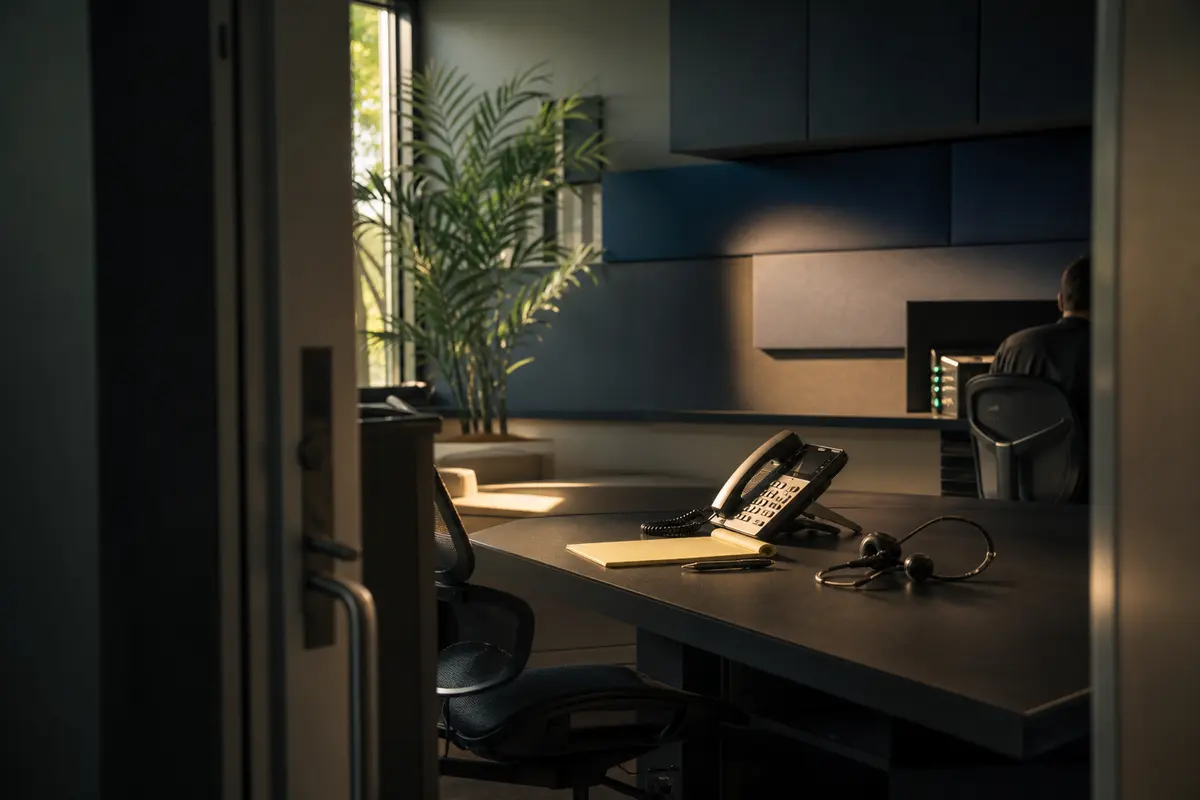
Editorial intake planning scene for AI Answering in Sullivan, New York

Local analysis

Evaluate AI Answering against your actual phone coverage, practice areas, escalation rules, accessibility requirements and follow-up ownership. Sullivan town is recorded in the 2020–2024 ACS 5-year data with an estimated population of 14,690 and a margin of error of 24, but that figure does not establish call volume, legal need, language preference, competition or revenue.

A practical decision framework is to test five questions: coverage, fit, ownership, record handling and evidence. Coverage asks where your current phone path fails. Fit asks whether the approved questions match your practice. Ownership asks who acts on each classification. Record handling asks where transcripts and summaries go and who can access them. Evidence asks how you will distinguish answered calls from useful follow-up and actual matter decisions. Sullivan’s 2020–2024 ACS estimate provides municipal context only; it should not be used to forecast demand or justify a result.

01

1. Start with the calls your team cannot answer

Bosseo’s public AI Answering description says calls go to the firm’s team first, with the AI stepping in when nobody answers within 20 seconds. It also describes coverage for nights, weekends, holidays and overflow, rather than presenting the system as a replacement for the front desk. That distinction matters for a Sullivan practice deciding whether the real gap is after-hours coverage, a busy line, lunch-period overflow or an unanswered call during ordinary office time. The Sullivan population estimate is local context, not proof that any of those gaps exist. Review your own call records and phone rules before deciding where a backstop would be useful.

Recommended approach

List every condition that currently sends a caller to voicemail or a busy signal. Decide whether the AI should answer only unanswered calls, and define which calls must reach a person immediately. Ask Bosseo to demonstrate the proposed routing using your firm’s actual hours and escalation choices.

02

2. Make qualification fit your practice

The public product page says AI Answering can guide callers through their situation, capture case type, timeline and contact details, and classify calls as Potential New Client, Current Client or Other. It also describes case-type tagging. Those capabilities can make a callback more useful, but a label is not a legal evaluation and a summary is not a substitute for attorney judgment. A firm serving Sullivan and Madison County should decide which facts are necessary for an initial review and which questions could confuse, discourage or overstate what the firm can do.

Recommended approach

Prepare a practice-area intake outline with required facts, prohibited advice, conflicts-related boundaries and a clear instruction for callers whose matter is outside your scope. Review whether the proposed questions work for local residents, people calling from elsewhere and existing clients without assuming any group’s needs.

03

3. Assign urgency and ownership before launch

Bosseo says each conversation produces a transcript, case summary and caller information, with a classification that helps distinguish potential new clients from current clients and other calls. Its public page also describes urgent matters being surfaced in the summary. The operational decision remains yours: who reviews an urgent call, who handles a current-client issue, and what happens when the responsible person is unavailable. Geographic service boundaries should be explicit. Sullivan is a town in Madison County; that relationship does not establish that every caller is located there or that every matter belongs with your firm.

Recommended approach

Create an ownership table for new inquiries, current-client calls, emergencies, records requests, wrong numbers and out-of-area matters. Set a human review path for any urgent or uncertain summary, and test whether the information delivered is sufficient for the assigned person to act without guessing.

04

4. Treat transcripts and summaries as working records

The public AI Answering page describes word-for-word transcripts, case summaries and caller information delivered to an inbox or case-management system. It also describes automatic delivery of caller details, transcripts and tags into a CRM or case-management system. Before relying on that workflow, your firm should examine where records will appear, who can access them, how they will be reviewed and how they fit with existing retention and confidentiality practices. Bosseo’s page states that recordings, transcripts and summaries are delivered to the firm and are not shared, sold or used for anything else; your consultation should still address the exact operating arrangement for your firm.

Recommended approach

Map the path from call to review, including access permissions, conflict screening, correction of inaccurate details and removal or retention decisions. Ask to see the transcript and summary format and confirm which destination your firm would use.

05

5. Check accessibility and caller experience

A response path is only useful if callers can understand what happens next. Bosseo describes a professional greeting and guided questions, but the public page does not establish your firm’s preferred voice, accessibility configuration, supported languages or suitability for every caller. Do not infer language demand or accessibility requirements from Sullivan’s population estimate. Instead, identify the ways your actual callers communicate and the alternatives your firm must provide when an automated conversation is not appropriate.

Recommended approach

Ask Bosseo to review greeting language, pacing, transfer or callback instructions, accommodation requests and escalation for callers who cannot complete the standard flow. Listen for whether the experience clearly distinguishes general information from legal advice and whether callers know what happens after they finish.

06

6. Measure response quality, not just answered calls

Bosseo describes call classifications, case-type tags and an ROI Dashboard connection for phone traffic. Those capabilities may support review of what happens after calls are answered, but answering a call does not prove that a matter is qualified, accepted or retained. Google’s guidance says automated content does not guarantee crawling, indexing or search visibility; that principle also supports a careful approach here: a system capability is not a performance result. Your firm should decide which operational measures matter before interpreting any dashboard.

Recommended approach

Choose measures such as answer coverage, classification accuracy, summary completeness, callback ownership, response timeliness and dispositions. Compare records over a defined period only after agreeing on definitions. Do not use Sullivan’s population as a proxy for expected calls, leads, cases or revenue.

Implementation

Review AI Answering for your Sullivan practice

Use a consultation to walk through your actual phone rules, service boundaries and intake responsibilities. Bosseo offers marketing, intake, automation, measurement, hosting and custom software services for law firms. Ask specifically which AI Answering configuration, delivery destination and review arrangements fit your firm.

  1. 011. Document your current phone path Record when calls ring the team, what happens when every line is occupied, how after-hours calls are handled and who owns the first review. Use your own records rather than estimating call volume from Sullivan’s population.
  2. 022. Define the approved intake boundary Identify practice areas, service geography, current-client routes, urgent situations and questions that require a human response. Separate information gathering from legal advice.
  3. 033. Review the proposed outputs Ask Bosseo to show how transcripts, summaries, caller information, classifications and tags would reach your chosen inbox or case-management destination. Confirm access and ownership.
  4. 044. Agree on review criteria Decide how your firm will assess answer coverage, classification accuracy, summary usefulness, callback responsibility and follow-up. Review the arrangement with the people who will use it.

Questions

AI Answering in Sullivan

Is AI Answering intended to replace our front desk?+

Bosseo’s public description presents it as a backstop. Calls go to your team first, and the AI is described as stepping in when nobody answers within 20 seconds. Confirm the routing behavior and exceptions that would apply to your phone system.

What information can it collect?+

Bosseo says the system can guide callers through their situation and capture case type, timeline, contact details and other case information. Your firm should approve the questions and determine what requires human handling.

What do we receive after a call?+

The public page describes a full transcript, case summary and caller information delivered to an inbox or case-management system. Ask Bosseo to show the format and confirm the destination available for your firm.

Can it distinguish new inquiries from current clients?+

Bosseo describes classifications including Potential New Client, Current Client and Other. Treat those classifications as routing aids, then have your team review the record and decide what action is appropriate.

How should a Sullivan firm define its service area?+

State the locations and matter types your firm actually serves. Sullivan town is recorded as being in Madison County, but that geographic fact does not define your firm’s service boundary or establish that every caller is from the town.

What should we ask before choosing the service?+

Ask about routing, intake questions, escalation, transcript delivery, access, retention, accessibility, call classification and measurement. Also ask which capabilities are included in the proposed arrangement rather than assuming that every public-page description applies without configuration.

Next step

See whether AI Answering fits your Sullivan law firm

Book a consultation with Bosseo to review your phone path, approved intake questions, escalation rules and record-delivery needs. Bring your practice areas and service boundaries so the discussion stays specific to your firm. Booking is available through calendar.bosseo.com.

Book an AI Answering consultation ↗
Sources and scope