Skip to content

South Valley Stream / New York

Custom Software for South Valley Stream law firms.

A law firm serving South Valley Stream may already have software for intake, case management, billing, documents and reporting. The problem is often the work between those systems: retyping information, checking shared inboxes, answering routine status questions or maintaining a spreadsheet that has become essential. Bosseo’s Custom Software service is intended for firms that need a tool built around the way their firm works rather than another generic platform.

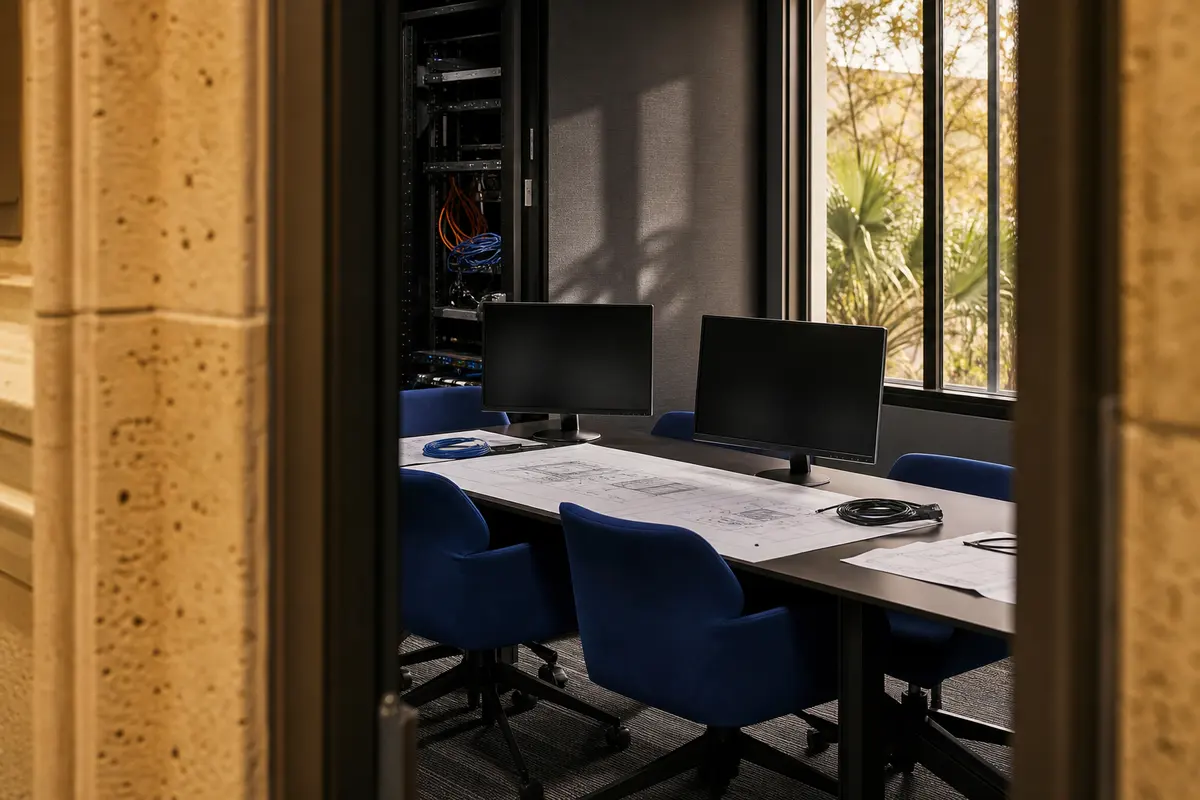
Editorial platform planning scene for Custom Software in South Valley Stream, New York

Local analysis

A practical Custom Software review for South Valley Stream firms

A practical decision framework for a South Valley Stream law firm is to assess Fit, Data, Control and Proof. Fit asks whether the problem is specific enough to warrant custom work. Data asks where information comes from and where it should go. Control asks who may access, change and recover it. Proof asks how the firm will test the working tool against agreed acceptance criteria. The South Valley Stream location identifies the service area, while the process review determines whether a build makes operational sense.

01

Start with the firm’s actual bottleneck

South Valley Stream is recorded by the U.S. Census Bureau as a census-designated place in Nassau County, New York, with a 2020–2024 ACS five-year population estimate of 6,512 and a margin of error of 785. That geographic fact helps define the service area; it does not establish legal demand, competition, lead volume or revenue. For your firm, the more useful starting point is operational: identify the task that repeatedly slows intake, case updates, referrals or internal reporting. Bosseo describes custom software for tools such as client portals, intake tools and internal dashboards, and says the work begins with the firm describing its bottleneck in plain English.

Recommended approach

Bring one process that staff can describe concretely: what starts it, who touches it, where information is entered, and what happens when a step is missed. A small, well-defined problem may be a better first candidate than a request to replace every system at once.

02

Define the data before discussing the interface

A useful custom tool depends on clear definitions. Decide what counts as a new inquiry, a qualified consultation, an open matter, a referral, a status update or a completed task. Then identify the authoritative record for each field and the permitted direction of any data movement. Bosseo’s public Custom Software page says its tools can connect with a firm’s website, intake and dashboard, and describes integrations with CRM, case-management and marketing systems. The page does not establish which systems your firm uses or which specific connection is available.

Recommended approach

Ask Bosseo to map each required field, its source, its destination, the person or role allowed to change it, and the consequence of a failed transfer. Treat any proposed integration as a scope question until the relevant systems and access requirements have been reviewed.

03

Review permissions and confidentiality boundaries

Legal work requires disciplined access decisions. A client-facing status portal, an internal dashboard and a referral tracker should not automatically expose the same information. Before selecting a build, separate public information, staff-only information, client-specific information and especially restricted matter data. Bosseo’s page describes client portals, internal dashboards and hosted custom tools, but it does not publish a firm-specific permissions model or make a representation about your professional obligations.

Recommended approach

Create a role-and-record review for the proposed tool. Specify who may view, create, edit, export or delete each category of information. Ask how access will be removed when a staff member changes role, and how the firm will review permissions as its workflow changes. Obtain any legal, ethical or security review your firm requires before approving the design.

04

Make reliability and recovery part of the scope

A tool used for intake or matter operations must have an answer for interruption, incorrect data and accidental deletion. Bosseo states that it hosts and maintains the custom software it builds on dedicated servers and describes monitoring and backups in its public page text. Those statements describe Bosseo’s stated service model; they do not establish a particular uptime level, recovery time, recovery point, local infrastructure presence or result for your firm.

Recommended approach

Ask for the operating assumptions that apply to the proposed build: what is monitored, what is backed up, how restoration is reviewed, who can authorize a correction, and what staff should do if the tool is unavailable. Put agreed reliability and recovery requirements into the scope rather than treating them as implied features.

05

Set acceptance criteria before the build is approved

Custom software should be judged by the work it is meant to improve, not by the number of screens it contains. Bosseo says its process includes scoped design and build, an early working version, staff onboarding, hosting, maintenance and iteration after launch. The public page does not provide a universal specification for every project, so your firm should define what “working” means for its own process.

Recommended approach

Write acceptance criteria in observable terms. For example, an illustrative criterion might require a designated staff member to enter an inquiry once, see the required fields in the approved location, and receive the agreed follow-up task. The example is a planning pattern, not a promised feature or result. Include permissions, error handling, records of changes and an agreed review path.

06

Choose custom software only where it earns its complexity

Bosseo’s public guidance distinguishes a custom build from buying an off-the-shelf product that already matches the problem. It positions custom work for firm-specific bottlenecks such as manual re-entry, status requests, referral tracking and intake workflows. A South Valley Stream service area does not by itself justify a custom application. The decision should rest on the process, the cost of continuing it, the limitations of available tools and the firm’s willingness to maintain a defined workflow.

Recommended approach

Compare three paths: keep the current process, configure an existing product, or commission a focused custom tool. Record what each path requires from staff, what data it touches, what risks remain and how success will be accepted. If an existing product solves the problem without harmful workarounds, custom software may not be the right choice.

Implementation

Bring one stubborn process to the consultation

Describe the task your team still handles manually. Bosseo’s public page says the conversation can begin without a formal requirements document and that scope and investment are defined on the call. Use the meeting to test the problem, not to assume that custom software is automatically the answer.

  1. 011. Describe the process in plain language Bring the task that staff repeat or monitor manually. Explain what happens today, where the information lives, who is responsible for the next step and what exception causes the process to break.
  2. 022. Map data, access and dependencies Identify the systems involved and the fields that must move between them. Review ownership, permissions, retention, correction procedures and any dependency that could prevent the proposed tool from working as intended.
  3. 033. Agree on scope and acceptance Separate essential behavior from later improvements. Define the records, roles, integrations, recovery expectations and tests that must be satisfied. Ask for the investment and operating terms that apply to the defined scope.
  4. 044. Review the working version and operating plan Bosseo says clients see a working version early and can refine the build with feedback. Use that review to test the workflow with the intended staff, confirm the agreed acceptance criteria and discuss onboarding, hosting, maintenance and future changes.

Questions

Custom Software in South Valley Stream

What kinds of custom software can Bosseo build for a law firm?+

Bosseo’s public Custom Software page describes client portals, intake tools, internal dashboards, speed-to-lead tools, referral trackers, document collection tools, calculators and connections between existing systems. Whether a particular build is suitable depends on your workflow and technical environment.

Do we need a requirements document before speaking with Bosseo?+

Bosseo says describing the operational annoyance in plain English is enough to begin the conversation. You can improve the discussion by bringing the current steps, records, roles and exceptions, but the page does not require a specific document.

Can the software connect to our current systems?+

Bosseo describes custom tools connected to a firm’s website, intake and dashboard, and discusses CRM, case-management and marketing connections. Your actual systems, access rights and technical requirements must be reviewed before any integration is treated as part of scope.

Who hosts and maintains a custom tool?+

Bosseo states that it hosts and maintains the custom software it builds on dedicated servers and describes updates, fixes and improvements as part of the relationship. Confirm the precise hosting, backup, monitoring, security and support terms for your proposed build.

How should our firm evaluate reliability and recovery?+

Ask what is monitored, what is backed up, how restoration is tested or reviewed, who can correct records and what staff should do during an interruption. Do not assume a particular uptime or recovery level unless it is expressly agreed for your project.

How do we know whether custom software is worth pursuing?+

Compare continuing the current workflow, configuring an existing product and commissioning a focused build. Consider repeated work, data risk, adoption, dependencies, permissions, maintenance and acceptance criteria. Bosseo’s consultation can help scope the bottleneck, but your firm must decide whether the proposed investment is justified.
Next step

Book a Custom Software review for your firm

Bring the manual step that keeps interrupting your South Valley Stream-serving law firm. Bosseo can review the workflow, discuss the data and permissions involved, and help determine whether a focused custom tool is appropriate. The consultation is the place to clarify integrations, hosting, maintenance, acceptance criteria and the scope of any proposed build.

Book a Demo ↗
Sources and scope