Skip to content

Crawford / New York

AI Answering for Crawford law firms.

A caller in Crawford, New York may reach your firm during office hours, after a missed call, or when your team is already speaking with someone else. Bosseo AI Answering is designed to serve as a safety net: your team gets the first ring, and the system answers when nobody picks up within 20 seconds. It can guide the caller through their situation, capture contact and case details, classify the call, and send a transcript and summary to your inbox or case-management system.

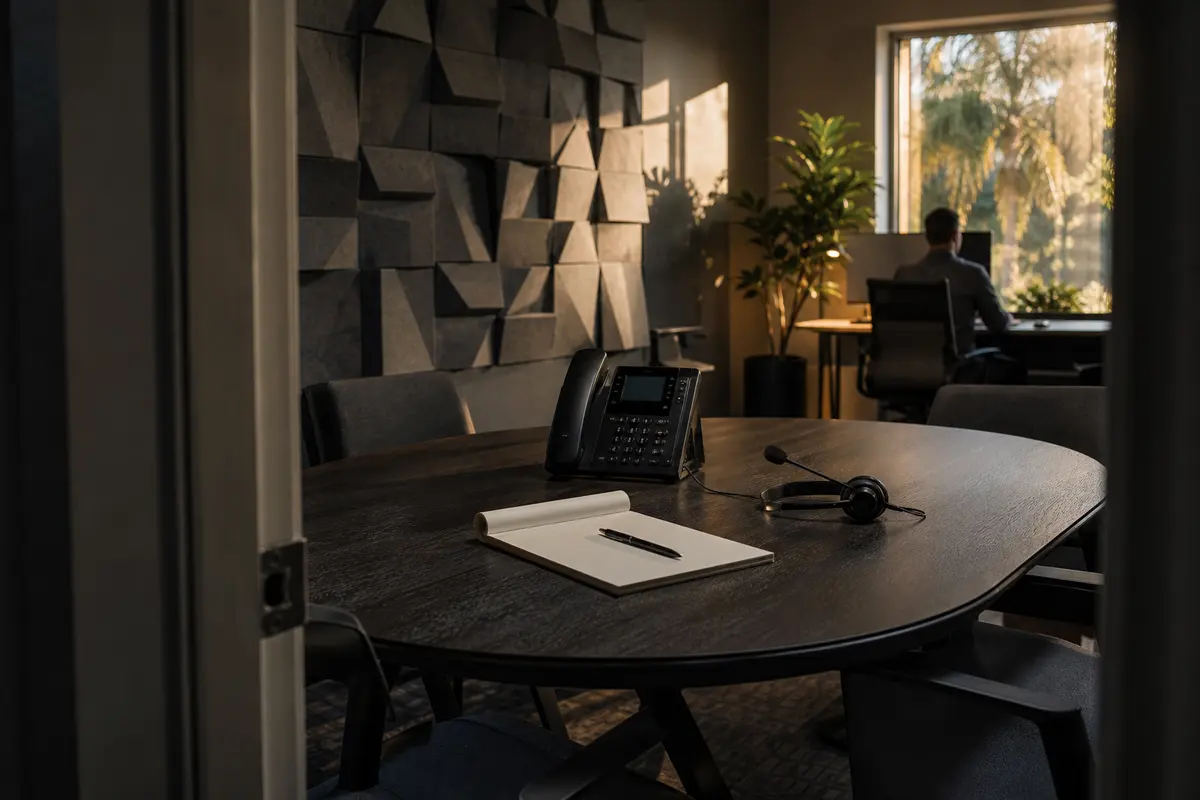
Editorial intake planning scene for AI Answering in Crawford, New York

Local analysis

For a Crawford firm, the decision is not whether every caller represents a case. It is whether your firm has a defined response when a call goes unanswered. Review routing, intake questions, escalation, accessibility and measurement before deciding whether Bosseo fits.

Use this decision framework to evaluate fit on operational facts rather than assumptions about Crawford’s market.

01

1. Start with Crawford’s actual service area

Crawford is a municipal town in Orange County, New York. The 2020–2024 ACS five-year population estimate is 9,088, with a margin of error of 20. That is geographic context, not evidence of call demand, legal need, competition or revenue. Your firm should define which callers it serves before configuring an answering path: Crawford residents, people with matters connected to Orange County, clients elsewhere in New York, or another legally relevant geography. A town-level reference should not silently become a countywide or statewide promise.

Recommended approach

Bring your intake territory and exclusions to the consultation. Decide which locations, matter types and caller relationships should receive a normal intake path, a current-client path, an urgent callback path or a polite decline. Bosseo describes AI Answering as configurable around a firm profile, practice areas, office locations, hours, parking and consultation process; confirm the exact information and routing you want used.

02

2. Make unanswered calls useful, not merely answered

Bosseo’s public product description says calls first ring your team and that the AI steps in when nobody answers within 20 seconds. It also describes 24/7 coverage, including nights, weekends, holidays and overflow, plus handling for up to 20 simultaneous calls. Those are product capabilities stated by Bosseo, not a forecast of how many calls a Crawford firm receives. The practical question is what the system should collect when it answers: the caller’s contact information, case type, timeline and situation, while avoiding questions your firm does not need at that stage.

Recommended approach

Write down the minimum information a lawyer needs for a callback and the information that should wait for a consultation. Review whether the 20-second fallback matches your front-desk workflow. Confirm what callers hear when the team is busy, when the matter is outside your practice, and when the person is an existing client.

03

3. Separate potential new clients from current clients

Bosseo says each call can be classified as Potential New Client, Current Client or Other. It also describes case-type tagging and summaries delivered to an inbox or case-management system. For a firm serving Crawford and Orange County, classification matters because a new inquiry, a status question from an existing client and a non-intake call may require different owners and response times. Classification alone does not decide whether a person is eligible for representation or whether an engagement exists.

Recommended approach

Agree on ownership for each classification before using the service. Specify who reviews potential new-client summaries, who handles current-client messages, and who resolves calls marked Other. Ask how the delivered information appears in your systems and what your staff must still review manually.

04

4. Put urgency and escalation under attorney control

A caller may describe a time-sensitive legal problem, but an answering system is not a substitute for legal judgment. Bosseo says the platform captures case details, produces a summary and classification, and surfaces urgency in the transcript and summary. The firm still needs to determine what counts as urgent, who receives that notice, and what response is appropriate. Population in Crawford does not establish the frequency of urgent calls; it only identifies the town’s recorded size.

Recommended approach

Create a written escalation policy for the matters your firm accepts. Include the information needed to identify urgency, the responsible reviewer, the approved callback route and the situations that require a different instruction. Have counsel review wording for legal, ethical and confidentiality concerns before it is used with callers.

05

5. Make accessibility and caller clarity part of intake

A clear next step is more useful than a long script. Bosseo describes a professional greeting and guided questions intended to capture the caller’s situation and contact details. The public description does not establish supported languages, accessibility certifications or a particular accommodation process, so those should not be assumed. A Crawford firm should also distinguish its local identity from its legal service boundaries: callers need to know whether the firm handles their matter and where the firm serves, not simply that it is associated with the town or Orange County.

Recommended approach

Review the greeting, consent language, practice-area descriptions, office information and callback instructions with your team. Ask Bosseo which accessibility and language options are available for your proposed configuration. Test whether a caller can understand the next step without receiving legal advice from the system.

06

6. Measure response quality without inventing a business case

Bosseo describes transcripts, case summaries, call classification, case-type tagging and an ROI Dashboard elsewhere in its product ecosystem. Those tools may help a firm inspect what happens after a call, but they do not prove that a missed call would have become a signed matter. The public page also includes illustrative calculator inputs and performance language; those figures are not evidence about Crawford. A sound review should distinguish answered calls, usable information, completed callbacks, consultations and retained matters.

Recommended approach

Choose measures your firm can define consistently. Review answer-path status, classification accuracy, summary completeness, callback ownership, time to review and outcomes recorded by your team. Ask what data is available, where it is delivered, how it can be exported or reviewed, and which decisions remain manual.

Implementation

Book an AI Answering review for your firm

A consultation can help you examine your call paths, intake boundaries, ownership rules, escalation choices and measurement questions for Crawford and the areas your firm serves.

  1. 011. Define the boundary List the locations and matter types you accept, including how Crawford and Orange County fit into your service area. Add exclusions and current-client handling.
  2. 022. Approve the caller experience Review the greeting, questions, practical firm information, classification language and callback instructions. Confirm what the system should not say or decide.
  3. 033. Assign review responsibility Name the internal owner for each call category and establish how urgent information is reviewed. Decide where summaries belong and who checks them.
  4. 044. Review evidence after implementation Use available call records and summaries to inspect answer paths, classification, completeness and follow-up. Compare recorded outcomes carefully; do not treat every answered call as a retained matter.

Questions

AI Answering in Crawford

Does AI Answering replace a Crawford firm’s front desk?+

Bosseo describes the AI as a backstop. Calls ring your team first, and the AI answers when nobody picks up within 20 seconds. Confirm the routing behavior and any exceptions for your phone system during consultation.

What happens when the system answers?+

Bosseo says it greets the caller, guides the person through the situation, captures case details and contact information, and provides a transcript and case summary. Your firm should approve the questions and wording before use.

Can it distinguish new inquiries from current clients?+

Bosseo says calls are classified as Potential New Client, Current Client or Other. Classification is an organizational aid; your team still decides how to review the call and what action to take.

How many simultaneous calls does Bosseo describe?+

Bosseo’s public page states that the system can handle up to 20 simultaneous calls. Ask how that capacity applies to your proposed configuration and what callers experience in any exceptional situation.

Where do call details go?+

Bosseo says transcripts, summaries and caller information can be delivered to your inbox or case-management system. Confirm the specific destination, fields, permissions and review responsibilities for your firm.

What should a Crawford firm prepare before booking?+

Prepare your service area, practice areas, office details, hours, consultation process, approved intake questions, urgent-call policy, current-client route and the person responsible for reviewing summaries. Do not assume a local population figure establishes demand or staffing needs.

Next step

See whether AI Answering fits your intake path

Book a consultation with Bosseo to review how your team handles unanswered calls, what information callers should provide, where summaries should go and how your firm can evaluate response quality. Bring your Crawford and Orange County service boundaries so the conversation stays specific to the matters you accept.

Book an AI Answering consultation ↗
Sources and scope