Skip to content

West Freehold / New Jersey

AI Answering for West Freehold law firms.

A caller from West Freehold, Monmouth County, may reach your firm during office hours, after hours, on a weekend or when every line is occupied. The relevant question is not how many people live in the area. The West Freehold CDP has a 2020–2024 ACS 5-year population estimate of 14,883, with a margin of error of 1,152. That figure does not establish call demand, legal need or staffing requirements. It does give your firm a defined local service area for reviewing how unanswered calls are handled. Bosseo AI Answering is designed to give missed calls a clear next step. Your team receives the first ring; if nobody answers within 20 seconds, the system can answer, capture the caller’s information and situation, and send a transcript and summary to your inbox or case-management system. The decision is whether those response paths, classifications, escalation rules and follow-up records fit your firm.

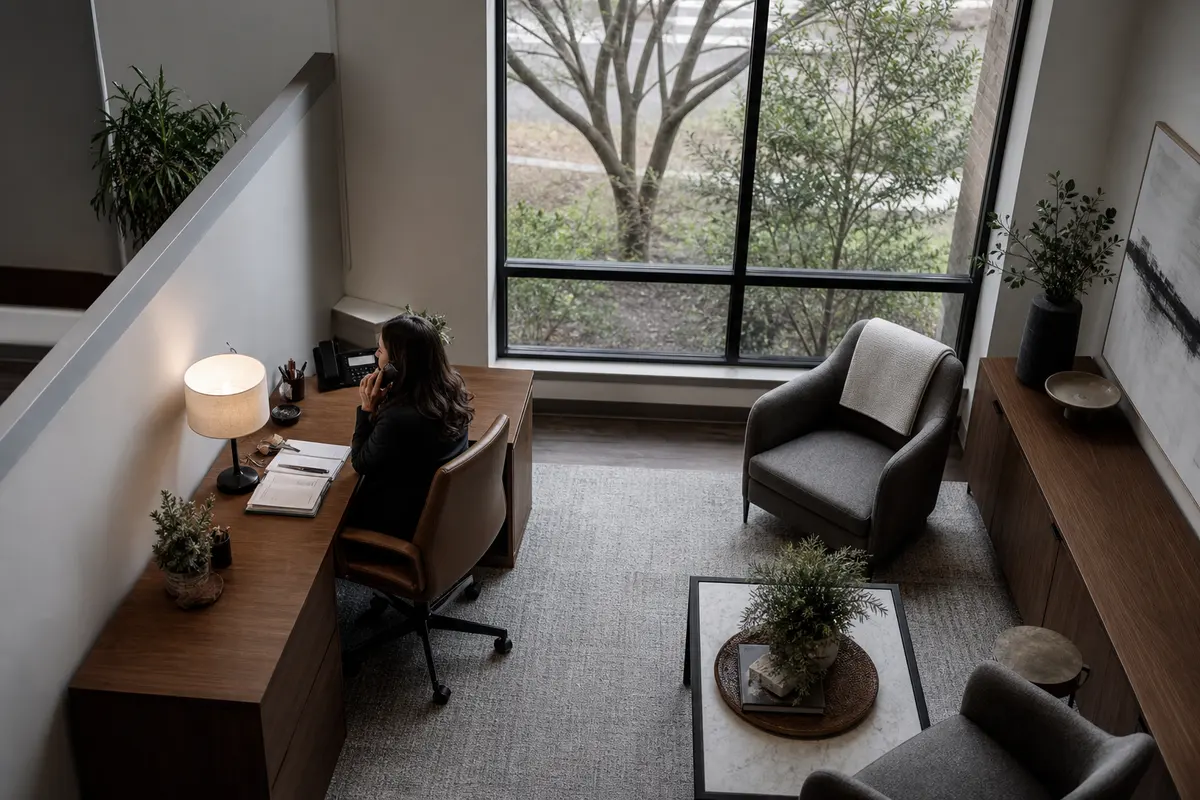
Editorial intake planning scene for AI Answering in West Freehold, New Jersey

Local analysis

Review AI Answering as an intake safety net for West Freehold callers—not as proof of demand or a substitute for deciding which matters your firm accepts. In a consultation, map your existing phone routing, intake questions, ownership and urgent-call response before deciding what should happen when your team cannot answer.

Use four questions to evaluate fit: Can the system answer under the conditions your firm cares about? Can it capture the information your team needs? Can the record reach the right owner and destination? Can you review response quality without making unsupported assumptions about demand or revenue? West Freehold’s geographic definition helps focus the discussion, while the local population estimate should remain context rather than a business forecast.

01

1. Start with West Freehold call coverage, not population assumptions

West Freehold is recorded as a census-designated place in Monmouth County, New Jersey. Its population estimate is useful for defining the place, but it cannot tell you how many people call a law firm, which practice areas they need, or whether your current staff requires additional coverage. A sound evaluation therefore begins with your own call-handling facts: when calls go unanswered, whether overflow reaches voicemail, how quickly someone reviews messages, and which callers need a prompt response. Bosseo describes AI Answering as 24/7 coverage for nights, weekends, holidays and overflow. Your firm should decide whether those periods are genuinely part of the problem before adopting any response path.

Recommended approach

List the hours and conditions in which a West Freehold inquiry could reach voicemail or a busy line. Compare that list with your firm’s preferred callback practice and decide whether the AI should act only after an unanswered ring, during selected periods, or for overflow. Treat the local population as geographic context, not as a forecast.

02

2. Preserve team-first routing and define ownership

Bosseo’s public AI Answering description says each call goes to the firm’s front desk first and the AI steps in when nobody answers within 20 seconds. That arrangement positions the system as a backstop rather than a replacement for your staff. It also creates an ownership question: who reviews the resulting record, who returns a potential-new-client call, and who handles a current client or other caller? Without named responsibility, a complete transcript can still wait in an inbox.

Recommended approach

Document the first-ring destination, the unanswered-call condition, the person or team that receives the summary, and the rule for assigning follow-up. Include coverage for lunch periods, court appearances, weekends and holidays only if those situations match your actual operations. Ask Bosseo to demonstrate the handoff using your preferred ownership model.

03

3. Capture the facts your attorneys need before a callback

The AI Answering page says the system greets callers, captures case type, timeline and contact details, and provides a full transcript, case summary and caller information. It also describes automatic classification as Potential New Client, Current Client or Other, with case-type tagging. Those capabilities can make the first review more consistent, but they do not decide whether your firm should accept a matter or provide legal advice. Your intake design still needs to identify the facts that matter to your practice areas and the questions your team considers essential.

Recommended approach

Prepare a short intake map for the consultation. Separate required contact details from practice-area questions, timing, urgency and the information needed for conflict or attorney review. Decide which answers should trigger a human callback and which callers should be directed to an existing firm process. Do not infer language preferences or legal needs from West Freehold’s population record; ask your firm what accessibility and communication requirements it actually serves.

04

4. Make urgent-call escalation explicit

Bosseo presents transcripts and summaries as available after a call and says urgent potential clients can be surfaced through classification and summary. The public page gives examples involving arrests, accidents and custody disputes, but those examples do not establish your firm’s practice areas or an emergency service commitment. An automated record is not the same as attorney availability, legal advice or guaranteed response time. Your firm must set the boundary between collecting information and escalating a matter to a person.

Recommended approach

Write an escalation table for the matters your firm handles. For each category, specify what the caller is told, who receives the notification, how urgency is marked, and what happens if that person is unavailable. Review disclaimers, after-hours instructions and the firm’s responsibility for monitoring the destination. Ask for a live demonstration of the urgent-call path rather than assuming a classification will fit your policy.

05

5. Decide where transcripts and summaries belong

Bosseo says transcripts, summaries and caller information can be delivered to an inbox or case-management system. The same page describes automatic CRM delivery of caller details, transcripts and tags. That gives you a practical record destination to evaluate, but the correct destination depends on your firm’s systems, permissions and retention choices. The page does not establish that every case-management product or configuration is supported, so compatibility should be confirmed rather than presumed.

Recommended approach

Choose the authoritative location for each record before implementation. Review who can access recordings, transcripts, summaries and contact details; how duplicate inquiries are handled; and how staff know when a record has been reviewed. Ask Bosseo to confirm the specific case-management or CRM destination your firm uses and explain what information is transferred.

06

6. Measure response quality without inventing a business case

Bosseo describes every call as becoming a transcript, summary and classification, and says the system can support coaching through Intake Coach. Those records can help your firm review unanswered calls, missing questions, tone and follow-up. They do not prove that a caller would have hired the firm, that a matter was suitable, or that a particular response created revenue. The West Freehold population estimate likewise cannot be converted into expected calls, leads or cases.

Recommended approach

Select measures tied to controllable work: whether the call was answered, whether required information was captured, whether the record reached the right owner, whether follow-up occurred under your policy, and whether the classification was useful. Review samples with appropriate confidentiality controls. Keep hypothetical revenue calculations separate from observed outcomes and label any internal estimate as illustrative.

Implementation

What to cover in a Bosseo review

Bring your actual phone path and intake decisions to a product-specific conversation. Bosseo’s public product page identifies 24/7 coverage, a 20-second unanswered-call condition, up to 20 simultaneous calls, transcripts, summaries, classifications, case-type tagging and coaching through Intake Coach. Confirm which parts fit your firm’s systems and policies.

  1. 011. Map your current phone path Write down where West Freehold calls go during normal hours, court appearances, lunch, weekends, holidays and busy periods. Mark every point at which a caller can reach voicemail or a busy line.
  2. 022. Set your intake boundaries Choose the questions AI Answering should ask, the practical information it may provide about your firm, and the subjects that must wait for attorney or staff review. Do not let an automated response imply legal advice or acceptance of representation.
  3. 033. Confirm records and responsibility Choose the inbox, CRM or case-management destination after confirming that your specific system is supported. Assign review responsibility and define how staff identify Potential New Client, Current Client and Other records.
  4. 044. Review actual call records Use the available transcript, summary and classification records to examine answer coverage, missing questions, urgency handling and follow-up. Measure observed process performance rather than turning local population into an assumed lead or revenue forecast.

Questions

AI Answering in West Freehold

Does AI Answering replace a West Freehold law firm’s front desk?+

Bosseo describes it as a safety net. Calls go to your team first, and the AI steps in when nobody answers within 20 seconds. Your firm still decides ownership, follow-up and the limits of automated communication.

What does Bosseo say the system captures?+

The public product page says it captures the caller’s situation, case type, timeline and contact details, and provides a transcript, case summary and caller information. Your firm should decide which questions are appropriate for its practice areas.

Can it distinguish new inquiries from existing clients?+

Bosseo says calls are classified as Potential New Client, Current Client or Other. Ask how those classifications will fit your firm’s review and assignment process before relying on them.

Where do the call records go?+

Bosseo says transcripts, summaries and caller information can be delivered to an inbox or case-management system, and its page describes CRM delivery. Confirm the specific destination, permissions and configuration for your firm rather than assuming compatibility.

How should a firm handle urgent calls?+

Create a firm-approved escalation rule that identifies who reviews urgent records, what callers are told, and what happens if that person is unavailable. A transcript or classification does not itself provide legal advice, guarantee attorney availability or establish representation.

What should we bring to a Bosseo consultation?+

Bring your current phone-routing description, practice-area intake questions, ownership assignments, urgent-call policy, preferred record destination and the process used to review voicemail. Also identify which outcomes you want to measure.

Next step

Review your unanswered-call path with Bosseo

Book a consultation to examine how AI Answering would fit your West Freehold law firm’s routing, intake questions, ownership rules and record destination. The discussion can focus on the calls your team cannot answer, the details you need captured and the next step your firm wants each caller to receive.

Book a Bosseo consultation ↗
Sources and scope