Skip to content

Monroe / New Jersey

AI Answering for Monroe law firms.

A caller who reaches voicemail has no clear reason to wait. Bosseo AI Answering gives your Monroe law firm a response path when your team cannot answer: the firm’s people get the first ring, and the AI can step in after 20 seconds, during nights, weekends, holidays and overflow. It captures the caller’s information, produces a transcript and case summary, and classifies the call for follow-up.

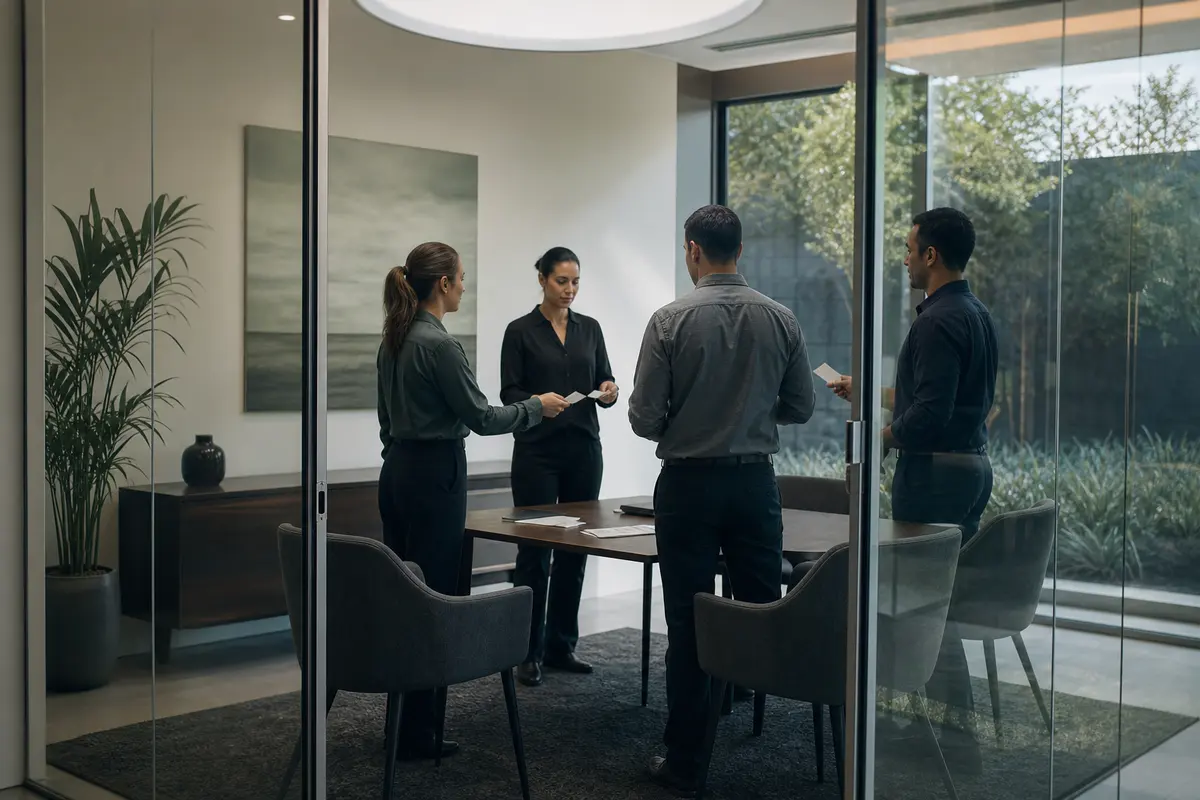
Editorial intake planning scene for AI Answering in Monroe, New Jersey

Local analysis

Evaluate AI Answering as a defined intake backstop—not as a replacement for your team. The important decisions are which calls should escalate, what information must be captured, who owns the callback, how urgency is surfaced, and which measures tell you whether the system is helping.

Use this decision framework to decide whether AI Answering addresses a real intake gap for your firm. Start with the caller’s path, then test operational fit. Monroe township’s recorded relationship to Middlesex County helps define the location served, but it does not tell you how many people will call, what they need or what your firm will earn.

01

1. Design the unanswered-call path around your Monroe practice

Monroe township is recorded in Middlesex County, New Jersey, and the 2020–2024 ACS 5-year population estimate is 49,032, with a margin of error of 28. That establishes the municipality’s geographic scope; it does not establish call demand, legal need, competition or staffing requirements. For your firm, the useful question is narrower: what should happen when an existing caller cannot reach a person? Bosseo’s public AI Answering page describes a team-first route in which calls ring your people first and the AI steps in when nobody answers within 20 seconds.

Recommended approach

Map your current unanswered-call states by office hours, lunch periods, meetings, line-busy conditions, weekends and holidays. Decide which situations should trigger the AI, which callers should receive a human callback, and which matters require an internal escalation rule. Keep Monroe and Middlesex County references accurate wherever your firm describes its service area.

02

2. Make intake questions fit the matters you actually review

Bosseo describes the AI as greeting callers professionally and walking them through their situation, including case type, timeline and contact details. Its public page also describes case-type tagging and classification as Potential New Client, Current Client or Other. Those capabilities make the intake design more important than a generic greeting: the firm must decide which facts are necessary before an attorney or intake team member calls back.

Recommended approach

Prepare a practice-area-specific question set for review during the consultation. Separate information needed to identify the caller and matter from information that should wait for a lawyer. Define what the system should do when a caller cannot answer, asks a question outside the firm profile, or describes an urgent situation. Do not treat an intake summary as legal advice or a substitute for attorney review.

03

3. Give urgency and ownership a clear destination

The Bosseo page says every call receives a transcript, case summary and caller information, with delivery to an inbox or case-management system. It also describes classification and summaries that surface the nature of a call. That can give your team a consistent record, but a record alone does not decide who responds or how quickly.

Recommended approach

Assign an owner for each call category before activation. Your consultation should cover urgent potential clients, current-client issues, non-client calls and matters outside the firm’s stated practice areas. Define the callback sequence, escalation contact and review responsibility. Ask how the proposed routing will fit your existing case-management or inbox workflow rather than assuming that every destination is available in your environment.

04

4. Treat accessibility as a response-path question

The public page describes coverage for nights, weekends, holidays and overflow, as well as a professional greeting and guided conversation. It does not establish the language needs, accessibility preferences or communication patterns of Monroe callers. The township’s population estimate cannot be used to infer those needs.

Recommended approach

Review the caller experience with your own clients and staff. Consider whether the greeting is understandable, whether callers can provide information without being rushed, and what happens when a caller needs a human, has difficulty communicating by phone, or asks for an accommodation. Bring those requirements to the consultation and document which requests the system can and cannot support.

05

5. Use transcripts and coaching to improve human intake

Bosseo presents AI Answering as an answering and coaching platform. Its public page says the system can analyze intake calls, including calls answered by your team, and provide feedback on missed questions, tone and lost conversions. That is a stated product capability; it is not a guarantee that every coaching recommendation will suit your firm or improve signed matters.

Recommended approach

Choose a small set of review questions: Was the caller classified correctly? Were the essential facts captured? Was urgency visible? Did the next owner receive enough context? Review the answers with the people responsible for intake and adjust your approved call handling. Keep attorney judgment in the loop when a conversation involves legal substance or a potential conflict.

06

6. Measure response quality without inventing business results

Bosseo describes transcripts, summaries, case-type tags and delivery to an inbox or case-management system. Those records can support operational review. They do not prove demand, rankings, leads, signed cases or revenue for a Monroe firm. Google’s guidance also states that automation does not guarantee crawling, indexing or search visibility; that guidance is relevant to broader marketing decisions, not evidence of AI Answering performance.

Recommended approach

Agree on measures you can actually observe, such as whether calls were answered, whether summaries arrived, whether classification was usable, whether callbacks had an owner, and whether staff found the information sufficient. Compare results against your own baseline after you have defined the measurement period and exclusions. Do not use Monroe’s population estimate as a proxy for call volume or commercial opportunity.

Implementation

Questions to bring to your Bosseo consultation

A useful consultation should let you examine the phone path, intake boundaries and handoff in the context of your firm. Bosseo identifies the booking destination as calendar.bosseo.com.

  1. 011. Document your current phone path List the numbers, hours, forwarding rules and situations that currently lead to voicemail, a busy signal or delayed review. Include after-hours, holiday and overflow conditions without estimating how often they occur.
  2. 022. Set the firm’s intake boundaries Identify the facts the answering path should collect, the questions it should not answer, and the circumstances that require a human or attorney decision. Confirm how current clients and potential new clients should be distinguished.
  3. 033. Confirm handoff and accountability Review where transcripts, summaries, caller information and classifications would arrive. Assign responsibility for reviewing them, returning calls and escalating urgent matters.
  4. 044. Establish review before judging value Define the records and time period you will use to assess answer coverage, summary usefulness, classification accuracy and callback completion. Keep operational observations separate from claims about leads, cases or revenue.

Questions

AI Answering in Monroe

Does AI Answering replace our Monroe law firm’s front desk?+

Bosseo’s public page describes a team-first setup: calls ring your people first, and the AI steps in when nobody answers within 20 seconds. Review the exact routing and responsibilities for your firm before deciding whether it fits your front-desk process.

What information can the system collect?+

Bosseo says the AI guides callers through their situation and captures case type, details and contact information. Your firm should decide which questions are appropriate for its practice areas and which matters require human or attorney review.

What do we receive after a call?+

Bosseo describes a full transcript, case summary and caller information delivered to your inbox or case-management system. Confirm the destination and handoff arrangement for your environment during the consultation.

Can it distinguish different kinds of callers?+

The public page describes automatic classification as Potential New Client, Current Client or Other, along with case-type tagging. Your firm should review how those labels will be used and who owns each category.

Can AI Answering handle nights and weekends?+

Bosseo describes 24/7 coverage, including nights, weekends, holidays and overflow. Confirm the approved greeting, escalation rules and callback responsibility for those periods before implementation.

How should a firm evaluate whether it is working?+

Start with observable operations: whether calls were answered, whether summaries arrived, whether classifications were useful, and whether a responsible person completed the next step. Do not infer demand or revenue from Monroe’s population, and do not treat product capabilities as guaranteed business results.

Next step

Review your Monroe law firm’s unanswered-call path

Book a consultation with Bosseo to examine how AI Answering could fit your team-first routing, practice-area intake, summaries, classification and follow-up decisions. Bring your current phone process and the questions your staff must resolve before adopting a new response path.

Book a consultation at calendar.bosseo.com ↗
Sources and scope