Skip to content

Anoka / Minnesota

AI Answering for Anoka law firms.

For an Anoka law firm, an unanswered call may contain information your team needs before deciding what happens next. Bosseo AI Answering is presented as a safety net: your team receives the first ring, and the system can answer when nobody picks up within 20 seconds. It captures caller information, creates a transcript and case summary, and classifies the call as a Potential New Client, Current Client or Other. The practical question is not whether every call represents a legal matter. It is whether your firm has a clear, reviewable response path for calls your team cannot answer.

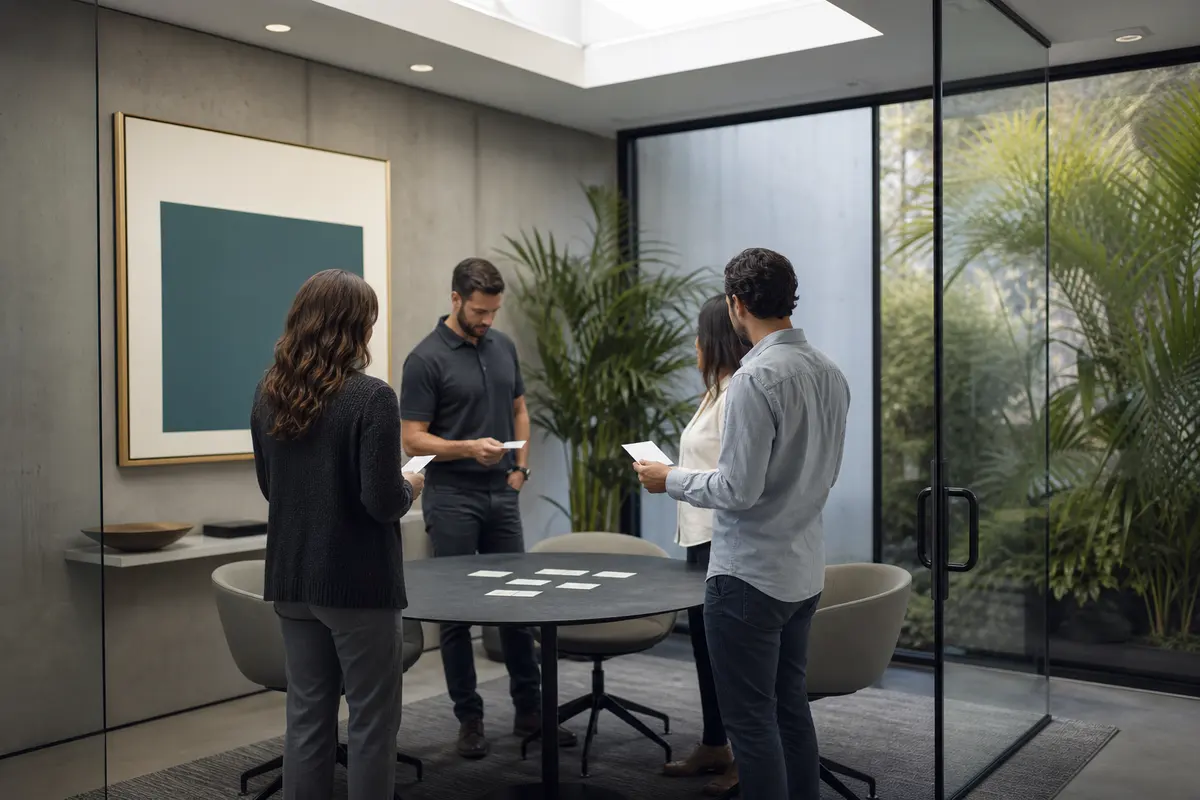
Editorial intake planning scene for AI Answering in Anoka, Minnesota

Local analysis

Use a consultation to map unanswered-call handling for your Anoka practice, define which details should be captured, decide who owns follow-up, and determine how summaries and classifications should be reviewed.

A sound decision should connect the product’s stated capabilities to a documented firm problem. Review four questions: which calls are currently unanswered, what information must be captured, who owns the next step, and which records will show whether the process is working. Anoka’s 2020–2024 ACS population estimate provides municipal context only; it does not answer those operational questions.

01

Start with the calls your team cannot answer

Anoka city is a municipality in Anoka County, Minnesota. The 2020–2024 ACS five-year population estimate for the city is 17,970, with a margin of error of 63. That is geographic context, not evidence of call demand, legal need or staffing requirements. Your firm should instead examine its own unanswered calls, after-hours calls, busy-line events and voicemail records. Bosseo describes AI Answering as covering nights, weekends, holidays and overflow. Its stated routing model sends the first ring to your team and has the AI step in when no one answers within 20 seconds.

Recommended approach

Bring a recent, privacy-appropriate view of unanswered-call handling to the consultation. Decide whether the first review should focus on after-hours coverage, simultaneous calls, holiday coverage, lunch periods or another specific gap. Do not size the decision from Anoka’s population alone.

02

Define a useful intake path for Anoka callers

Bosseo states that the system guides callers through their situation and captures case type, timeline and contact details. It also describes automatic classification into Potential New Client, Current Client or Other, with case-type tagging. Those categories can help separate a prospective matter from an existing-client request or another call, but they do not replace your firm’s conflict, urgency, eligibility or attorney-review decisions.

Recommended approach

Write down the minimum information your team needs for a callback and the questions that require human judgment. Decide how the firm should handle an urgent matter, an existing client, a caller outside its practice scope and a call that lacks enough information for immediate evaluation. Have counsel review the proposed intake path before relying on it.

03

Make ownership and escalation explicit

A summary is useful only when someone knows what to do with it. Bosseo says a full transcript, case summary and caller information can be delivered to an inbox or case-management system. The page also says calls are classified and that urgency can be surfaced in the summary. It does not establish your firm’s response policy, attorney availability, conflict process or emergency protocol.

Recommended approach

Assign an owner for reviewing new summaries and a separate decision-maker for exceptions. Set your own internal rules for which categories require prompt review, what information may be collected before a conflict check, and when a caller should receive a direct human response. Treat any urgency label as a signal for review, not as legal advice or a final triage decision.

04

Use transcripts to inspect intake quality

Bosseo describes a full transcript and summary for each call, including calls answered by the AI. It also states that its Intake Coach analyzes intake calls and provides feedback on missed questions, tone and lost conversions. This creates a possible review path for the quality of conversations, but it does not establish that every summary is complete or that coaching will produce a particular result.

Recommended approach

Choose a small set of review questions: Was the caller’s purpose clear? Were contact details captured? Did the conversation distinguish a potential new client from an existing client? Did the summary preserve the facts needed for a callback? Review the answers with the people responsible for intake and attorney oversight.

05

Plan for overflow without assuming demand

Bosseo states that AI Answering can handle up to 20 simultaneous calls. That is a stated product capability, not a prediction that an Anoka firm will receive that many calls or need that capacity. A firm should also distinguish a busy line from an unanswered call, an after-hours call and a call intentionally routed elsewhere.

Recommended approach

Compare the stated simultaneous-call capacity with your own phone-system records and forwarding design. Confirm what happens when several calls arrive together, which calls should reach staff first, and how the firm will identify duplicate, repeat or existing-client contacts. Review the proposed routing with whoever manages your telephone system.

06

Measure response handling, not imagined revenue

Bosseo describes transcripts, classifications, case-type tags and delivery to an inbox or case-management system. Its page also presents an ROI Dashboard that can use answered-call information, tags and case type. Those capabilities may support review, but the provided materials do not establish your firm’s current answer rate, signed matters, fees, revenue or return on investment.

Recommended approach

Choose measures that your firm can define and audit: unanswered calls, time of day, classification, completed summaries, callback ownership and follow-up status. If you use financial measures, calculate them from your own records and state the assumptions. Do not treat population, a classification or an answered call as proof of a retained matter.

Implementation

Related service handoffs

AI Answering concerns the phone path and the information created after a call. Other Bosseo services may address adjacent decisions, but each should be evaluated on its own terms.

  1. 011. Bring the current phone path Document where calls go during office hours, outside office hours, holidays, lunch periods and busy-line conditions. Note who currently reviews voicemail and how the firm distinguishes prospective clients from current clients.
  2. 022. Approve the intake boundaries Identify the practice areas and practical firm information that may be used in the answering path. Have the appropriate attorney or firm leader decide what the system should collect, what it should not decide, and which issues require human review.
  3. 033. Assign review and follow-up Name the person responsible for reading summaries, checking the selected internal records and routing the next action. Define how urgent, incomplete, duplicate and existing-client calls are handled without treating automated classification as a legal conclusion.
  4. 044. Select measures and review them Track the operational facts that matter to your decision: when calls arrived, whether they were answered, how they were classified, whether a summary was received, who owned follow-up and what the firm recorded afterward. Revisit the design using your own records.

Questions

AI Answering in Anoka

Does AI Answering replace our front desk?+

Bosseo describes it as a backstop. Calls go to your team first, and the AI steps in when nobody answers within 20 seconds. Your firm should confirm how that routing would fit its existing telephone process.

What information does the system capture?+

Bosseo says the system guides the caller through the situation and captures case type, timeline and contact information. Your firm should decide which additional questions are appropriate and what requires attorney or staff review.

What do we receive after a call?+

Bosseo states that the firm can receive a full transcript, case summary and caller information through an inbox or case-management system. Confirm the destination and review process for your firm during the consultation.

Can it distinguish prospective and existing-client calls?+

Bosseo says calls are classified as Potential New Client, Current Client or Other. Those labels can support routing, but they do not replace conflict checks, eligibility decisions, legal advice or attorney judgment.

Can it handle several calls at once?+

Bosseo states that the system handles up to 20 simultaneous calls. Compare that stated capability with your own phone records and confirm how your firm wants concurrent calls routed.

What should we measure before deciding?+

Start with your own records: unanswered calls, timing, overflow events, classifications, summaries received, assigned ownership and follow-up status. Avoid using Anoka’s population as a proxy for demand, leads, cases or revenue.

Next step

Review your Anoka call path with Bosseo

Book a consultation to examine how your firm handles unanswered calls and whether Bosseo AI Answering fits that process. Discuss first-ring routing, the stated 20-second handoff, simultaneous-call capacity, intake information, summaries, classifications, ownership and measurement. Bosseo’s public page directs consultations to its booking calendar; the decision should rest on your firm’s records and review requirements.

Book a Bosseo consultation ↗
Sources and scope