Skip to content

Warren / Michigan

AI Answering for Warren law firms.

For a law firm serving Warren in Macomb County, an unanswered call can leave the firm without the information needed to decide what happens next. Bosseo AI Answering is designed as a safety net: your team receives the first ring, and the system can step in when nobody answers within 20 seconds. It can greet the caller, collect case details and contact information, classify the call, and deliver a transcript and summary to your inbox or case management system.

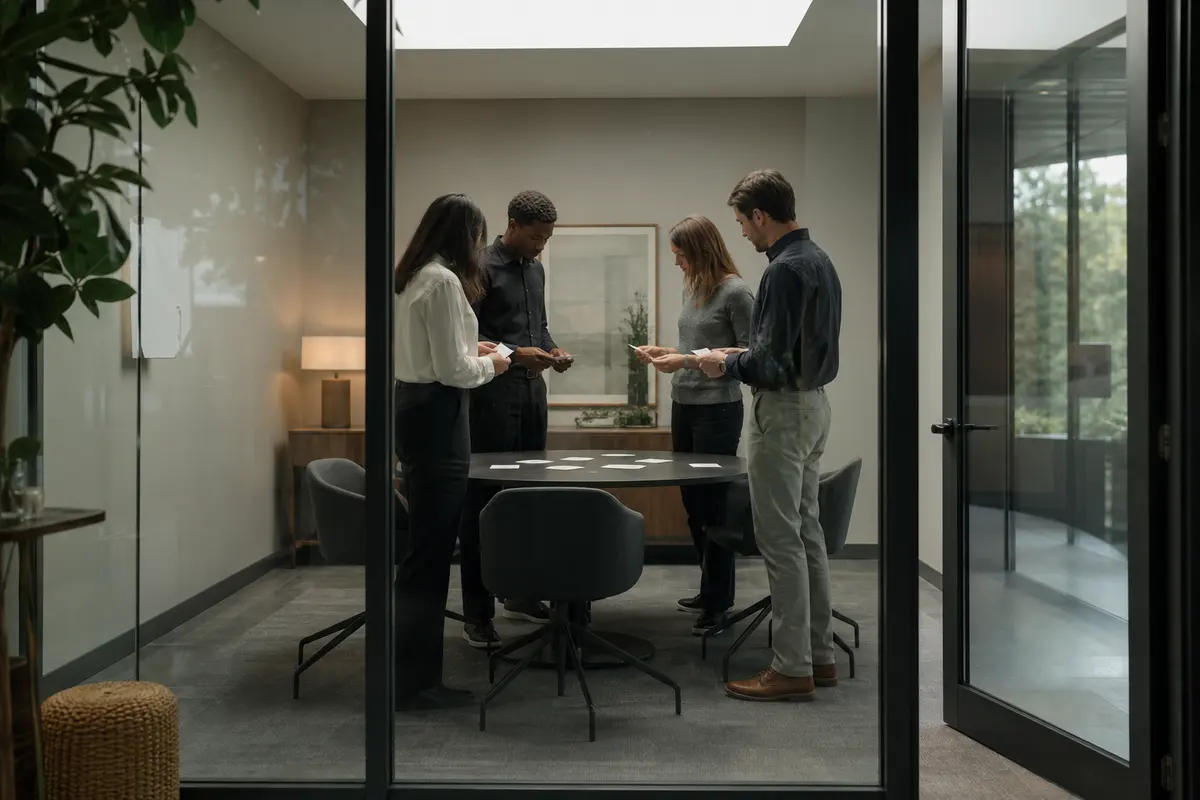
Editorial intake planning scene for AI Answering in Warren, Michigan

Local analysis

The decision is not whether every Warren call represents a new matter. Warren is a city in Macomb County with a 2020–2024 ACS 5-year population estimate of 137,928, with a margin of error of 52. That establishes the community’s scale, not call demand, language preference, legal need or likely revenue. Review your own unanswered-call patterns, practice-area priorities, urgency rules and follow-up ownership before deciding whether AI Answering fits.

Use this decision framework to evaluate fit without turning a local population figure into a business forecast.

01

1. Start with Warren coverage, not assumptions about demand

Your service area is Warren, Michigan, within Macomb County. The Census population estimate describes the city as a municipality and records 137,928 residents for the 2020–2024 ACS 5-year period. It does not show how many people call law firms, which practice areas they need, when they call, or whether they would retain counsel. For that reason, population should inform the scope of your review rather than serve as a forecast. Ask which phone numbers serve Warren callers, whether your firm also accepts matters elsewhere in Macomb County, and whether the same intake path should apply across those geographies.

Recommended approach

Map your actual service boundaries and compare them with the locations, practice areas and consultation rules your callers hear. Keep Warren and Macomb County distinct in your internal reporting so a city-level observation does not become a county-wide demand claim.

02

2. Design the handoff around your people

Bosseo’s public AI Answering description places your team on the first ring. The AI is described as stepping in when nobody answers within 20 seconds, including after-hours, weekend, holiday and overflow situations. That makes routing a staffing and ownership decision, not simply a technology setting. Decide who receives a live call, who reviews a completed summary, and who handles an urgent matter when the usual contact is unavailable.

Recommended approach

Document the first-ring destination, the unanswered-call rule, the person responsible for reviewing notifications, and the backup owner. Test the arrangement with calls representing your Warren service area and your other approved locations. Confirm that the escalation path matches your firm’s actual availability before relying on it.

03

3. Capture facts that help an attorney decide

The product page says the system guides callers through their situation and captures case type, timeline and contact details. It also describes a full transcript, case summary and caller information after the call. Those outputs can give your team a consistent starting record, but they do not replace your firm’s legal judgment, conflict review or decision about representation. The useful question is whether the information collected supports your existing intake decisions.

Recommended approach

List the minimum facts needed for each practice area you accept in Warren. Separate information needed for a callback from information that requires attorney review. Remove questions your firm cannot use, and define how staff should correct or supplement a summary.

04

4. Make classification and urgency operational

Bosseo describes automatic classification as Potential New Client, Current Client or Other, along with case-type tagging. Its page also says urgent potential clients can be surfaced in the transcript and summary. Classification is useful only when someone owns the next action. A label does not itself establish that a caller is eligible for representation, that a deadline exists, or that the firm has completed a conflict check.

Recommended approach

Agree on the meaning of each classification, the practice-area labels you actually use and the conditions that require prompt human review. Define how staff distinguish a new inquiry from an existing client and how they document a caller’s stated urgency without turning it into legal advice.

05

5. Review capacity before you promise availability

The public product page states that AI Answering can handle up to 20 simultaneous calls and presents coverage for nights, weekends and holidays. That is a stated product capability, not evidence that your firm will receive a particular number of calls or convert them into matters. It also does not establish that every caller will be a fit. Your review should focus on whether the stated capacity and routing model match your phones, personnel and response commitments.

Recommended approach

Compare the described simultaneous-call capacity with your phone configuration and the largest periods of unanswered or busy calls you can document. Decide what happens when several summaries arrive together, who prioritizes them and what response standard your firm can actually maintain.

06

6. Measure response and intake quality without inventing a forecast

Bosseo describes transcripts, summaries, classifications and case-type tags, with delivery to an inbox or case management system. It also describes an Intake Coach that analyzes calls and provides feedback on missed questions, tone and lost conversions. These outputs can support review of response paths and intake quality. They do not guarantee crawling, indexing, rankings, leads, retainers or revenue, and the Census population figure cannot supply those missing measures.

Recommended approach

Choose measures your firm can observe: whether a call was answered, whether the summary arrived, whether ownership was assigned, whether a callback occurred, whether the matter passed your intake criteria and where staff found gaps. Review Warren-related calls separately if that distinction matters to your practice, while avoiding conclusions from small or incomplete samples.

Implementation

Review AI Answering with Bosseo

Bring your current phone-routing information, accepted practice areas, intake questions, escalation rules and examples of unanswered-call handling. The consultation can focus on whether the described coverage, capture and delivery model fits your firm’s decisions.

  1. 011. Define the service boundary Write down whether the relevant intake path is limited to Warren, extends across Macomb County or covers additional locations. Keep those geographic labels separate in call notes and reporting. Do not use Warren’s population estimate as a substitute for a demand forecast.
  2. 022. Approve the conversation Select the case types, timelines, contact details and practical firm information the system should collect or communicate. Identify questions that require a human response. Review the wording for accuracy and consistency with your firm’s intake policies.
  3. 033. Assign every next action Name the owner for a live handoff, a completed summary, an urgent inquiry, a current-client call and an Other classification. Add a backup owner and decide how the firm records attempted and completed callbacks.
  4. 044. Set the review cadence Examine transcripts, summaries, classifications and staff feedback on a regular schedule. Look for missing questions, unclear urgency, misclassification and delays in ownership. Adjust the approved intake path based on observed calls rather than assumptions about Warren residents.

Questions

AI Answering in Warren

Does AI Answering replace our Warren office or front desk?+

No. Bosseo describes the system as a backstop. Calls go to your team first, and the AI steps in when nobody answers within 20 seconds. Your firm still decides who handles the call, reviews the information and determines whether a matter fits.

What does the system capture?+

Bosseo says the system guides the caller through the situation and captures case type, timeline and contact details. Its public page also describes a transcript, case summary and caller information after the call. You should approve the questions and review the outputs against your own intake requirements.

How many calls can it handle at once?+

Bosseo’s public page states that the system can handle up to 20 simultaneous calls. Treat that as a stated capability to compare with your phone setup and documented unanswered or busy-call periods, not as a forecast of Warren call volume.

Where do the call details go?+

The public page says transcripts, summaries and caller information can be delivered to your inbox or case management system. Confirm the destination, access rules and ownership arrangement that fit your firm before using the information in daily intake.

Can it identify urgent inquiries?+

Bosseo describes classification and says urgent potential clients can be surfaced in the transcript and summary. Your firm must define what requires urgent human review and must apply its own intake, conflict and legal-judgment procedures.

Will AI Answering produce more cases or revenue?+

No outcome should be assumed. The service is described as answering calls, collecting information and creating records for follow-up. Population data for Warren does not prove demand, and the product description does not establish a result for your firm. Measure your own calls, follow-up and intake dispositions.

Next step

Decide whether your Warren intake needs a stronger safety net

Book a consultation with Bosseo to review AI Answering against your firm’s routing, practice areas, escalation rules and follow-up ownership. The discussion can help you separate a product capability from the operating decisions your team must make.

Book a consultation ↗
Sources and scope