Skip to content

Hyattsville / Maryland

Custom Software for Hyattsville law firms.

Your firm may not need another general-purpose legal platform. It may need one tool for a specific operational bottleneck: a client status portal, an intake workflow, an internal dashboard or a connection between systems. Bosseo builds custom software for law firms around the way they work, then hosts and maintains the software it builds. For a firm serving Hyattsville and Prince George's County, the useful starting point is not a feature list. It is a clear review of the work your team repeats, the information the tool must handle, and the conditions that would make the build acceptable.

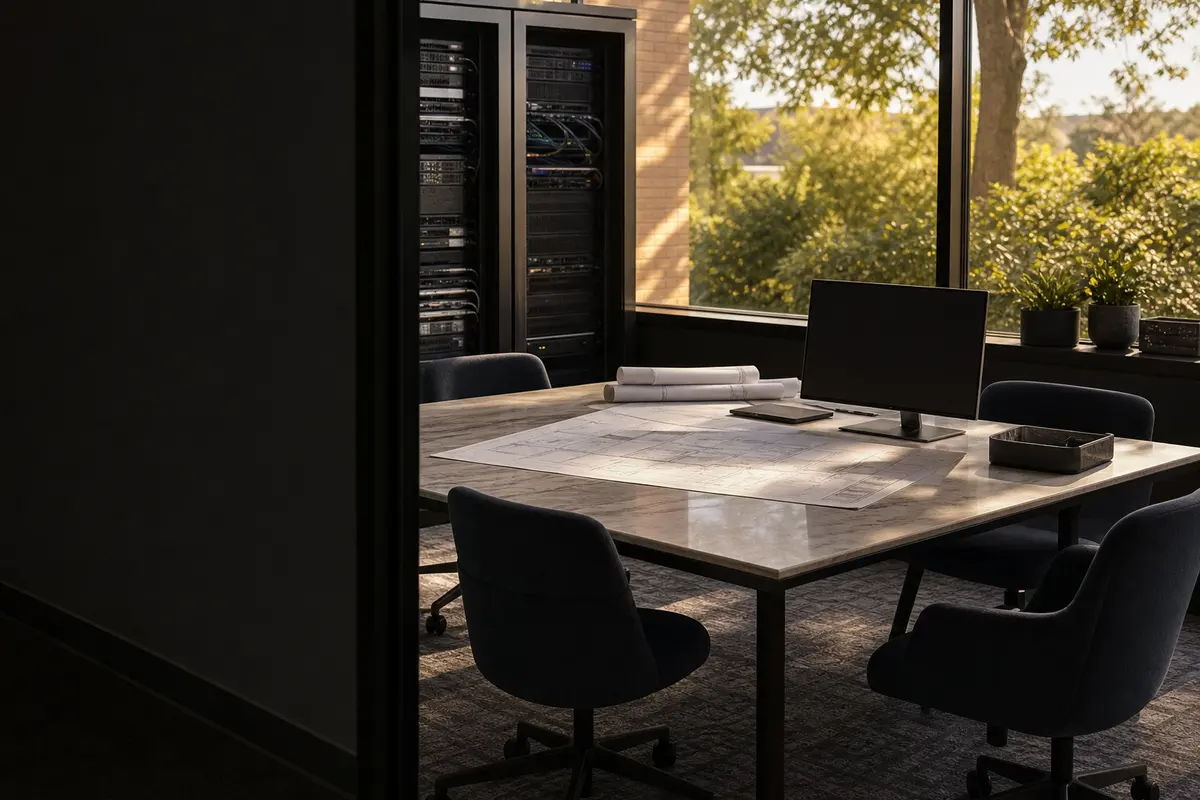
Editorial platform planning scene for Custom Software in Hyattsville, Maryland

Local analysis

Use a custom-software consultation to decide whether a focused tool is justified, what it must connect to, how access and recovery should work, and how your team will determine that the finished software is ready.

A sound decision weighs operational fit before novelty. For a Hyattsville law firm, the relevant geography is Hyattsville city in Prince George's County; the Census population estimate provides location context, not proof of legal demand or a reason to build software. Use the consultation to compare the current process with the proposed tool, then record the decision in terms your team can test.

01

1. Start with the bottleneck, not the platform

Bosseo’s Custom Software page describes tools built around a firm’s workflow, including client portals, intake tools and internal dashboards. That matters when your office has developed its own method for signing, working and closing matters. A generic product may force staff to use workarounds, while a focused build can be evaluated against one clearly defined problem. Hyattsville is a municipality in Prince George's County, with a 2020–2024 ACS five-year population estimate of 20,966. That geographic fact identifies the local setting; it does not establish demand, case volume or software requirements. Your decision should therefore come from your firm’s actual work across Hyattsville and the county, not from population alone.

Recommended approach

Bring one recurring task to the review in plain language. Describe who performs it, what information they use, where the work pauses, and what happens when a step is missed. Ask Bosseo whether custom software is appropriate or whether an existing product is sufficient.

02

2. Define data before discussing screens

A custom tool is only useful when the firm agrees on the information it receives, changes and displays. For an intake tool, that may include contact details, matter information and follow-up status. For a portal, it may include a matter stage, next action or requested document. Those examples are possible review topics, not a claim about what your firm currently stores or what a particular build will include. Bosseo describes discovery on the firm’s workflow and scoped design and build. The consultation should turn the operational problem into a written data discussion before anyone treats a screen as finished.

Recommended approach

Ask which fields are required, which are optional, who may edit them, what counts as the authoritative record, and how corrections are handled. Keep data definitions tied to the practice area and process you actually intend to support.

03

3. Test permissions and responsibility

Law-firm software can expose information to different groups, so access rules deserve attention before implementation. A receptionist, paralegal, attorney, client or outside referral source may not need the same view or editing ability. The available Bosseo page text supports software built around a firm’s workflow and hosted and maintained by Bosseo, but it does not establish a particular permission model for your proposed tool. Treat permissions as a requirement to review rather than an assumed feature.

Recommended approach

Create an access matrix during consultation. For each role, identify what the person may view, create, change, export or delete. Also decide who approves access changes and how the firm will review them when responsibilities change.

04

4. Review reliability, recovery and hosting questions

Bosseo states that it hosts and maintains custom software on dedicated servers and describes monitoring and backups in its public Custom Software text. That supports asking detailed questions about hosting and recovery. It does not justify promising a particular uptime level, recovery time, security certification or infrastructure location. Those details should be confirmed for the proposed scope rather than inferred from general service language.

Recommended approach

Ask what is backed up, how often recovery is tested, who responds to an incident, how maintenance is communicated, and what access the firm retains to its information. Make recovery expectations part of acceptance criteria, not an afterthought.

05

5. Be precise about integrations

Bosseo describes custom tools that connect with a firm’s website, intake and dashboard, and says integrations with a firm’s existing systems can be included in a build. The public page does not identify every possible vendor, account type or integration behavior. A connection should therefore be evaluated against your actual systems, permissions and data flow. The question is not simply whether two products can be named in the same conversation. It is whether information can move accurately, with clear ownership and an understandable failure path.

Recommended approach

List the systems involved and trace one record from entry to its destination. Ask what is transmitted, when it is transmitted, what happens if the connection fails, and how duplicate or conflicting records are handled. Require the proposed integrations and exclusions to appear in the scope.

06

6. Set acceptance criteria your team can observe

Bosseo describes showing a working version early, refining it with feedback, onboarding staff and continuing maintenance after launch. That creates a useful basis for evaluation: the firm can judge the tool by observable work rather than by a promise that custom software will solve everything. Google’s guidance says automated or scaled pages need original value, accuracy and relevance, and that automation does not guarantee crawling, indexing or search visibility. Those search principles do not determine whether an internal tool works, but they reinforce the need to evaluate outcomes directly rather than assume automation guarantees performance.

Recommended approach

Write acceptance tests in operational language. For example, confirm that an authorized staff member can complete the defined task, that an unauthorized role cannot access restricted information, and that a failed connection produces a visible next step. Review the tests with the people who will use the software.

Implementation

Prepare for a Custom Software Review

Bring enough operational detail to make the conversation concrete without pretending that the solution has already been chosen.

  1. 011. Map the current work Write down the task as it happens today. Include the trigger, each handoff, the records touched, the decisions made and the point at which a person must intervene. Avoid starting with preferred software features.
  2. 022. Decide what the tool must control Separate required data from useful data. Define roles, permissions, notifications, exception handling and recovery questions. If the firm cannot agree on the rule, mark it for decision rather than hiding it inside the build.
  3. 033. Confirm scope and connections Review the proposed tool with Bosseo and identify the systems it may connect to. Confirm supported behavior, exclusions, hosting expectations, maintenance responsibilities and the conditions that determine whether the scope is acceptable.
  4. 044. Test adoption and acceptance Use the working version to check the defined workflow with the people who will use it. Record defects, unclear steps and access issues. Approve the tool only when the agreed acceptance checks are met.

Questions

Custom Software in Hyattsville

What kinds of custom software can Bosseo build for a law firm?+

Bosseo describes client portals, intake tools, internal dashboards, speed-to-lead tools, referral trackers, document-intake flows, calculators and connections between existing systems as examples of custom work. The appropriate scope depends on your firm’s bottleneck and should be confirmed in consultation.

Do we need a requirements document before speaking with Bosseo?+

Bosseo’s public page says you can describe the bottleneck in plain English and that its team asks the questions needed to scope the work. Bring a clear description of the task, the people involved and the systems touched. A formal specification is not required to begin the discussion, but the final scope should be precise.

Can custom software connect with our existing systems?+

Bosseo describes connections with a firm’s website, intake and dashboard, as well as integrations with existing systems. Ask about your specific systems, permissions, data fields, failure handling and any exclusions before treating an integration as part of the scope.

Who hosts and maintains the software?+

Bosseo states that it hosts and maintains the software it builds and describes dedicated servers, monitoring, backups, updates, fixes and improvements. Ask the consultation team to confirm the hosting and recovery arrangements that apply to your proposed tool.

How should our firm evaluate whether the build is ready?+

Define observable acceptance checks before implementation. Test the required workflow, role permissions, data handling, integration behavior and exception paths with the staff who will use the tool. Do not use assumed search visibility, lead volume or revenue as proof that an internal workflow tool is ready.

How do we decide between custom software and an off-the-shelf product?+

Choose an existing product when it fits the requirement without material workarounds. Consider custom software when a focused workflow, connection or permission model is not adequately served by what you already use. Ask Bosseo to scope the problem honestly, including whether custom software is unnecessary.

Next step

Bring Bosseo Your Firm’s Hardest Manual Handoff

Book a consultation through calendar.bosseo.com and describe the workflow your Hyattsville-serving firm wants to examine. Bosseo can review the bottleneck, discuss a possible custom scope and help you decide what data, permissions, recovery questions, integrations and acceptance checks belong in the conversation. If custom software is not the right answer, make that part of the decision.

Book a Custom Software Review ↗
Sources and scope