Skip to content

Whiteland / Indiana

AI Answering for Whiteland law firms.

A missed call gives your team no case details to evaluate and no clear next action for the caller. Bosseo AI Answering is designed for law-firm intake: your team receives the first ring, and the AI can answer when nobody picks up within 20 seconds. It captures the caller’s situation and contact information, then sends a transcript, summary and classification to your inbox or case management system.

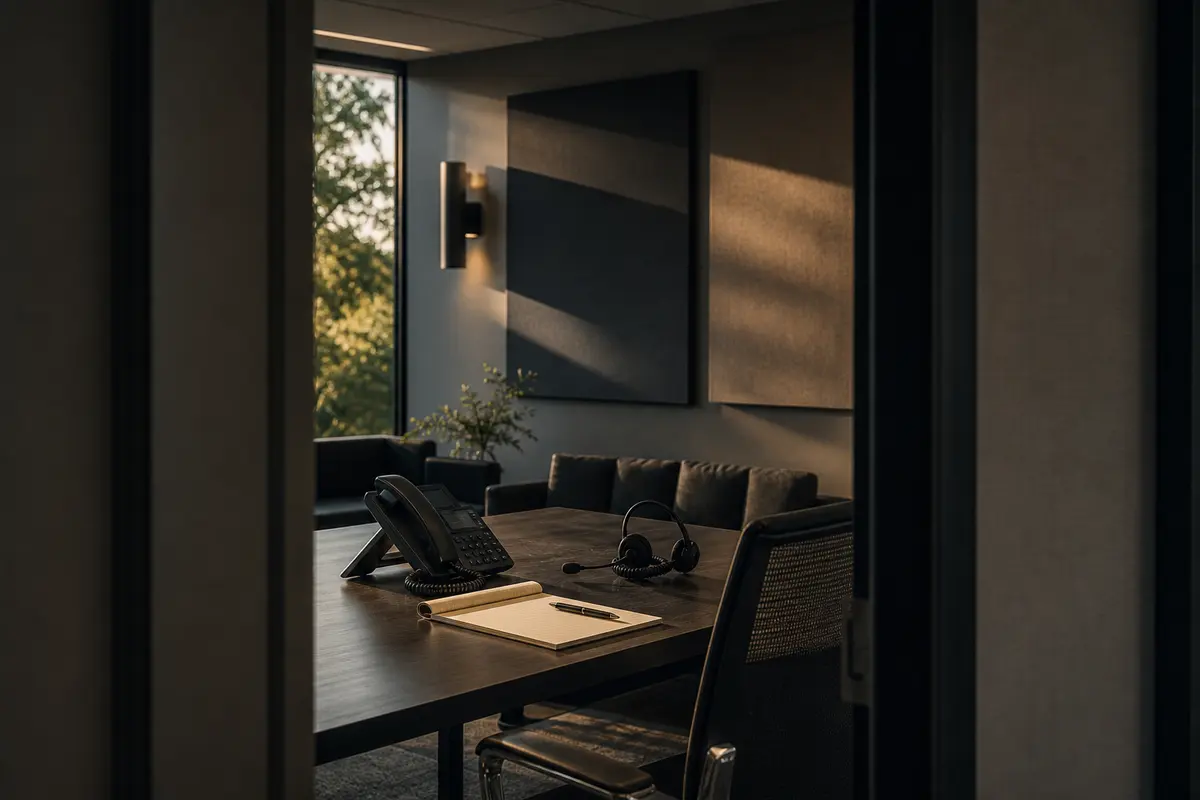
Editorial intake planning scene for AI Answering in Whiteland, Indiana

Local analysis

For a Whiteland firm, the useful question is not whether the town’s population proves phone demand. The U.S. Census Bureau records Whiteland town as a Johnson County municipality with a 2020–2024 ACS 5-year population estimate of 5,173 and a margin of error of 694. That is geographic context—not evidence of call volume, legal need or staffing requirements. Evaluate AI Answering against your actual unanswered calls, practice areas, current routing and response ownership.

Use a four-part decision framework: coverage, qualification, ownership and measurement. Coverage asks when the AI should answer. Qualification asks whether the captured information is useful. Ownership asks who acts on each record. Measurement asks what your firm can observe without treating population, geography or product capacity as a demand forecast.

01

Start with the calls your team cannot answer

Bosseo’s public AI Answering page describes a team-first arrangement: calls ring your people first, and the AI steps in when nobody answers within 20 seconds. The stated coverage includes nights, weekends, holidays and overflow. This matters more than a generic “24/7” label because your review should identify the exact situations in which a Whiteland caller reaches voicemail or a busy line. Do not use Whiteland’s population estimate to assume those situations occur frequently. Instead, compare the proposed response path with your phone records and office schedule.

Recommended approach

Map business hours, lunch coverage, meeting periods, holidays and overflow conditions. Decide whether the 20-second handoff fits your existing front-desk practice, and define who reviews a newly captured call.

02

Capture the details a law firm needs next

The product page says the AI guides callers through their situation and captures case type, timeline and contact details. It also describes a full transcript and case summary after the call. For a Whiteland practice serving Johnson County, the practical review is whether those fields help an attorney or intake team decide what happens next—not whether an automated conversation can determine legal merit. A caller’s answers still require professional review, conflict procedures and the firm’s own decision-making.

Recommended approach

List the minimum information required for each practice area you handle. Ask Bosseo how your firm profile, practice areas, consultation process and escalation instructions would be represented, and identify information that must never be treated as legal advice.

03

Separate new inquiries from existing-client calls

Bosseo states that each call is classified as Potential New Client, Current Client or Other. That distinction can reduce the chance that a new inquiry is buried among routine calls, but classification is not a substitute for a firm-defined owner. A Whiteland office should decide who receives each category and what happens when a current client reports an urgent issue or a prospective caller describes a time-sensitive event.

Recommended approach

Create an ownership table for the three stated classifications. Include the person or team responsible, the response channel, the escalation condition and the record that should be created. Validate the categories with real call types from your firm rather than with assumptions about local demand.

04

Review simultaneous-call handling against your phone reality

Bosseo says the system can handle up to 20 simultaneous calls. That is a stated product capacity, not a forecast of your call volume or a promise that every call will become a client. It gives you a concrete technical question to compare with your phone system: what happens when several callers reach the firm at once, and where does each resulting record go? The fact that Whiteland is a municipality in Johnson County does not answer that question.

Recommended approach

Review busy-line behavior, forwarding rules and any existing call queue. Ask for a clear explanation of how simultaneous calls are presented to your team and how duplicate, wrong-number or non-intake calls are classified.

05

Make the transcript useful after the call

The public product text says transcripts, summaries and caller information can be delivered to an inbox or case management system. It also describes case-type tagging and automatic CRM delivery. Before selecting a destination, your firm should decide who can access the information, how quickly it must be reviewed and which record is authoritative. A transcript is an intake record; it does not itself establish representation, create an attorney-client relationship or replace your normal conflict and engagement procedures.

Recommended approach

Compare inbox delivery with your current case-management workflow. Confirm the supported destination, permissions, retention approach and handoff responsibilities during consultation. Define the fields that must be visible immediately to the person making the callback.

06

Use coaching as a review question, not a promise of conversion

Bosseo describes an Intake Coach built into the platform. Its public page says the system analyzes calls and provides feedback on missed questions, tone and lost conversions, including calls answered by your team. That creates a way to discuss intake quality alongside coverage. It does not prove that a particular Whiteland firm will sign more matters, and it does not establish a future conversion rate.

Recommended approach

Choose a small set of intake-quality questions your firm already values. During a consultation, ask how feedback is presented, who reviews it and how you would distinguish a coverage problem from a qualification, conflict or follow-up problem.

Implementation

Questions to bring to a Bosseo consultation

Bring your phone routing details, practice-area intake requirements and examples of the records your team currently reviews. The goal is to test fit for a Whiteland firm serving its defined market, not to assume that local population establishes a need for any particular staffing model.

  1. 011. Audit your current response path Review a representative period of phone records and note unanswered calls, busy lines, after-hours calls, holidays and overflow. Separate measured observations from opinions. Do not infer call volume from Whiteland’s population estimate.
  2. 022. Define intake ownership For each call classification and practice area, name the responsible role, callback expectation and escalation rule. Decide how urgent descriptions are surfaced without treating the system as a lawyer or a substitute for professional judgment.
  3. 033. Confirm technical and information boundaries Discuss the 20-second handoff, up-to-20 simultaneous calls, transcripts, summaries, case-type tags and delivery to an inbox or case-management system. Confirm what your firm must provide and how access and retention will be handled.
  4. 044. Set a measurement plan Track the measures your firm can actually observe: answer status, time to review, time to callback, classification, disposition and intake-quality findings. Treat any illustrative calculator or hypothetical scenario as arithmetic, not a Bosseo performance forecast.

Questions

AI Answering in Whiteland

Does AI Answering replace our front desk?+

Bosseo’s public page describes it as a backup: your team gets the first ring, and the AI steps in when nobody answers within 20 seconds. Confirm the forwarding behavior for your phone system during consultation.

What does the caller provide?+

The stated experience guides the caller through the situation and captures case type, timeline and contact information. Your firm should decide which additional information is necessary for each practice area and what requires human review.

What do we receive after a call?+

Bosseo says the firm receives a full transcript, a case summary and caller information, delivered to an inbox or case-management system. Confirm the specific destination, permissions and configuration for your firm.

Can it distinguish prospective and existing-client calls?+

The public product text describes three classifications: Potential New Client, Current Client and Other. Your firm still needs to assign owners and escalation rules for each category.

How many calls can it handle at once?+

Bosseo states that AI Answering handles up to 20 simultaneous calls. Compare that stated capacity with your own phone routing and ask how records are presented when calls arrive together.

Will it guarantee new clients or signed matters?+

No outcome should be assumed. The system is described as answering, capturing and organizing calls. A caller’s decision, legal fit, conflicts, follow-up and engagement process remain separate firm decisions.

Next step

Review your Whiteland call path with Bosseo

Book a consultation to examine how AI Answering could fit your firm’s existing phone routing, intake fields, ownership rules and review process. Bosseo’s stated booking destination is calendar.bosseo.com. Bring your actual call-handling questions so the discussion stays grounded in your practice rather than assumptions about Johnson County demand.

Book a Bosseo consultation ↗
Sources and scope