Skip to content

Glastonbury Center / Connecticut

Automation for Glastonbury Center law firms.

A first inquiry should create a clear next action—not another item for someone to copy from an inbox. Bosseo Automation is designed to connect website forms, calls, chat or video intake with a firm’s CRM and case-management workflow. For a law firm serving Glastonbury Center, the useful question is not whether the area’s population proves demand. It does not. The U.S. Census Bureau records Glastonbury Center as a census-designated place in Connecticut, within the Capitol Planning Region, with a 2020–2024 ACS five-year population estimate of 7,266 and a margin of error of 930. That is geographic eligibility information, not evidence of search volume, case demand, staffing needs or revenue. The practical evaluation is narrower: where does an inquiry enter your firm, who owns the next action, what happens when nobody is available, and can you see the path from inquiry to consultation or matter?

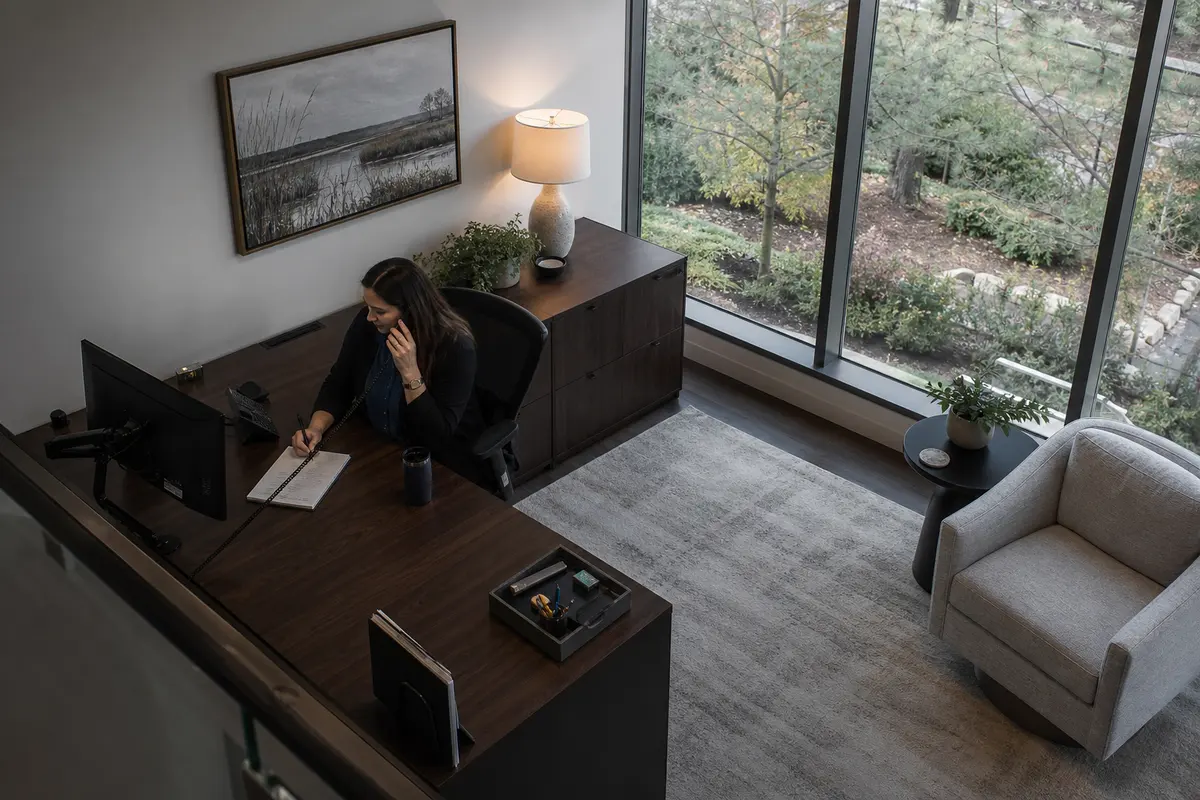
Editorial intake planning scene for Automation in Glastonbury Center, Connecticut

Local analysis

For a Glastonbury Center practice, evaluate Automation against your actual intake path and service area. Bosseo describes a system that can log and tag inquiries, route them, trigger follow-up, connect with case-management tools and reduce duplicate entry. Confirm the exact systems, permissions, matter rules and human review requirements during a consultation.

Use this decision framework to compare the current path with a connected one. Choose Automation when the main problem is a defined handoff between intake, ownership, follow-up and case-management work. Pause for clarification when your firm has not chosen its system of record, message approvals, escalation rules or measurement definitions. A consultation should produce decisions you can inspect—not assumptions based on the Glastonbury Center population record.

01

1. Start with the real Glastonbury Center intake boundary

Glastonbury Center is recorded as a CDP rather than as a county or a metropolitan area. Its recorded county relationship is the Capitol Planning Region. That distinction matters when you define a service area: a Glastonbury Center inquiry may be one segment of a broader Connecticut practice, but the population record does not establish how many people contact a firm or what legal services they need. Automation should therefore begin with the firm’s own channels and geographic rules, not with a population-based assumption. Bosseo describes capturing inquiries from forms, calls, chat or video intake, then logging contact details, case type, source and intake answers. Your review should identify which inquiries are in scope, which require a human decision, and which should be declined or redirected.

Recommended approach

Bring a channel-by-channel inventory to the consultation. Mark whether Glastonbury Center is a target service area, a location filter, or simply one place named in wider Connecticut coverage. Decide what information may be collected before attorney review and what must remain with staff.

02

2. Replace handoffs with an accountable next action

Bosseo positions Automation as a connection between a website, CRM and case-management system. Its public description includes lead logging, tagging, routing, task assignment, reminders and follow-up. The operational issue to examine is not an assumed volume of inquiries; it is whether an inquiry can sit in an inbox without an owner. For a firm serving Glastonbury Center alongside other Connecticut locations, routing rules may need to distinguish matter type, urgency, location or responsible team member. Those rules should be chosen by the firm rather than inferred from the place name.

Recommended approach

Document the next action for each intake category: who receives it, what deadline applies, when escalation occurs and what staff member can take over. Ask Bosseo to confirm how those rules would be represented in your existing systems before approving a connection.

03

3. Make follow-up useful without overstating responsiveness

The Bosseo page describes instant text-back, scheduled email sequences, reminders and follow-up that can continue outside ordinary office hours. It also says sequences can be written by matter type and can stop when a lead replies or books. These capabilities do not prove that every inquiry will become a client, that a response will satisfy professional obligations, or that a particular Glastonbury Center audience prefers text or email. The firm still decides tone, timing, consent requirements, escalation and when a person must intervene.

Recommended approach

Review every proposed message as a law-firm communication. Separate acknowledgment from legal advice, set a clear handoff to staff, and test what happens when an individual replies with urgent or ambiguous information. Measure delivery, response and booked-consultation events only after defining them precisely.

04

4. Connect the tools you already use—after confirming the stack

Bosseo says Automation is intended to connect existing practice tools rather than replace them. Its public page names Clio, MyCase, Filevine, PracticePanther, Smokeball, Lawmatics, HighLevel, Zapier and APIs, while also stating that the exact stack should be confirmed. That makes system discovery essential for a Connecticut firm whose intake may cross website, telephone and case-management workflows. A named platform alone does not establish that every field, permission, attachment or status will transfer in the way your staff expects.

Recommended approach

List your website form provider, CRM, case-management platform, calendar and communication channels. For each, identify the source of truth, required fields, duplicate-handling rule and access owner. Ask for a system-specific review rather than assuming a connector covers your complete workflow.

05

5. Preserve human judgment at the escalation points

Automation can move information and trigger defined actions; it cannot replace the firm’s judgment about conflicts, legal advice, representation, urgency or suitability. Bosseo describes routing, task assignment and case-management handoff, and its page says staff can step into a conversation manually. That distinction is important when an inquiry from Glastonbury Center is part of a larger Connecticut intake territory. A location label can help route work, but it cannot decide whether the firm should accept the matter.

Recommended approach

Create explicit human checkpoints for conflicts, emergency language, attorney review, eligibility and engagement. Make the owner and escalation path visible on each task. Have authorized staff test the workflow with incomplete and unexpected answers before relying on it.

06

6. Measure the path, not a presumed market

Bosseo describes attribution and an ROI Dashboard that can show the journey from marketing to matter, while the Automation page emphasizes logging when an inquiry arrives, who receives a task and when a consultation is booked. Those measures can help a firm inspect operations. They do not establish Glastonbury Center search demand, rankings, competition, leads or revenue. Google’s guidance also states that automated or scaled pages require original value, accuracy and relevance, and that automation does not guarantee crawling, indexing or search visibility. Automation should be evaluated as an intake-and-operations decision, with marketing results measured separately.

Recommended approach

Agree on definitions before reviewing performance: inquiry received, qualified inquiry, consultation booked, engagement and matter opened. Segment by channel and service area only where the underlying data supports it. Treat any geographic comparison as an observation to review, not as proof of future results.

Implementation

Prepare for a practical Automation review

A useful consultation is specific to your firm’s channels, people, tools and matter rules. Bring the information below so Bosseo can discuss the possible scope without assuming demand or inventing a workflow.

  1. 011. Map the current path Write down every route into the firm: website form, call, chat and video intake where applicable. For each route, record the current destination, required information, owner, response expectation and point where a record enters the CRM or case-management system. Include how a Glastonbury Center inquiry is treated within the firm’s wider Connecticut service area.
  2. 022. Set decision and escalation rules Choose the fields that control routing, such as matter type or urgency, and identify the cases that always require human review. Define who can approve messages, change a task, stop follow-up and address sensitive or incomplete information. Do not use the Census population estimate as a proxy for any of these decisions.
  3. 033. Confirm technical scope Ask Bosseo to review the exact tools your firm uses. Confirm what can be transferred, where records are created, how duplicates are handled, what permissions apply and whether a direct connection, Zapier or an API is appropriate. Keep the existing system of record clear to staff.
  4. 044. Review and measure the live path Before relying on the workflow, have authorized staff inspect test scenarios, including a reply, a booking, an incomplete submission and an escalation. Then review the agreed events: receipt, ownership, follow-up, consultation and matter progression. Keep operational measurements separate from claims about search visibility or market demand.

Questions

Automation in Glastonbury Center

What does Bosseo Automation connect?+

Bosseo describes connections among website forms, calls, chat or video intake, a CRM and case-management systems. Its public page names Clio, MyCase, Filevine, PracticePanther, Smokeball, Lawmatics, HighLevel, Zapier and APIs. Confirm your exact tools and required fields during the consultation.

Will Automation replace our CRM or case-management platform?+

Bosseo presents Automation as a way to connect the systems your firm already uses rather than replace them. The exact workflow, permissions and system of record should be confirmed for your stack.

Can our staff intervene after an automated action?+

Bosseo’s public page says staff can step into a conversation manually while Automation handles defined logging, routing, reminders and follow-up. Your firm should specify the points where human review is required.

Can we use this for inquiries serving Glastonbury Center?+

Yes, the geographic question can be included in your routing and measurement design, but the Census record only identifies Glastonbury Center as a CDP in Connecticut within the Capitol Planning Region. It does not establish demand, legal need or lead volume. Decide how the place fits your broader service area.

Can automated follow-up provide legal advice?+

Automation should not be treated as a substitute for attorney judgment. Review messages for accuracy, scope, consent, confidentiality and escalation, and determine when an authorized member of the firm must respond.

Does Automation guarantee search visibility or new matters?+

No conclusion about search visibility, leads, clients or revenue should be drawn from an automation workflow. Google states that automated or scaled pages need original value, accuracy and relevance, and that automation does not guarantee crawling, indexing or visibility. Bosseo’s Automation offering should be evaluated on the intake and operations decisions it supports.

Next step

Review your Glastonbury Center intake path with Bosseo

Book a consultation through calendar.bosseo.com to discuss where an inquiry enters your firm, how ownership is assigned, which systems need to connect and what follow-up your team is prepared to approve. Bring your actual intake path and tools so the conversation can stay specific to your law firm serving Glastonbury Center and Connecticut.

Book an Automation consultation ↗
Sources and scope