Skip to content

Branford Center / Connecticut

AI Answering for Branford Center law firms.

A caller who reaches voicemail has no clear next step. Bosseo AI Answering is presented for law firms as a phone-system safety net: your team gets the first ring, and the AI can answer when nobody picks up within 20 seconds. It can capture case details and contact information, classify the call, and deliver a transcript and summary to your inbox or case-management system. For a firm serving Branford Center, the useful question is not whether the local population guarantees demand. It does not. The Branford Center CDP is recorded in the South Central Connecticut Planning Region and has a 2020–2024 ACS 5-year population estimate of 6,305, with a margin of error of 655. That is geographic context—not proof of call volume, legal need, competition or revenue. The decision should instead rest on how your phone line behaves, what information your team needs, and how quickly urgent calls receive ownership.

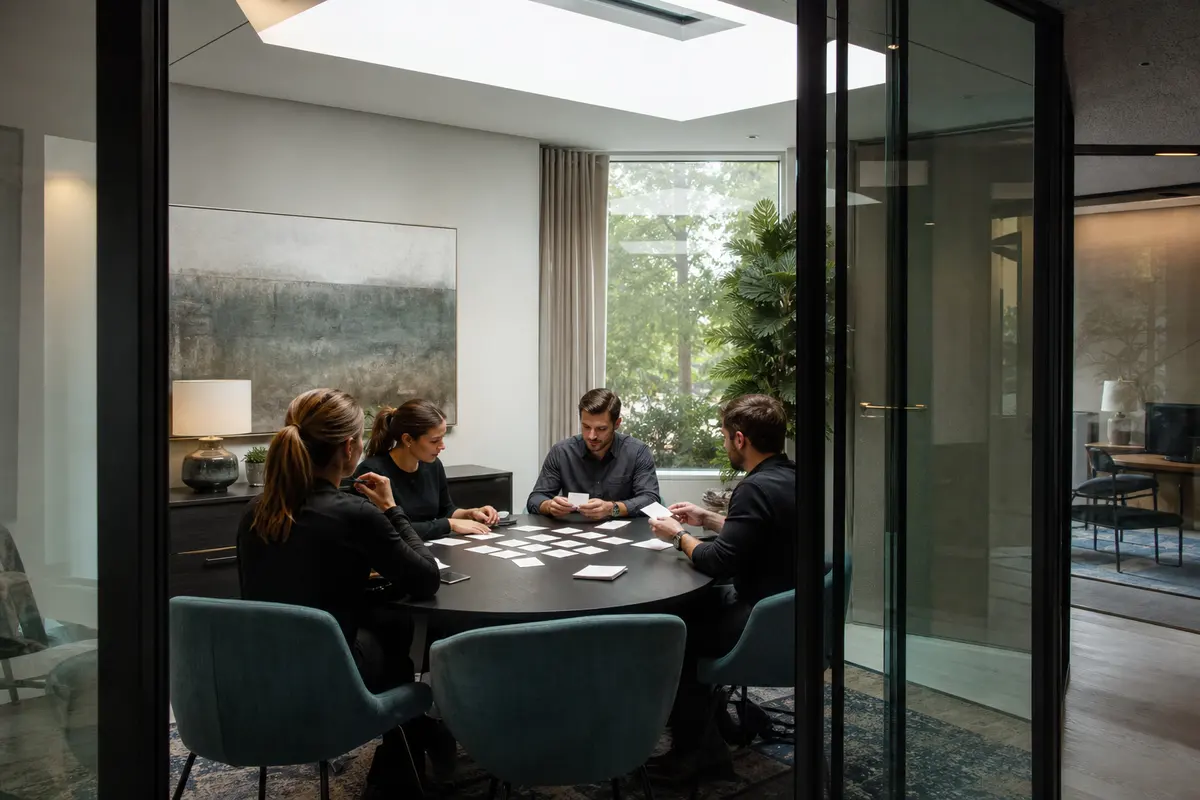
Editorial intake planning scene for AI Answering in Branford Center, Connecticut

Local analysis

Use a consultation to map your existing Branford Center service area, unanswered-call rules, intake questions, escalation choices and record-delivery needs before deciding whether Bosseo AI Answering fits.

Use this decision framework before booking or approving an implementation. A good fit depends on the gap between your current phone path and the response path you want—not on the Branford Center population estimate alone.

01

1. Start with the calls your team does not answer

Bosseo describes AI Answering as coverage for nights, weekends, holidays and overflow. Its public page says calls go to your team first and that the AI steps in if nobody answers within 20 seconds. This matters for a Branford Center firm because the location itself does not tell you when callers will reach the office or how many will call. Review your own phone records instead: unanswered calls, after-hours calls, busy-line events and calls that arrive while staff are already speaking with someone. Do not treat the Branford Center population estimate as a forecast of any of those measures.

Recommended approach

Bring a defined review period of phone records to the consultation. Decide whether the desired response path is after-hours coverage, overflow protection, or both. Ask Bosseo to explain how your existing number and unanswered-call rule would be handled.

02

2. Define what a useful intake record contains

The public Bosseo page says the system greets callers, captures case details and contact information, and provides a full transcript and case summary. It also says calls can be classified as Potential New Client, Current Client or Other, with case-type tagging. Those capabilities make the intake record the center of the decision. A firm serving Branford Center should decide which facts must be available for a callback, which questions are appropriate for each practice area, and which questions belong with a lawyer rather than an answering system.

Recommended approach

Write down the minimum information your team needs to assess a callback: caller identity, contact details, matter type, timing and urgency. Separate information capture from legal advice. Have Bosseo review the proposed call path before adopting it.

03

3. Make ownership and escalation explicit

Answering a call is not the same as deciding who acts next. Bosseo says each call is classified and that urgent potential clients can be surfaced in the transcript and summary. Your firm still needs its own ownership rules. A caller connected with Branford Center may be a new inquiry, a current client or another type of caller; the place name does not determine the matter, urgency or responsible person.

Recommended approach

Create a written handoff for each classification. Specify who reviews a potential new-client summary, who handles current-client calls, what qualifies as urgent for your firm, and what happens when a summary contains insufficient information. Confirm where the record is delivered and who can access it.

04

4. Treat accessibility as a design question, not a demographic assumption

The Branford Center population estimate does not establish language preference, disability prevalence, call behavior or communication needs. Those conclusions should not be inferred from geography. Bosseo’s public page describes a professional guided phone interaction, but it does not establish supported languages or accessibility certifications. That leaves important implementation questions for your consultation.

Recommended approach

Ask Bosseo to demonstrate the caller experience and explain available accessibility, language and consent options without assuming a local preference. Review whether callers can understand the greeting, provide information comfortably and reach a person or receive a clear callback path when the system cannot resolve the inquiry.

05

5. Decide how records reach the people who act on them

Bosseo says transcripts, summaries and caller information can be delivered to an inbox or case-management system, and that automatic CRM delivery is available on its public product page. The operational issue is not merely whether a record exists. It is whether the right person sees it, recognizes its priority and can work from it without retyping. Your current software, permissions and configuration should be reviewed rather than assumed.

Recommended approach

Map the path from completed call to review, callback and matter-opening decision. Ask which inbox or case-management destination is appropriate, what fields and tags are included, and what your firm must configure. Do not approve a destination until the responsible users have reviewed an example in the consultation.

06

6. Measure response quality without inventing a business case

Bosseo presents transcripts, classifications, case-type tags and an ROI Dashboard as ways to turn phone traffic into data. Those capabilities can support review, but they do not prove that a Branford Center firm will receive more calls, sign more matters or generate more revenue. Google states that automation does not guarantee crawling, indexing or search visibility; similarly, an answering system should be evaluated through your own phone and intake records rather than a promised outcome.

Recommended approach

Choose measures your firm can actually observe: answered versus unanswered calls, time to review, completeness of required fields, classification accuracy, callback ownership and disposition. Compare records over a defined period only after agreeing on definitions. Keep population data as location context, not as a performance baseline.

Implementation

What to bring to a Bosseo review

A focused consultation can be more useful when your firm brings its current rules and questions. Bosseo’s booking destination is calendar.bosseo.com.

  1. 011. Inventory the current phone path List every number used by the firm, the people or systems that receive the first ring, the unanswered-call condition and the after-hours behavior. Include overflow situations rather than assuming they are rare.
  2. 022. Approve the intake boundary Identify the information the system may collect and the questions that should be deferred to your team. Include practice-area tags, caller classification and the point at which a human must review the matter.
  3. 033. Set ownership and delivery Choose who reviews each classification, where summaries and transcripts should arrive, and how an urgent call is surfaced. Confirm permissions and case-management requirements with Bosseo before adopting the path.
  4. 044. Establish a review cycle Use your own records to examine answer coverage, record completeness, review time, callback ownership and dispositions. Adjust questions and handoffs when the records show a practical gap.

Questions

AI Answering in Branford Center

Does AI Answering replace our front desk?+

Bosseo’s public page says your team gets the first ring and the AI steps in when nobody answers within 20 seconds. Review the routing design for your own phone system so the intended safety-net role is clear.

What can the system provide after a call?+

Bosseo says it can provide a full transcript, a case summary and caller information, delivered to an inbox or case-management system. Confirm the destination and configuration appropriate for your firm.

How are calls classified?+

Bosseo’s public page describes classifications of Potential New Client, Current Client or Other, along with case-type tagging. Your firm should define the review and ownership action attached to each category.

Can it handle several calls at once?+

Bosseo states that its system can handle up to 20 simultaneous calls. Ask how that capacity applies to the proposed configuration and what happens when your phone system or another part of the path imposes a limit.

Can I assume it supports the communication needs of Branford Center callers?+

No. The Branford Center population record does not establish language preference or accessibility needs, and the public product page does not establish supported languages or accessibility certifications. Ask for a demonstration and a direct explanation of available options.

Will AI Answering guarantee new clients or revenue?+

No such outcome should be assumed. Bosseo describes coverage, capture, classification and summaries. Your firm should evaluate results using its own records, and population data cannot prove demand, leads, cases or revenue.

Next step

Review your Branford Center call path with Bosseo

Book a consultation to examine how AI Answering could give missed calls a clear next step for your law firm. Discuss first-ring routing, 20-second unanswered-call coverage, intake capture, classification, escalation, record delivery and measurement. Bosseo also offers related services including Intake Coach, Video Intake, ROI Dashboard, Lead Attribution, Automation and Custom Software; treat those as separate decisions and ask how any handoff would work for your firm. Book through calendar.bosseo.com.

Book an AI Answering review ↗
Sources and scope