Skip to content

Lafayette / Colorado

AI Answering for Lafayette law firms.

For a law firm serving Lafayette, an unanswered call can leave your team without the caller’s name, legal issue, urgency or preferred next step. Bosseo’s AI Answering service is designed to provide a response path when your team does not answer, including nights, weekends, holidays and overflow. It can capture caller details, produce a transcript and case summary, and classify calls as Potential New Client, Current Client or Other. The practical question for your firm is not whether every call represents a case. It is whether your response process gives each caller an appropriate next step and gives your team enough information to decide what happens next.

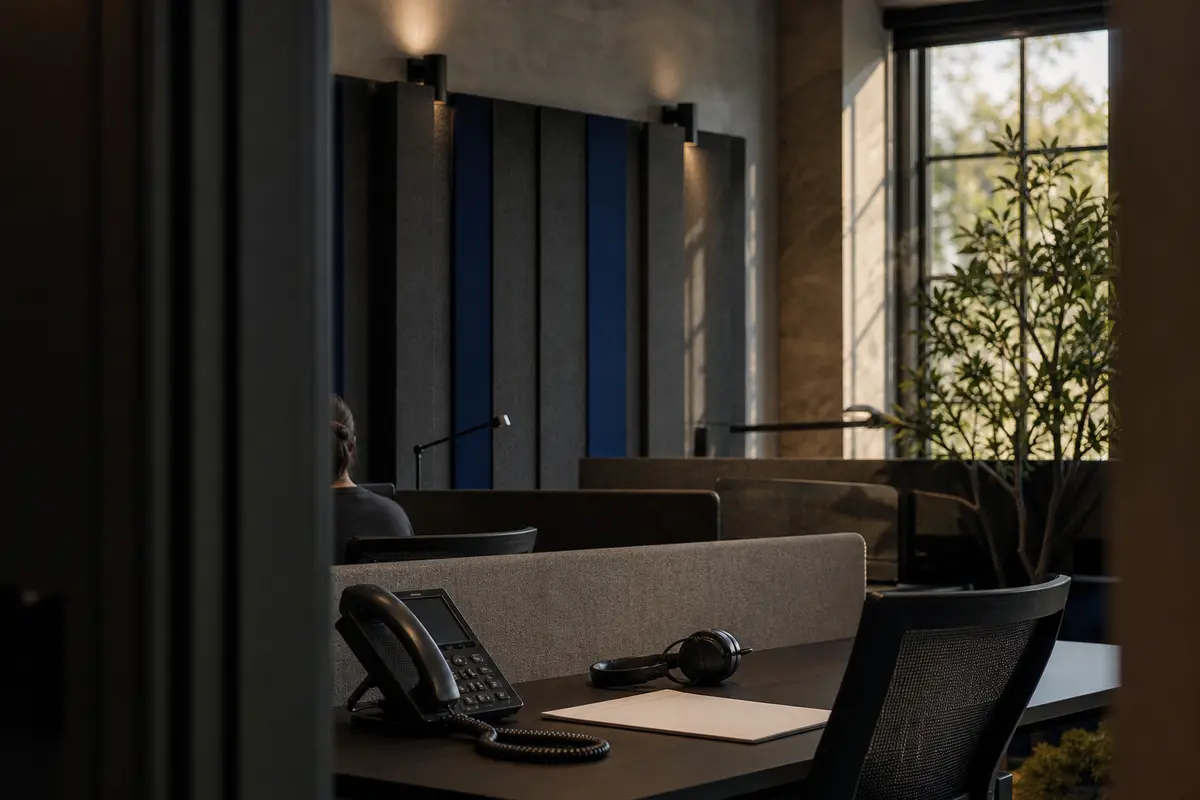
Editorial intake planning scene for AI Answering in Lafayette, Colorado

Local analysis

Use Lafayette’s actual service area, your firm’s intake rules and your existing phone workflow to decide where AI should answer, what it should collect, who should receive urgent calls and which measures will show whether the system is useful.

A sound decision for a Lafayette law firm should connect local scope to operating evidence. Lafayette is a city in Boulder County, and the Census Bureau’s 2020–2024 ACS estimate records 30,602 residents with a 233 margin of error. That is context for defining the place you serve, not a forecast of calls or cases. Use your own phone records and intake review to decide whether the service addresses a real operational gap.

01

1. Set the service area before you set the call flow

Lafayette is a municipality in Boulder County, Colorado. The U.S. Census Bureau records a 2020–2024 ACS five-year population estimate of 30,602, with a margin of error of 233. That number describes the city; it does not establish call demand, legal need, language preference, competition or likely case volume. For an answering system, the more useful local question is how your firm defines service coverage. You may serve Lafayette alone, Boulder County more broadly or clients elsewhere in Colorado. Those boundaries affect how the answering experience should describe your firm and when a caller should be referred for review.

Recommended approach

Write a short service-area policy before configuration. Identify the locations and matter types your firm accepts, the locations that require attorney review, and the situations that should be declined or redirected. Ask Bosseo to demonstrate how those boundaries would be reflected in the greeting, qualification questions and summary rather than treating Lafayette’s population as a demand forecast.

02

2. Make the team-first handoff explicit

Bosseo’s public AI Answering page describes a team-first setup: calls go to your people first, and the AI answers when nobody picks up within 20 seconds. It also describes coverage for nights, weekends, holidays and overflow. That matters if your Lafayette office has a preferred daytime answering arrangement but needs a defined fallback outside that arrangement. The 20-second rule is a product behavior stated by Bosseo; whether it fits your firm depends on your existing phone routing and the kinds of calls you receive.

Recommended approach

Review your current forwarding rule, business hours, lunch coverage, holiday coverage and overflow behavior. Decide whether the AI should be the fallback for every unanswered call or only selected lines. Test what happens when a call is answered late, transferred, disconnected or received while multiple callers are waiting. Keep the final rule consistent with how your team actually monitors new inquiries.

03

3. Choose qualification questions that help an attorney act

The service description says the AI can guide a caller through the situation, capture case type, timeline and contact details, and provide a transcript and case summary. It also describes automatic classification as Potential New Client, Current Client or Other, plus case-type tagging. Those capabilities do not decide which questions are legally appropriate for your practice. A Lafayette firm serving Boulder County may need a different review path for a new inquiry than for an existing client calling about an active matter.

Recommended approach

Create a question set around the decisions your team must make next: whether the caller is new or current, what general matter type is involved, where the issue occurred, when it occurred, how to reach the caller and whether a time-sensitive concern requires prompt review. Avoid asking for more sensitive information than your intake process needs. Have the firm approve wording, disclaimers and escalation rules before use.

04

4. Turn urgency into ownership, not just a label

Bosseo describes transcripts, summaries and caller information being delivered to an inbox or case-management system. Its public page also says calls can be classified and that urgent potential clients can be surfaced in the summary. A classification is useful only when someone owns the next action. Lafayette’s municipal boundary and Boulder County relationship can help your firm determine which local matters fit the practice, but geography alone does not determine urgency or eligibility.

Recommended approach

Assign an owner for each call category. Define who reviews a potential new client, who handles a current-client message, who checks an urgent summary and what happens when the assigned person is unavailable. Specify the acceptable next step for calls outside your service area or practice scope. During review, ask how the delivery destination is selected and how your team will know that a callback or other action is due.

05

5. Use simultaneous-call handling as a testable operating choice

Bosseo states that its AI Phone System can handle up to 20 simultaneous calls. That is a product capacity statement, not evidence that a Lafayette firm receives a particular number of calls or needs that capacity. It may nevertheless be relevant if your existing phone arrangement sends callers to voicemail during a busy period. The right decision depends on your observed call patterns, not on the city population estimate.

Recommended approach

Review phone records for unanswered calls, busy signals, after-hours calls and transfers before selecting a routing design. Ask Bosseo to explain how simultaneous calls are represented in your team’s inbox or case-management destination, how duplicate callers are distinguished and what the caller hears if the system reaches a limit or encounters an interruption. Measure response handling by category rather than assuming every answered call is a qualified matter.

06

6. Measure information quality alongside answer coverage

Bosseo describes a full transcript, case summary and caller information after each call. Its page also describes an Intake Coach that analyzes intake calls and provides feedback on missed questions, tone and lost conversions. These outputs can help your firm review whether the answering path collected information your team can use. They do not establish that the system will produce a particular number of leads, signed cases, revenue or ranking improvement.

Recommended approach

Choose measures that match the decision you are making: calls answered, summaries received, correct classification, required fields captured, urgent calls reviewed, callbacks completed and calls routed to the right owner. Review a sample of transcripts for accuracy and appropriate escalation. Keep legal intake judgment with the firm, and treat any business outcome as something to measure rather than a promised result.

Implementation

What to bring to a Bosseo review

A focused consultation can compare AI Answering with the way your firm handles calls now. Bring the information needed to make a routing and ownership decision, not assumptions based on population or general market claims.

  1. 011. Document the current phone reality List the numbers, business hours, team-first routing, voicemail behavior, overflow conditions and after-hours responsibilities that exist today. Include the calls your team wants answered and the calls that should go elsewhere.
  2. 022. Approve the intake and escalation rules Choose the questions, categories, service-area boundaries and urgent-call ownership. Decide which information is necessary for a callback and which should not be requested during the initial conversation.
  3. 033. Review the delivery path Ask how transcripts, summaries, caller information and classifications would reach your inbox or case-management destination. Confirm who monitors that destination and how the firm records completed follow-up.
  4. 044. Establish a review cadence Have the responsible team review answer handling, summary quality, classification, escalation and callbacks at an agreed interval. Adjust rules when the records show that a question, category or owner is unclear.

Questions

AI Answering in Lafayette

Does AI Answering replace our front desk?+

Bosseo describes it as a backstop. Calls go to your team first, and the AI answers when nobody picks up within 20 seconds. Your firm should confirm whether that routing matches its Lafayette office hours, staff coverage and overflow rules.

What happens after the AI answers?+

Bosseo says the caller is guided through the situation and that the system can capture case type, timeline and contact details. It also describes a transcript, case summary and caller information delivered to your inbox or case-management system.

Can we decide which Lafayette or Boulder County matters fit?+

Your firm must define its own service-area and matter rules. The system can be reviewed against those rules, but Lafayette’s population and county relationship do not determine eligibility, legal need or case value.

How many calls can it handle at once?+

Bosseo’s public page states that the system handles up to 20 simultaneous calls. Ask how that capacity would work with your phone routing and how concurrent calls would appear in the delivery destination.

Can the system identify urgent inquiries?+

Bosseo describes call classification and summaries that can surface urgency. Your firm still needs to define what counts as urgent, who reviews it, and what action is appropriate. No response-time or case outcome should be assumed without an agreement and measurement.

What should we review before choosing the service?+

Review your unanswered-call records, routing rules, intake questions, service-area policy, delivery destination, privacy and confidentiality requirements, ownership assignments and measures for summary quality and follow-up.

Next step

Review AI Answering for your Lafayette firm

Book a consultation with Bosseo to examine your current call path, service-area rules, intake questions, escalation ownership and measurement choices. Bosseo’s public page identifies calendar.bosseo.com as its booking destination. Bring your real phone workflow so you can decide whether AI Answering is an appropriate safety net for your team.

Book a Bosseo consultation ↗
Sources and scope