Skip to content

Orinda / California

AI Answering for Orinda law firms.

For an Orinda law firm, the practical question is not whether every caller represents a matter. It is whether an unanswered call receives a clear next step. Bosseo AI Answering is presented as a phone system for law-firm intake: your team gets the first ring, and the AI answers when nobody picks up within 20 seconds. It can capture case details and contact information, classify the call, and send a transcript and summary to your inbox or case-management system.

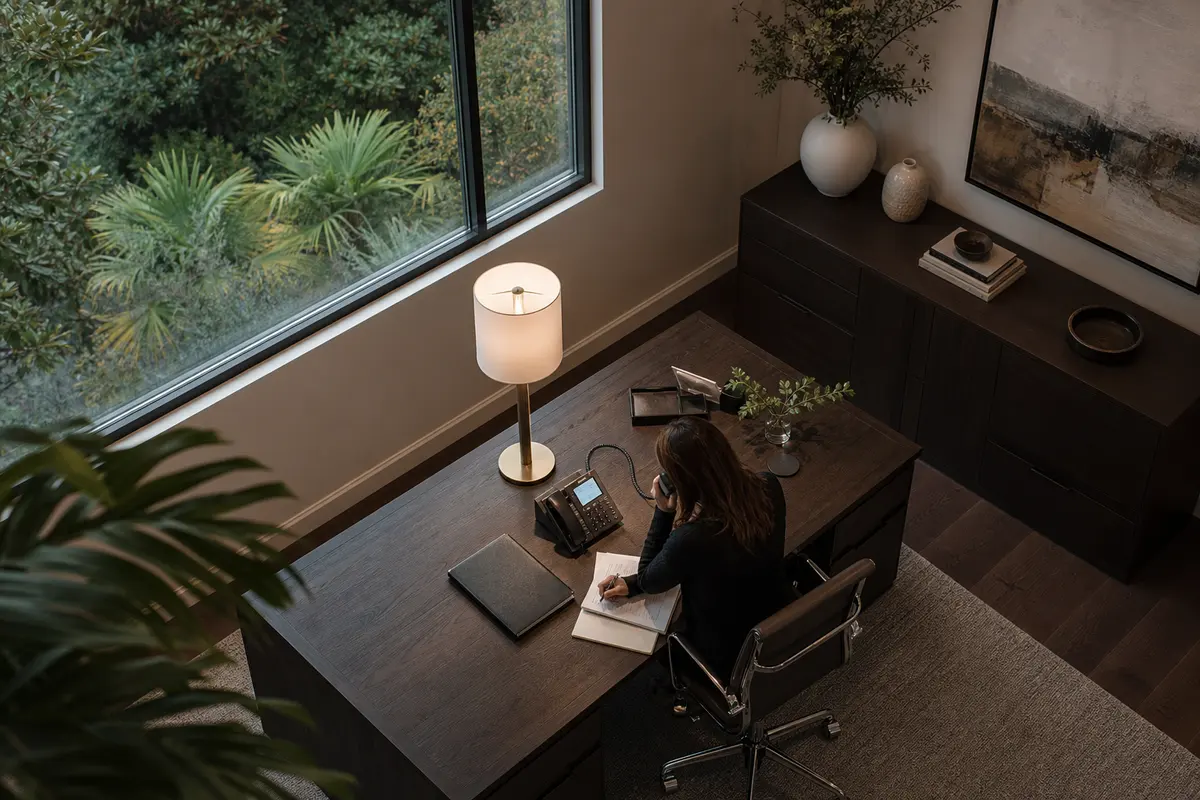
Editorial intake planning scene for AI Answering in Orinda, California

Local analysis

A practical AI Answering review for Orinda firms

A sound decision compares the service with your actual phone operation. Use four questions: Does the response path fit your staff? Does the intake capture information your attorneys can use? Does ownership remain clear after the call? Can you measure quality without confusing an answered call with a retained matter? Orinda’s Census population estimate supplies municipal context only; it should not be used to fill gaps in your call records.

01

1. Start with the calls your Orinda team actually misses

The Census records Orinda city as a municipality in Contra Costa County and estimates its population at 19,514, with a margin of error of 40, for 2020–2024. That is geographic context, not a forecast of calls or matters. The useful local question is narrower: which calls intended for your Orinda practice currently reach voicemail, ring out, or arrive when the office is closed? Bosseo’s public product page describes coverage for nights, weekends, holidays and overflow, with the firm’s team receiving the first ring. It states that the AI answers when nobody picks up within 20 seconds.

Recommended approach

Review a defined period of phone records by time, outcome and caller type. Separate missed potential-client calls from current-client calls and other inquiries. Then decide whether a 20-second fallback, rather than an always-on replacement for your staff, matches the way your Orinda office handles calls.

02

2. Design qualification around your practice areas

Bosseo says the system guides callers through their situation and captures case type, timeline and contact details. Its page also describes case-type tagging and classification as Potential New Client, Current Client or Other. Those capabilities matter only if the questions and categories reflect your firm’s intake decisions. A general label such as “legal matter” may not tell your team whether a callback is urgent, appropriate for the firm or ready for attorney review.

Recommended approach

Define the minimum information your attorneys need before returning an Orinda inquiry. Include the practice-area distinctions, timing questions and conflict-related information your firm is permitted to collect at intake. Have counsel review the wording, the boundaries of the interaction and the handoff for matters the system should not assess.

03

3. Make ownership and escalation explicit

A transcript alone does not establish who acts next. Bosseo describes a full transcript, case summary and caller information delivered to an inbox or case-management system, along with classifications that help identify what matters most. Its public page also describes urgency being surfaced in the summary. Those features can support prioritization, but your firm still needs to decide who reviews the record and how an urgent inquiry is handled.

Recommended approach

Assign an owner for each classification and define the next action: attorney callback, intake-team follow-up, current-client routing or another approved response. Write an escalation rule for time-sensitive matters and confirm that callers are not led to believe the AI provides legal advice, creates an attorney-client relationship or guarantees a response time your firm has not adopted.

04

4. Use after-hours coverage without changing your service promise by accident

Orinda callers may contact a law firm outside its stated office hours, but the available population record does not show when people call or what they need. Bosseo publicly describes 24/7 coverage, including nights, weekends and holidays, and presents the AI as a safety net behind the team. That distinction lets you evaluate after-hours response without assuming that every off-hours call is a prospective matter.

Recommended approach

Compare your published hours, voicemail language and emergency instructions with the proposed answering experience. Decide which calls should receive immediate internal attention, which can wait for the next business day and which should receive a clear alternative instruction. Test the experience from a caller’s perspective before making it part of your public service promise.

05

5. Test capacity against your own peak periods

Bosseo states that its AI Phone System can handle up to 20 simultaneous calls. That is a stated system capability, not evidence that your firm receives that many calls or that every call would be suitable for automated intake. For a Contra Costa County practice serving Orinda, the relevant comparison is your own phone pattern: ordinary traffic, campaigns, court-related spikes, lunch periods and office closures.

Recommended approach

Ask Bosseo to explain how simultaneous calls are handled, how records are separated and how your team sees priority during a rush. Compare the stated capacity with historical call records rather than using local population as a proxy. Document what happens if a call exceeds the intended flow or needs a human immediately.

06

6. Measure response quality, not just answered calls

The public page describes transcripts, summaries, classifications, case-type tags and an Intake Coach that analyzes calls and provides feedback on missed questions, tone and lost conversions. It also describes delivery to an inbox or case-management system and references an ROI Dashboard elsewhere in the Bosseo ecosystem. These are useful areas to examine, but the product page does not establish your firm’s future answer rate, signed matters, revenue or return on investment.

Recommended approach

Choose measures that connect the phone experience to decisions: unanswered calls before and after implementation, time to human review, classification accuracy, completeness of required intake fields, urgent-call handling and disposition. Confirm which measurements are available for your proposed configuration and review results with legal and intake leadership rather than treating a transcript or tag as a retained client.

Implementation

What to bring to a Bosseo review

A focused consultation is most useful when you bring the decisions that affect caller experience and attorney follow-up.

  1. 011. Bring your phone evidence Gather unanswered-call records, voicemail examples, after-hours inquiries and any existing intake notes. Separate Orinda-specific records where you can, without assuming that the city’s population predicts your phone traffic.
  2. 022. Define the safe intake boundary List what the AI may ask, what it may explain about the firm and what must go to a human. Include practice-area routing, current-client handling, urgent inquiries and the firm’s approved disclaimers.
  3. 033. Review the handoff in detail Ask how your team receives transcripts, summaries, caller information and classifications. Confirm the proposed inbox or case-management destination, access rules, review responsibility and escalation path.
  4. 044. Set a decision scorecard Agree on baseline measures and a review cadence before choosing the service. Evaluate answer coverage, record quality, response ownership and disposition; do not treat rankings, population or vendor examples as your result.

Questions

AI Answering in Orinda

Does Bosseo AI Answering replace our front desk?+

Bosseo’s public page describes a team-first model: calls ring your people first, and the AI steps in when nobody answers within 20 seconds. Confirm how that routing would work with your phone system and staffing.

What does the system capture?+

Bosseo says the AI guides callers through their situation and captures case type, details and contact information. Ask Bosseo to review the exact fields and questions proposed for your practice areas.

What do we receive after a call?+

The public product page describes a full transcript, case summary and caller information delivered to an inbox or case-management system. Confirm the destination, access controls and record-handling terms for your firm.

Can it distinguish new inquiries from current clients?+

Bosseo describes automatic classification as Potential New Client, Current Client or Other, as well as case-type tagging. Your firm should validate the categories and decide who owns each resulting action.

How many calls can it handle at once?+

Bosseo states that the system handles up to 20 simultaneous calls. This does not predict your call volume. Compare the stated capacity with your own records and ask how a concurrent-call rush appears to staff.

Will AI Answering guarantee more signed matters or revenue?+

No such firm-specific result is established here. Bosseo describes answering, capture, classification, summaries and coaching, but your results depend on caller behavior, intake decisions, follow-up and other factors. Set measures rather than relying on a guarantee.

Next step

Review AI Answering for your Orinda firm

Book a consultation with Bosseo to examine your missed-call paths, intake questions, escalation rules and measurement plan. Bring your phone records and practice-area requirements so the conversation stays grounded in how your firm serves Orinda and Contra Costa County. Booking is available through calendar.bosseo.com.

Book a Bosseo consultation ↗
Sources and scope