Skip to content

Oceanside / California

AI Answering for Oceanside law firms.

A missed call can leave your team without the caller’s case type, timeline or contact information. Bosseo AI Answering is presented as a law-firm phone system that answers when your team cannot, including nights, weekends, holidays and overflow. For an Oceanside firm, the right decision is not whether every caller represents a viable matter. It is whether your response path records enough information for your team to decide what happens next.

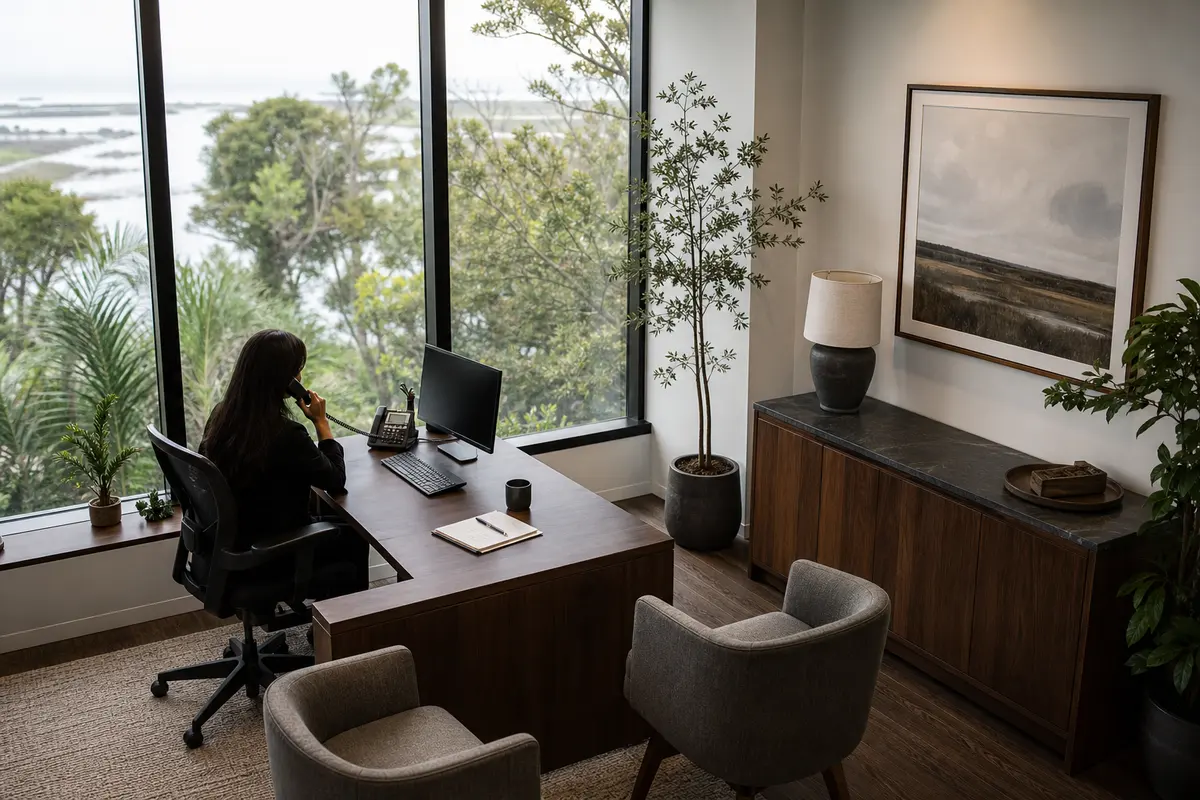
Editorial intake planning scene for AI Answering in Oceanside, California

Local analysis

A practical AI Answering review for Oceanside firms

A sound decision separates what is measured from what is configured. Start with your firm’s actual phone records, then compare Bosseo’s described capabilities with the response paths your attorneys and staff need. Evaluate the service for Oceanside operations without assuming that a city population estimate proves demand or legal need.

01

1. Make the unanswered-call path explicit

Bosseo’s public AI Answering page describes a team-first arrangement: calls go to your people first, and the AI steps in when nobody answers within 20 seconds. It also describes coverage for nights, weekends, holidays and overflow. That distinction matters for an Oceanside practice serving callers from the city and elsewhere in San Diego County. Your firm can evaluate whether unanswered calls currently reach voicemail, a receptionist, another attorney or a different destination. Do not assume that Oceanside’s population means your firm has a particular volume of calls. Review your own phone records instead.

Recommended approach

Document the current path for an answered call, an unanswered call, a busy line and an after-hours call. During a Bosseo consultation, ask how the proposed response path would preserve your existing team-first arrangement and what your staff would see when the AI answers.

02

2. Decide what intake information is necessary

The public product page says the system guides callers through their situation and captures case type, details and contact information. It describes a full transcript, case summary and caller information after the call. For a law firm in Oceanside, the useful question is not how many people live in the city. The useful question is which facts your attorneys need before deciding whether to return a call, schedule a consultation or direct it elsewhere. Those facts may differ by practice area and urgency.

Recommended approach

List the minimum information your firm needs for each matter type. Separate information needed to identify a potential new client from information needed for a current client, a general inquiry or an urgent situation. Have counsel review the proposed questions and escalation language before implementation.

03

3. Establish ownership for urgent and ordinary calls

Bosseo describes automatic classifications of Potential New Client, Current Client or Other, along with case-type tagging. Its page also says urgent matters can be surfaced in the transcript and summary. Classification does not replace your firm’s judgment. An Oceanside firm should decide who reviews each category, during which hours, and what happens when a caller reports a deadline, arrest, accident or another time-sensitive event. The public page does not establish your firm’s response policy, so that policy remains a decision for you.

Recommended approach

Create an ownership table for each classification and case type. Identify the person or role responsible for reviewing the record, the permitted follow-up channel and the circumstances requiring attorney attention. Confirm that the proposed process fits your professional obligations and internal policies.

04

4. Use records to improve intake conversations

The public AI Answering page presents Intake Coach as part of the same platform. It says the system analyzes intake calls and provides coaching related to missed questions, tone and lost conversions, including calls answered by your team. That can support a review of how your firm handles inquiries from Oceanside and the wider San Diego County area, but it does not establish that improvement will occur automatically or that any particular conversion result will follow.

Recommended approach

Choose a small set of review questions for your team: Was the caller’s matter type captured? Was the timeline clear? Did the caller receive an appropriate next step? Did the staff member identify a follow-up owner? Review records for patterns and decide which coaching topics are actionable.

05

5. Clarify where summaries should go

Bosseo states that transcripts, summaries and caller information can be delivered to an inbox or case management system. Its public page also describes automatic CRM delivery and says caller details, transcripts and tags can flow into a CRM and case management without retyping. The exact destination and configuration for your firm should be confirmed directly. A clean destination matters because a useful record can still be overlooked if it arrives in an inbox nobody owns.

Recommended approach

Identify the system your team already uses for intake and matter review. Ask Bosseo what delivery and classification options apply to your environment, what staff must review manually and how your firm should handle duplicate, incomplete or misclassified records.

06

6. Measure response quality without inventing demand

Bosseo presents AI Answering as a way to turn calls into transcripts, summaries and classified records. Those records can help your firm examine answered calls, missed calls before implementation, follow-up ownership and the time between a call and review. They cannot, by themselves, prove that Oceanside has a particular level of legal demand or that every unanswered call would have become a client. The Census population estimate describes Oceanside city, not your firm’s audience, call volume or revenue opportunity.

Recommended approach

Agree on measurements that your firm can actually observe: answer-path outcome, classification, record completeness, review ownership and follow-up status. Compare those observations with your existing records and define how often the team will inspect them. Treat any financial model as an internal estimate, not a Bosseo result or guarantee.

Implementation

Related services to consider

AI Answering addresses the phone response path. Bosseo’s public product page also presents adjacent services that may fit later questions about intake and measurement.

  1. 01Step 1: Audit your present phone experience Review a representative set of your own call records. Note when calls arrive, who answers, what happens during overflow and where unanswered calls go. Keep Oceanside and San Diego County as geographic labels only; do not turn the city population estimate into a forecast.
  2. 02Step 2: Approve the intake boundaries Decide which questions the system should ask, which practical firm information it may provide and which issues require staff or attorney review. Confirm the wording with the people responsible for professional and operational oversight.
  3. 03Step 3: Assign review responsibility Name the role responsible for each classification and define the review path for urgent information. Decide how your team will handle incomplete records, current-client calls and inquiries outside your practice scope.
  4. 04Step 4: Review records and refine the process Inspect transcripts, summaries, tags and follow-up status at an interval your firm chooses. Use observed gaps to refine questions, ownership and coaching priorities. Do not treat automated records as proof of demand, case value or future results.

Questions

AI Answering in Oceanside

Does AI Answering replace our front desk?+

Bosseo’s public page describes a team-first setup. Calls go to your people first, and the AI answers when nobody responds within 20 seconds. Confirm the proposed routing for your phone system during the consultation.

What does the system capture?+

The public description says the AI guides callers through their situation and captures case type, details and contact information. It also describes a transcript and case summary after the call. Your firm should decide which information is necessary and approve the intake boundaries.

What happens after a call?+

Bosseo says the transcript, summary and caller information can be delivered to your inbox or case management system. The exact destination and configuration should be confirmed for your firm.

How are calls classified?+

The public page describes classifications for Potential New Client, Current Client and Other, as well as case-type tagging. Classification should support review; it does not replace your firm’s decision about legal eligibility, conflicts or representation.

Can it handle several calls at once?+

Bosseo’s public page states that the system can handle up to 20 simultaneous calls. Ask how that capacity applies to the configuration being considered for your firm and how records are presented to your team.

How should an Oceanside firm evaluate the service?+

Use your own call records and workflows. Review answer-path outcomes, captured information, classifications, ownership and follow-up. Oceanside’s population estimate is geographic context only and should not be used as a forecast of calls, clients or revenue.

Next step

Review your Oceanside call path with Bosseo

Book a consultation to examine how your firm handles unanswered calls, what information should be captured and where each record should go. Bosseo’s public booking destination is calendar.bosseo.com. Use the discussion to decide whether AI Answering fits your intake responsibilities and review process; no call-volume or revenue assumption is required.

Book an AI Answering consultation ↗
Sources and scope