Skip to content

Lodi / California

AI Answering for Lodi law firms.

For a law firm serving Lodi, an unanswered call creates an information gap: you may not know who called, what happened, how urgent the matter is or which team member should respond. Bosseo AI Answering is presented as a backstop for calls your team does not answer. The firm's team receives the first ring; when nobody answers within 20 seconds, the AI can greet the caller, capture case details and contact information, classify the call and deliver a transcript and summary to the firm's inbox or case-management system. Lodi is a municipality in San Joaquin County, California. The 2020–2024 ACS five-year estimate records 67,607 residents, with a margin of error of 52. That population figure describes the city; it does not establish call demand, language needs, legal need, competition or likely case volume.

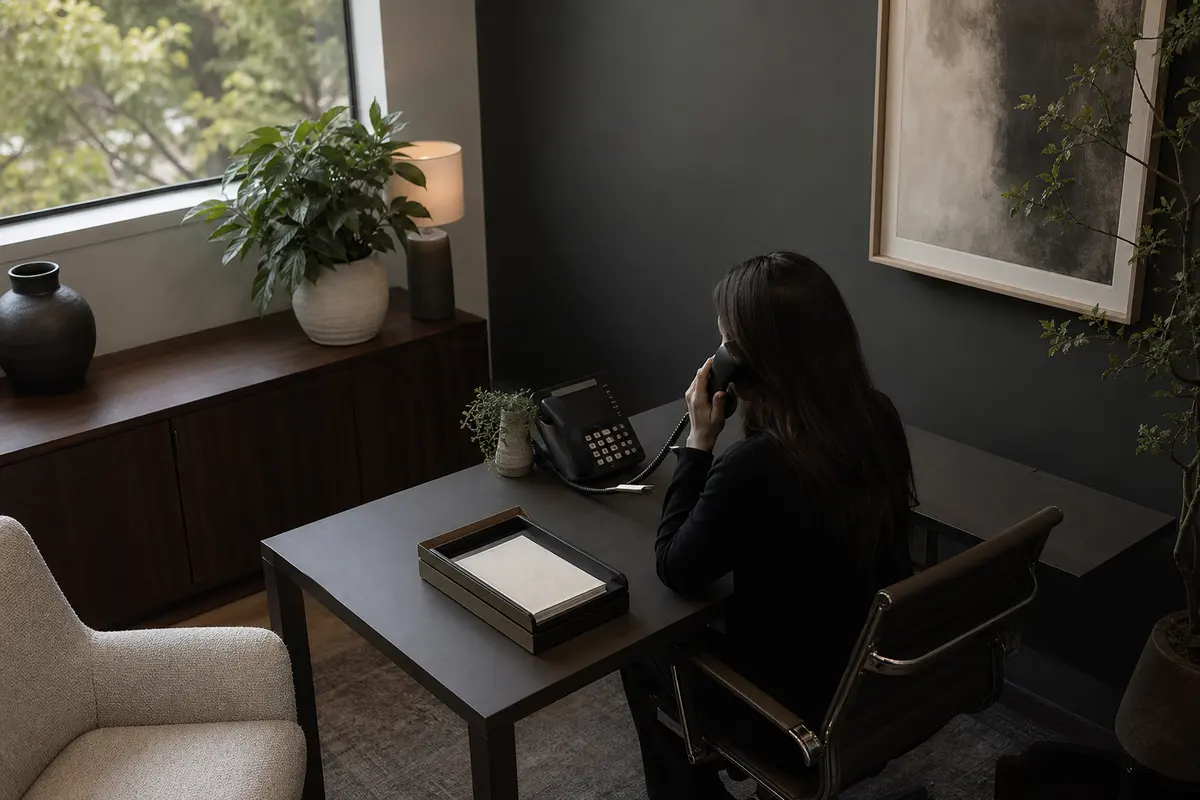
Editorial intake planning scene for AI Answering in Lodi, California

Local analysis

Evaluate AI Answering around your firm's actual response path: what happens when staff do not answer, what information the caller must provide, who owns the callback, how urgent matters are surfaced and which measurements will tell you whether the system is useful.

Use this decision framework to evaluate fit in the order a call moves through your firm. Start with coverage, then inspect information quality, ownership, delivery and review. Lodi's status as a city in San Joaquin County helps define the service area you are discussing; its population estimate is not a substitute for your firm's own phone records or operational judgment.

01

1. Put the team-first call path in writing

Bosseo's public AI Answering description says calls go to the firm's front desk first. If nobody answers within 20 seconds, the AI steps in. That distinction matters when you are deciding whether the service should supplement your Lodi office rather than replace its existing phone handling. The right question is not whether every call should be automated. It is which unanswered calls should receive a structured next step instead of voicemail or no record at all.

Recommended approach

Map your current path for a new caller, an existing client and an unrelated call. Identify the unanswered-call threshold, the people who should receive the resulting information and the matters that require prompt human review. Ask Bosseo to demonstrate the handoff using your firm's intended routing.

02

2. Define the intake information that is actually useful

The public product text describes a professional greeting, guided questions about the caller's situation, case type, timeline and contact details, plus a full transcript and case summary. It also describes classification as Potential New Client, Current Client or Other, and case-type tagging. Those fields can help your team decide what to read first, but the firm still needs to determine which facts are necessary for its own practice areas and callback decisions.

Recommended approach

Prepare a concise intake outline for review: identity and contact details, the reason for calling, relevant dates, immediate urgency, opposing-party information where appropriate and the requested next step. Have counsel decide which questions are suitable for automated collection and which must wait for a qualified member of the firm. Do not treat the city population as evidence of any particular practice-area demand.

03

3. Make urgency and ownership explicit

Bosseo describes summaries and caller information being delivered after a call, with classifications intended to show what matters most. A summary is useful only when someone owns the next action. A Lodi firm should decide who reviews a potential new-client call, who handles current-client messages and how urgent situations are escalated. The public page does not establish your firm's response policy, legal advice procedures or availability, so those decisions remain yours to set.

Recommended approach

Create an internal ownership table before booking a review. For each call category, name the responsible role, the permitted callback method, the escalation route and the information that must be confirmed by a human. Ask for a demonstration of how a call is labeled and how its summary reaches the selected destination.

04

4. Review simultaneous-call handling against your real phone setup

Bosseo states that its AI Phone System can handle up to 20 simultaneous calls. That is a stated product capacity, not evidence that your firm will receive any particular number of calls or that every call will be handled in the way you prefer. It is relevant when a firm is assessing overflow, busy lines or a concentrated period of inquiries, but it should be considered alongside the firm's phone system and routing configuration.

Recommended approach

Ask your phone administrator to document current numbers, forwarding rules, after-hours handling and any existing voicemail or answering arrangements. During the consultation, confirm how unanswered calls are routed, what happens when lines are occupied and whether the stated simultaneous-call capacity applies to the configuration you are considering.

05

5. Decide where call records should land

The public AI Answering page says transcripts, summaries and caller information can be delivered to an inbox or case-management system. It also describes automatic CRM delivery and case-type tags. Before treating that as an operational fit, your firm should identify the destination, access permissions, retention expectations and review responsibilities. A record that reaches the wrong place can create as much work as a record that never arrives.

Recommended approach

List the system or inbox your team would review, the people who need access and the fields that must be visible without retyping. Ask Bosseo to show the delivery path and clarify the exact case-management or CRM connection available for your selected setup. Have counsel review confidentiality and record-handling requirements before use.

06

6. Measure response quality without assuming business results

Bosseo describes transcripts, summaries, classifications, case-type tags and an Intake Coach that analyzes calls and provides feedback on missed questions, tone and lost conversions. These outputs can support operational review. They do not guarantee signed matters, revenue, rankings or a particular return. Google states that automated content does not guarantee crawling, indexing or search visibility; that guidance is separate from phone performance, but it reinforces the need to assess actual outcomes rather than rely on a product claim or an illustrative calculator.

Recommended approach

Agree on review questions before implementation: Were calls captured? Was the classification useful? Did the summary contain the information the reviewer needed? Was ownership clear? Were urgent matters surfaced according to your policy? Use your own records to assess changes, and separate service-quality observations from legal-market or financial conclusions.

Implementation

What to bring to a Bosseo consultation

A useful review should be grounded in your firm's existing phone setup and intake decisions. Bring the people who understand routing, intake and follow-up, and use the questions below to keep the conversation specific.

  1. 01Step 1: Document the current phone experience Write down where calls go first, what happens when nobody answers, how overflow is handled and who currently checks voicemail. Include business hours and the situations your staff already treat as urgent. This gives the consultation a real operating context instead of asking the product to solve an undefined problem.
  2. 02Step 2: Separate collection from legal judgment Choose the factual information a caller may provide for intake review, then identify decisions that require a human. A transcript or summary can organize a conversation; it does not replace your firm's conflict review, legal analysis, advice or engagement decision.
  3. 03Step 3: Confirm delivery and accountability Select the inbox or case-management destination your team will actually monitor. Assign ownership for each classification and decide how the reviewer records the next action. Ask Bosseo to show the configured path, including what information arrives after the call.
  4. 04Step 4: Review performance using your records After your firm has a defined operating period, review whether calls were captured, summaries were usable, classifications were accurate for your purposes and follow-up ownership was clear. Keep those observations separate from unsupported claims about demand, conversion, case value or revenue.

Questions

AI Answering in Lodi

Does Bosseo AI Answering replace our front desk?+

Bosseo's public description says the firm's team gets the first ring and the AI steps in when nobody answers within 20 seconds. It is described as a safety net for unanswered calls, not as a replacement for your front desk. Confirm the routing behavior for your phone configuration during the consultation.

What does the AI collect from a caller?+

The public page describes a professional greeting and guided collection of the caller's situation, case type, timeline and contact details. It also describes a transcript and case summary. Your firm should decide which questions are appropriate for its practice and which require human handling.

How are calls classified?+

Bosseo describes three classifications: Potential New Client, Current Client and Other. It also describes case-type tagging. Ask to see how those labels appear in the destination your firm would use and how your team should act on each category.

Where do transcripts and summaries go?+

Bosseo says the full transcript, case summary and caller information can be delivered to your inbox or case-management system. The exact destination and configuration should be confirmed for your firm before adoption, including access and record-handling expectations.

How many calls can the system handle at once?+

Bosseo's public AI Answering page states that the system can handle up to 20 simultaneous calls. That stated capacity does not predict your call volume or guarantee a particular result. Ask how it applies to your phone system and intended routing.

Can AI Answering tell us which calls need attention first?+

Bosseo describes classification, case-type tagging, summaries and caller information, and it says urgent information can be surfaced in the summary. Your firm must define urgency, escalation and callback policies. Ask for a demonstration using categories that match your practice.

Next step

Review your unanswered-call path with Bosseo

Book a consultation to examine how AI Answering could fit your Lodi law firm's existing phone and intake operations. Bring your routing, intake questions and ownership decisions so the discussion can focus on a clear next step for calls your team does not answer. Bosseo's public booking destination is calendar.bosseo.com.

Book an AI Answering consultation ↗
Sources and scope