Skip to content

West Memphis / Arkansas

Automation for West Memphis law firms.

A new inquiry creates work before it becomes a consultation. Someone must capture the contact details, identify the matter type, decide who owns the next step and record what happened. Bosseo Automation is designed to connect those actions so information entered once can move from a website, call, chat or video intake into the firm’s operating systems. For a law firm serving West Memphis and Crittenden County, the useful question is not whether a larger population automatically means more demand. It is whether your current response path gives every appropriate inquiry a clear, timely next action.

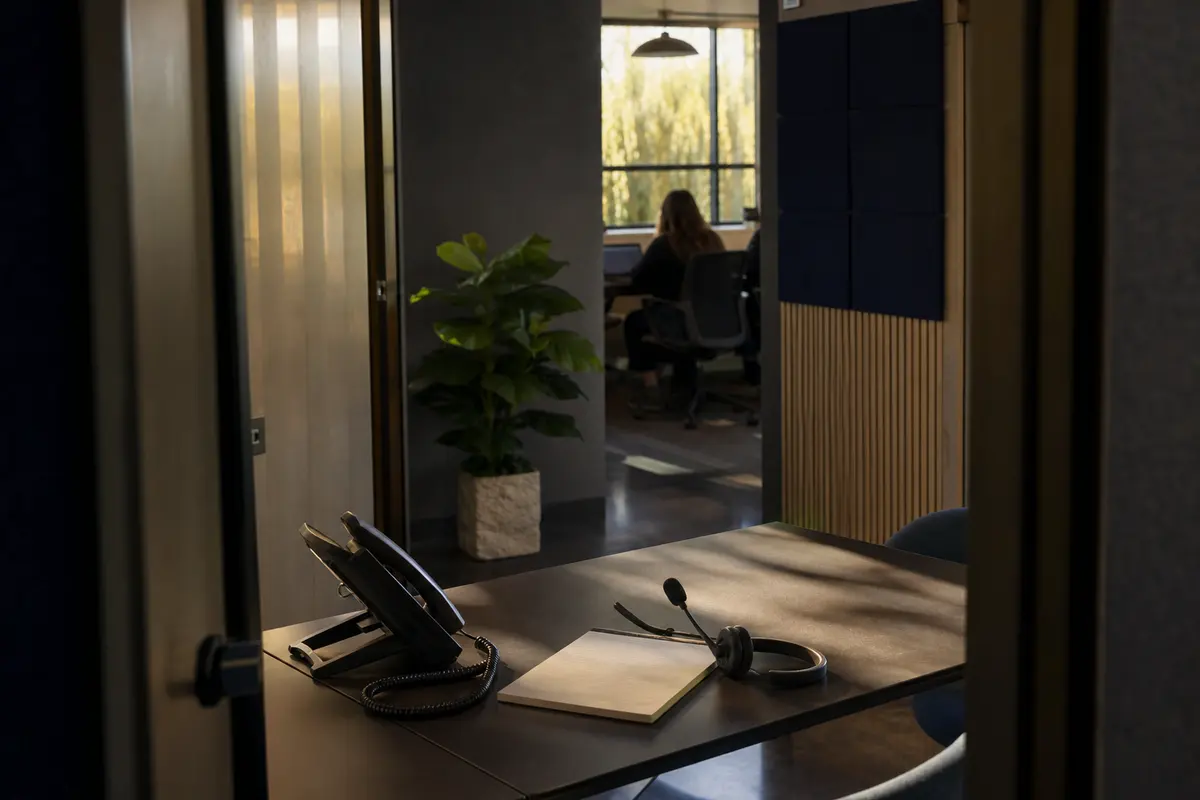
Editorial intake planning scene for Automation in West Memphis, Arkansas

Local analysis

A practical Automation review for West Memphis firms

A sound decision weighs operational fit before expansion. Review the current path, identify the handoffs that create delay or duplicate work, confirm what your systems can exchange and preserve human control over legal judgment. Then decide what should be measured and what evidence would justify a change.

01

1. Map the West Memphis intake path before changing it

West Memphis is recorded as a municipality in Crittenden County, Arkansas, with a 2020–2024 ACS five-year population estimate of 23,929 and a margin of error of 27. That figure describes the city; it does not establish legal demand, call volume, staffing needs or likely case revenue. It does provide a precise geographic boundary for an initial service review. Start by separating inquiries from West Memphis from those elsewhere in Crittenden County and from any broader service area your firm chooses to serve. Then document how each inquiry currently arrives and where it goes next.

Recommended approach

Bring your website forms, phone process, chat or video-intake path, CRM, case-management system and calendar decisions to the review. Bosseo describes Automation as a way to map the intake flow, connect systems and move a lead toward a ready-to-work file. The scope should be based on your actual systems and practice areas, not on population as a proxy for need.

02

2. Decide what information must travel with every inquiry

Bosseo’s public Automation page describes website-to-CRM synchronization, logging and tagging of contact details, case type, source and intake answers. It also describes movement into case-management platforms and the goal of eliminating double entry. Those capabilities matter when staff must otherwise copy an inquiry from an inbox into another system. The quality of the handoff depends on the fields your firm genuinely needs and the distinctions it makes between prospective matters.

Recommended approach

Define the minimum record for each practice area: contact information, source, matter classification, intake answers, owner and next action. Review whether a West Memphis inquiry should be treated differently from an inquiry elsewhere in Crittenden County, and decide which geographic information is useful for triage without treating location alone as a qualification decision.

03

3. Build routing around ownership and escalation

Automation is most useful when the next responsible person and the next action are unambiguous. Bosseo describes routing and task assignment, including rules that can account for urgency, along with instant lead routing and follow-up. The public page does not establish your firm’s staffing model or which matters require immediate escalation. Those decisions belong to you.

Recommended approach

Specify who receives each matter category, what happens when the assigned person is unavailable and which circumstances require human review. Test the rules against ordinary inquiries, incomplete submissions and urgent situations. Do not infer staffing requirements from West Memphis’s population; use your own intake records and operating hours to decide where escalation is needed.

04

4. Set follow-up rules without overpromising outcomes

Bosseo describes instant text-back, scheduled email sequences, reminders and follow-up sequences by case type. These tools can create a consistent response path, but automation does not establish that an inquiry will hire the firm, become a case or produce revenue. Google’s guidance also states that automated or scaled material needs original value, accuracy and relevance; automation does not guarantee crawling, indexing or search visibility. Those principles support careful, useful communications rather than volume for its own sake.

Recommended approach

Approve the timing, wording, channel and stop conditions for each follow-up path. A sequence should pause when a person replies or books, and a staff member should be able to take over. Review messages for legal accuracy, accessibility and relevance to the firm’s actual services before using them.

05

5. Preserve human judgment at the handoff

The public Automation page positions the service as a connection between marketing, intake and operations rather than a replacement for the firm’s CRM or case-management software. It lists Clio, MyCase, Filevine, PracticePanther, Smokeball, Lawmatics, HighLevel, Zapier and API-based connections as examples, while noting that the exact stack should be confirmed. A system connection does not decide whether representation is appropriate or whether a conflict exists.

Recommended approach

Keep legal judgment, conflict review, eligibility decisions and consultation handling with your team. Ask Bosseo to confirm how your current tools would connect, what information would be transferred and where a person must review or approve the next step. If an existing connector is not suitable, discuss whether a supported custom-software scope is appropriate rather than assuming one exists.

06

6. Measure the handoffs that affect service quality

Bosseo describes attribution and an ROI Dashboard as part of its broader ecosystem, and its Automation page identifies events such as lead arrival, response, task assignment and consultation booking. Those descriptions do not prove a result for your firm. They do suggest a practical measurement framework: record what entered the system, when it was assigned, whether follow-up occurred and what disposition followed.

Recommended approach

Agree on definitions before reviewing performance. Useful questions include: Was the inquiry captured? Was the source recorded? Was an owner assigned? Was the first response sent? Did the person reply, schedule, decline or remain unresolved? Segment results by service area and geography only when your records support that analysis. Treat West Memphis and Crittenden County as geographic fields, not as evidence of demand or conversion.

Implementation

Questions to bring to the Bosseo consultation

A useful conversation should end with defined decisions, not assumptions. Use these prompts to keep the review specific to your West Memphis practice and its Crittenden County service area.

  1. 01Step 1: Bring the real systems to the conversation List the website intake points, phone and answering arrangements, CRM, case-management platform, calendar and current follow-up methods. Include the tools used by the people who actually handle inquiries.
  2. 02Step 2: Choose the decisions automation may support Set the approved fields, matter categories, ownership rules, escalation conditions, response wording and stop conditions. Separate administrative movement from legal decisions that require a person.
  3. 03Step 3: Confirm the connection scope Ask Bosseo to confirm the exact systems, data paths and any direct, Zapier or API-based connection relevant to your firm. Do not treat a named platform as proof that your specific configuration is supported.
  4. 04Step 4: Establish review questions Track capture, assignment, response, follow-up, booking and disposition. Compare those records over time and by relevant service area or geography only when the underlying data is complete enough to support the comparison.

Questions

Automation in West Memphis

Will Bosseo Automation replace our CRM or case-management system?+

Bosseo’s public page describes Automation as connecting existing systems rather than replacing them. Ask for confirmation based on your firm’s exact tools and workflow.

Which systems can Bosseo connect?+

The public page names Clio, MyCase, Filevine, PracticePanther, Smokeball, Lawmatics, HighLevel, Zapier and API-based connections. Confirm the specific connection, fields and permissions for your setup during the consultation.

Can we keep a staff member involved?+

Yes. The described workflow includes routing, tasks and follow-up while leaving judgment and conversation handling with the firm. Define the precise human-review points before implementation.

Can follow-up differ by practice area?+

Bosseo describes follow-up sequences by case type. Your firm should approve the categories, wording, timing, channel and conditions that stop or transfer a sequence.

Does Automation guarantee more cases or better search visibility?+

No such result should be assumed. Automation can support intake and operational handoffs, but it does not establish demand, signed matters, revenue, rankings, crawling, indexing or search visibility.

How should a West Memphis firm use local information in the review?+

Use West Memphis and Crittenden County as geographic fields in your service-area and intake decisions. The city’s population estimate is not evidence of call volume, legal need, competition or staffing requirements.

Next step

Review your West Memphis intake path with Bosseo

Book a consultation to examine how inquiries move from first contact to the next action. Bring your current systems, practice-area rules and service-area decisions so the discussion can focus on routing, follow-up, ownership, accessibility and measurement rather than assumptions about demand.

Book a Bosseo consultation ↗
Sources and scope