Skip to content

Hot Springs Village / Arkansas

Custom Software for Hot Springs Village law firms.

A law firm in Hot Springs Village may not need another generic legal platform. It may need one focused tool for the work that keeps returning to a spreadsheet, shared inbox, or manual handoff. Bosseo’s Custom Software service is designed around that decision: identify the bottleneck, define the data and permissions, examine the systems involved, and decide whether a purpose-built tool is justified.

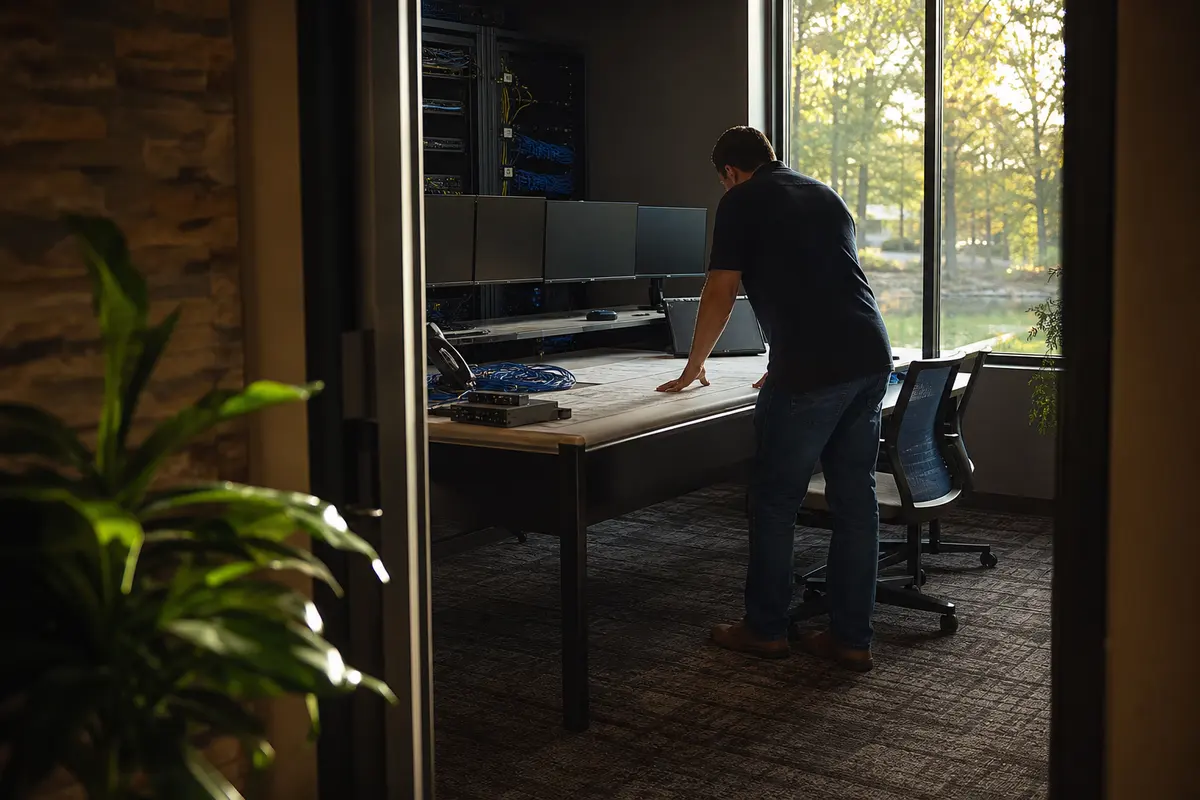
Editorial platform planning scene for Custom Software in Hot Springs Village, Arkansas

Local analysis

Hot Springs Village is recorded as a census-designated place in Garland County and Saline County, Arkansas. Its 2020–2024 ACS five-year population estimate is 16,327, with a margin of error of 1,230. That figure describes the place; it does not establish legal demand, competition, lead volume, or a case opportunity. For your firm, the useful question is operational: which repeated task is sufficiently important, defined, and costly to deserve custom software?

Use this decision framework before booking a Custom Software conversation. It keeps the decision tied to the firm’s operations instead of to the size of Hot Springs Village or to an assumed market opportunity. Hot Springs Village is a CDP in Garland County and Saline County with a 2020–2024 ACS population estimate of 16,327; that is geographic and population context, not proof of demand or a software requirement.

01

1. Start with the firm’s actual bottleneck

Bosseo describes custom software as a way to build around a firm’s workflow rather than force the firm into an off-the-shelf process. Examples on the public product page include client status portals, intake tools, internal dashboards, referral trackers, document-intake flows, calculators, and connections between existing systems. A Hot Springs Village firm should not choose among those examples because they sound familiar. It should identify the specific task that staff repeat, where the handoff stalls, and what information must survive the handoff. The firm’s location in a CDP spanning Garland County and Saline County is useful context for defining service coverage and internal routing, but it does not tell you which software problem matters most.

Recommended approach

Bring one sentence to the consultation that begins with the task someone at the firm performs manually. Then map the people, records, decisions, and exceptions involved before discussing a build.

02

2. Define data before discussing screens

A custom tool is only as reliable as the definitions behind it. Before approving an intake flow, portal, tracker, or dashboard, decide what counts as a lead, consultation, matter, referral, status, document, deadline, and completed action. Separate required fields from optional notes. Identify which values are entered once, which may be changed, and which should be read-only. This matters whether the firm serves clients in Hot Springs Village, elsewhere in Garland County, elsewhere in Saline County, or across Arkansas. Geography can be a field or routing question; it is not evidence that a particular workflow is needed.

Recommended approach

Ask Bosseo to play back the proposed data definitions in plain language. Reject ambiguous labels, duplicated fields, and any design that requires staff to infer what a status or assignment means.

03

3. Test reliability, permissions, and recovery

Bosseo’s public page states that its custom tools are hosted on dedicated servers, monitored, backed up, and maintained. It also says the service includes maintenance, updates, fixes, improvements, and team onboarding. Those statements do not answer every firm-specific governance question. You still need to establish who may view, edit, assign, export, or delete information; what happens when a required system is unavailable; how mistakes are corrected; and how the firm retrieves information if a process changes. A firm handling matters across two listed counties may also want location fields used consistently, but county coverage does not determine access rights.

Recommended approach

Make permissions, recovery expectations, change ownership, and acceptance criteria part of the scope discussion. Ask for a clear description of what Bosseo will maintain and what remains the firm’s responsibility.

04

4. Examine integrations without assuming them

The product page says Bosseo builds tools that can connect with a firm’s website, intake, dashboard, CRM, case management, billing, conflict-check, and marketing systems. It also presents automation and reporting as related parts of its ecosystem. That is a capability description, not confirmation that a particular vendor, account, API, data field, or permission model will work for your firm. An integration review should identify the systems currently in use, the records that need to move, the direction of each transfer, and the point at which a person must review the result.

Recommended approach

Ask for an integration-specific scope: systems involved, fields exchanged, triggers, exceptions, permissions, testing criteria, and ownership of failed or duplicate records. Do not approve “connected” as a sufficient technical definition.

05

5. Choose a small, consequential build

Bosseo’s page emphasizes that useful custom builds are often focused tools rather than oversized platforms. It gives speed-to-lead routing, client status, referral tracking, and the removal of duplicate entry as examples. The right first scope for a Hot Springs Village firm depends on its own measured bottleneck, not on the population estimate for the CDP or on a generic list of legal software features. A narrow build is easier to describe, test with staff, and evaluate against a real acceptance condition.

Recommended approach

Select the smallest tool that removes a clearly defined recurring step while preserving necessary review. Write down what the tool must do, what it must not do, and what evidence will show that it is ready for use.

06

6. Decide how the tool will be used after launch

Bosseo states that its team designs and codes the tools, shows a working version early, hosts and maintains the result, and includes onboarding and iteration after launch. A firm should still decide who owns day-to-day adoption, who reports defects, who approves changes, and which usage or operational measures matter. Google’s guidance says automated or scaled pages do not guarantee crawling, indexing, or search visibility; that principle is relevant here because custom software should be judged by the agreed operational job, not by an implied marketing outcome. Software should support the firm’s work, while legal judgment and staff accountability remain with the firm.

Recommended approach

Set an acceptance review around the workflow: correct records, correct permissions, understandable handoffs, documented exceptions, and staff ability to complete the intended task. Treat search visibility, lead volume, revenue, and case outcomes as separate questions unless separately scoped and measured.

Implementation

A practical decision framework for your consultation

A strong consultation should answer four questions: Is the bottleneck real? Is the data definable? Can the workflow be connected and governed? What would acceptance look like? If those answers are unclear, the next step may be further review rather than a build.

  1. 01Step 1: Describe the problem Bring the recurring task, not a preferred technology. Note who performs it, how often it occurs, what information is involved, and where the process stops or loops back.
  2. 02Step 2: Set definitions and boundaries Agree on fields, statuses, permissions, exceptions, records of authority, and the exact job the tool must perform. Include whether geography such as Hot Springs Village, Garland County, or Saline County is relevant to routing or reporting.
  3. 03Step 3: Review the proposed build Examine the working version against the firm’s real process. Test normal cases and exceptions, confirm the systems involved, and gather staff feedback before acceptance.
  4. 04Step 4: Establish ongoing ownership Confirm onboarding, maintenance, issue reporting, permissions changes, recovery expectations, and the measures the firm will use to decide whether the tool remains useful.

Questions

Custom Software in Hot Springs Village

What can Bosseo build for a law firm?+

Bosseo lists client status portals, speed-to-lead tools, referral trackers, document-intake flows, internal dashboards, calculators, and integrations between existing systems as examples. The appropriate build depends on the firm’s documented bottleneck.

Do we need a technical requirements document before speaking with Bosseo?+

Bosseo’s public page says no. The firm can describe the operational annoyance in plain English, and the consultation can be used to clarify the workflow and scope.

Will a custom tool connect to our current systems?+

Bosseo says its tools are designed to connect with a firm’s website, intake, dashboard, CRM, case management, and marketing stack. A specific connection still needs review of the systems, fields, permissions, and technical conditions involved.

Who hosts and maintains the software?+

Bosseo states that it hosts, monitors, backs up, and maintains the tools it builds on dedicated servers. Ask the consultation team to define the applicable hosting, recovery, maintenance, and support details for your proposed scope.

How should we evaluate whether the build is ready?+

Use agreed acceptance criteria tied to the workflow: correct data definitions, appropriate access, visible exceptions, understandable handoffs, and staff ability to complete the intended task. Do not substitute rankings, lead volume, or revenue for software acceptance unless those measures are separately scoped.

Should we build custom software or buy an existing product?+

Buy an existing product when it genuinely matches the firm’s problem. Consider custom software when the firm is maintaining workarounds, duplicating entry, or joining systems through manual steps. Bosseo’s consultation can be used to test that decision rather than assume custom is necessary.

Next step

Bring the bottleneck to Bosseo

Book a consultation through Bosseo’s calendar at calendar.bosseo.com. Describe the manual process your Hot Springs Village law firm wants to examine, identify the systems and people involved, and ask for a direct assessment of whether custom software is warranted. The conversation should clarify the workflow, data, permissions, integrations, acceptance criteria, and ongoing maintenance before you decide.

Book a Custom Software consultation ↗
Sources and scope